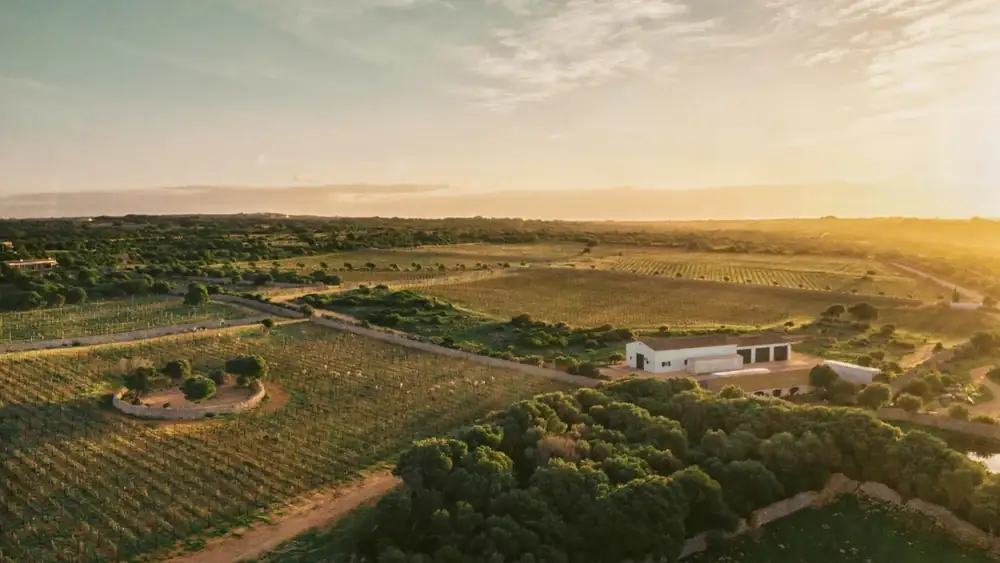
The wines of Menorca
When discussing Menorcan gastronomy, most people focus on Mahón-Menorca cheese, lobster stew, or sobrasada. However, the island also produces wine, and has done so for centuries.
A story marked by abandonment and recovery
Vine cultivation in Menorca dates back to Roman times and continued for centuries afterward. Its significant growth began after the British conquest of 1708. The increase in population, the presence of troops, and the movement of sailors in the port of Maó boosted consumption and production. At the beginning of the 19th century, some 1,300 hectares of vineyards were under cultivation, but then came the decline. Diseases that ravaged the fields of Europe, such as powdery mildew and phylloxera, also reached the island and caused a sharp decline. The gradual abandonment of the countryside and the Spanish Civil War ultimately reduced wine production almost entirely to domestic consumption.
The recovery began during the 1980s, both in old vineyard areas and with new plantings. In 2002, the Protected Geographical Indication Vi de la Terra Illa de Menorca was recognized, identifying wines made on the island with grapes grown on its land. And from then on, the trend skyrocketed.
What are the wines of Menorca like?
White wines currently represent the majority of production. They are typically fresh, light, and aromatic, with fruity and floral notes. Authorized grape varieties include Chardonnay, Macabeo, Malvasia, Muscat of Alexandria, Parellada, and Moll, also known as Prensal Blanc.
The red wines are made primarily with Cabernet Sauvignon, Merlot, Monastrell, Syrah, and Tempranillo grapes. They typically have aromas of berries and spices. Rosé wines, usually fresh and fruity, are also a significant part of the selection.
The presence of international varieties is important, but some producers are paying special attention to Mediterranean grapes such as Malvasia and Monastrell. There is no single style of Menorcan wine: each winery is defining its own path.
These wines are especially well-suited to the island's cuisine. The white and rosé wines pair well with fish, seafood, rice dishes, and stews, while the red wines can be served with meats, cured meats, and aged Mahón-Menorca cheeses.
Twelve preparations and a production that continues to grow
The 2025 harvest marked a record high since the modern revival of Menorca cultivation. Wineries declared 2,394 hectoliters under the Vi de la Terra Illa de Menorca Protected Geographical Indication (PGI), 27% more than the previous year. White wine accounted for 49% of that production, followed by red at 26%, and rosé at 25%. Including wines from the Illes Balears PGI and those without a geographical indication, Menorca produced 2,794 hectoliters that year. The island has 175 hectares of vineyards registered in the planting registry, compared to 154 hectares in 2024.
According to 2025 data from the Consell Insular de Menorca, the island currently has twelve wine producers, one of them joining this season, confirming the growth of the Menorcan wine sector: Crispín Mariano Vadell, from Es Mercadal; Bodegas Binifadet, from Sant Lluís; Cía. Vitivinícola de Menorca (Sa Cudia), from Maó; Celler Solano, from Sant Climent; Vinyes Binotord, from Ciutadella; Hort Sant Patrici, from Ferreries; Sa Marjaleta, from Ciutadella; Bodegas Torralbenc Vell, from Alaior; Sa Bodega de Son Cremat, from Maó; Torralba Agrícola, from Ferreries; Domaine Santa Catalina, from Maó; and Fontenille Torre Vella, from Alaior.
Menorcan wine remains a niche product, with most bottles consumed on the island itself. This is precisely where one of its greatest attractions lies: it allows one to delve deeper into Menorcan gastronomy and understand that, alongside its more famous products, there is a small wine sector that is regaining lost ground.
This article was prepared with the support of the Fundació Foment del Turisme de Menorca.
Cover photo: Torralbenc