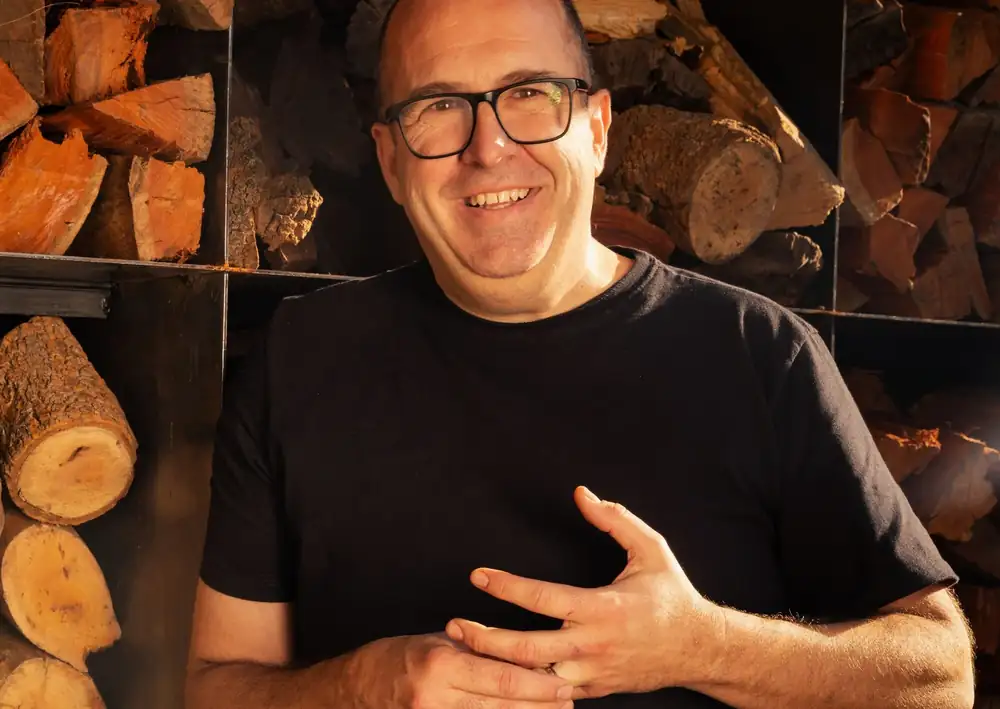
Asadero, the fires of a great cook who did everything possible to remain hidden
Since bright screens have dazzled our lives—formerly those of television, now those of our mobile phones—chefs have become willing protagonists in an explicit reality show that often borders on the pornographic.
Asadero is part of the Mezcla group, the same owners of Casa Cavia and Orno, among other establishments. But it's a restaurant that caters entirely to Rastellino's whims and tastes. “When they called me to tell me about the project (Juan Carlos García, Guadalupe García, Martín Pawlas), I went to that first meeting out of politeness, convinced I was going to tell them I wasn't interested. Cecilia and I made a living from catering; that allowed us to have a beautiful family with three daughters, manage our time, and we were perfectly happy that way; we didn't need anything else.”
"First, there was the tremendous investment they'd made in the place: a remodeled old house, the kitchen in the center surrounded by the bar, an incredible garden in the back. Something very serious was going on here. But what really convinced me was that I started telling them everything I didn't like, what they should change so I could envision it running the restaurant. And instead of telling me to get lost, they accepted everything, every whim. I was cornered; it was impossible to say no..."
Asadero existed a few years ago, in a different neighborhood, with a different feel, as a grill with luxurious aspirations, in Olivos, in the northern suburbs of Buenos Aires. It didn't work out back then, and the group's original idea was to revive it. “I wasn't interested in running a grill; Don Julio already does that perfectly. So, I started telling them what I did enjoy doing. Creating a fire pit where there's meat, sausages, but also rabbit, fish, baby squid, and lots of vegetables cooked over the fire. When I first arrived, they had a huge gas-fired pizza oven: I had that changed. We removed the gas line, and now it's all wood. The grill grates were also stainless steel, a typical Palermo sight that I didn't like at all: I took them out and put in a proper Argentine iron grill, which rusts if you don't use it every day.”
These are not decisions that Juan Pedro makes arbitrarily, but rather he bases them on the experience of a chef who 20 years ago was part of Thymus (Fernando Mayoral's restaurant that marked the change in Argentine gastronomy at the beginning of the 21st century), who toured the haute cuisine of France with the pastry chef Michel Belin, also with the chef Michel Trama. “I went to France with the goal of becoming head chef of a three-Michelin-starred restaurant. But when I experienced the mistreatment I encountered, I realized that goal was foolish. I have a calm temperament; I can't stand being on bad terms with anyone. Of course, I learned a great deal, particularly about work ethic—being in the kitchen for 20 hours, sleeping two hours, and then going back to work. It also gave me the opportunity to travel: I would save up my money and days off, and suddenly I'd go eat pintxos in San Sebastián, try Pierre Hermé's pastries in Paris, or dine at a Michelin-starred restaurant. That's how I spent my time: eating and buying cookbooks. Until one day I couldn't take it anymore and I returned to Argentina.”
Back in Argentina, he worked in other places (like the trendy La Corte in Las Cañitas), started teaching at Bue Trainers, and completed a sommelier course at CAVE. There he met Cecilia Spinetto, they fell in love, and Allium, the catering company they've run for over 15 years, was born. “I prefer to define it as a restaurant at home: each menu is carefully planned, we work with seasonal ingredients and what's available at the market, and we keep it small, avoiding weddings. We cook a lot in other people's homes, for five or ten people, and we try not to accept events with more than 60 guests. This allows me to live the way I want: spend time at home with a glass of wine, take two days off to cook and entertain friends, enjoy raising our daughters, go on vacation together to Patagonia, go fishing, build a fire, and grill the fish right there,” he says. A fairytale that, in his case, he took very seriously.
The grill that isn't a grill
When you think about Rastellino's culinary style, some of the ideas that later translate into Asadero come to mind. While he doesn't want to define himself as a charcutier ("a charcutier is César Sagario, the best in Argentina," he says), his sausages and cured meats have a strong presence on the menu: a tongue cured in brine for 18 days, cooked at a low temperature, finished on a griddle until crispy on the outside, buttery on the inside, accompanied by a quince compote; a fresh lamb sausage in sheep casing, served with apple and herbs; a blood sausage that comes with a free-range egg and roasted onion emulsion; in addition to daily specials such as head cheese or a duck liver pâté. From the embers come cuts of heavy beef (“if you come looking for a grill, you’ll find a grill: there’s provoleta cheese, sweetbreads cooked for two hours over low heat, a fantastic ribeye steak, skirt steak, the best ‘banderita’ barbecue,” he says), but also delicate and juicy fish (mullet, grouper, whiting, sea bream, which are aged for a couple of days to enhance the crispy skin) and some of his own favorites that he stubbornly insists on: boneless rabbit, baby chicken, the incredibly tender baby squid cooked for ten seconds in an iron pan with grooves cut into it so the fire can pass through and touch the mollusk. The dishes come out almost bare, with just a segment of mandarin orange, a lemon.
To accompany the meal, there's a selection of vegetables from the group's own garden in the Saavedra neighborhood: wood-fired fennel with Abascay Brandsen cheese; roasted sweet potato with charred ricotta, honey, and peanuts; and a delicious green salad that's briefly passed over the fire through a fine-mesh metal strainer, absorbing aromas from the smoke and the Maillard reaction, among others. The desserts are indulgent but never bland, flirting with Argentine tradition, with the omnipresence of artisanal ice cream, another of Juan Pedro's passions: charred apple pancake with cream ice cream and pecans; Balcarce dessert with chestnuts, meringue, and dulce de leche ice cream; and profiteroles with Belgian chocolate ice cream, dulce de leche sauce, and almonds are just a few examples.
Just a couple of months old, Asadero is effortlessly handling a consistently full dining room, with Rastellino at the helm, a thirty-something Lautaro Dantas as head chef, and a wine list curated by Delvis Huck featuring a wide selection of imported labels at very reasonable prices, as well as aspirational bottles from Juan Carlos García's personal collection. “We're building a great team of young people who are eager to try new things, who bring me ideas, who respond to my requests. I have to admit: at first, I didn't want to take this job, but now I'm very happy I did.”