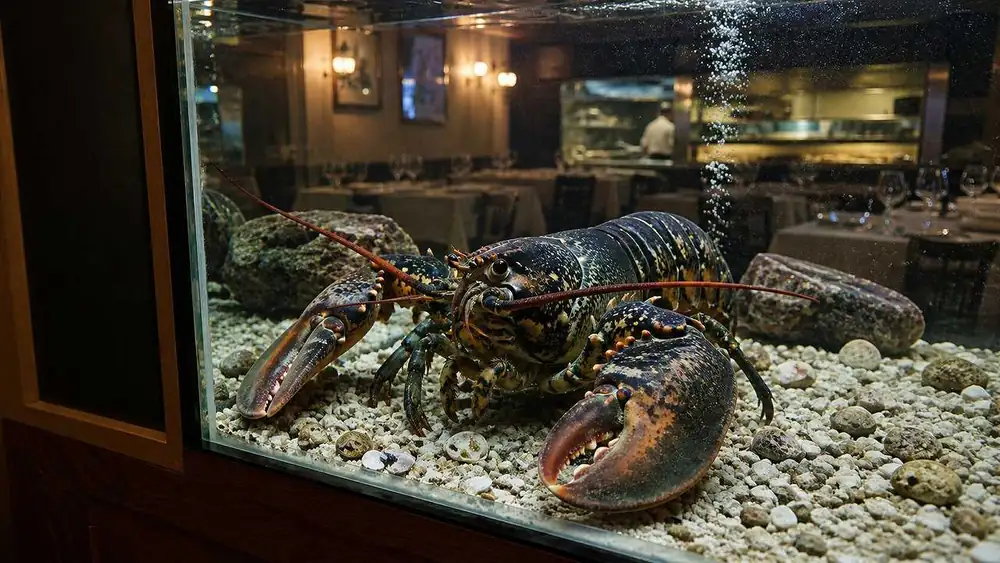
Why buying lobsters at a restaurant and releasing them into the sea isn't a brilliant idea
The American tourists who bought lobsters from a restaurant in Pompeii, then released them into the sea, must have felt very good and right, very animal-loving and environmentally friendly.
Beautiful, right? Unfortunately not. Because despite the good intentions, releasing animals purchased from a place that sells them for food into the wild isn't a brilliant idea. In fact, it's terrible from so many perspectives it's hard to even put them together. But let's try. Without even getting into the moral question of vegetarians versus omnivores, animals versus sentient beings, consider lobsters, etc. On the contrary, assuming that it's right to pursue certain objectives.
Releasing animals into the wild is prohibited
First of all, freeing animals by releasing them "into the wild" is prohibited by law in most cases. The law is EU Regulation No. 1143/2014 and the related Legislative Decree No. 230/2017. It strictly regulates what can be done with animals, whether wild or not, native or otherwise. For example, even rescuing an injured wild animal can be illegal if it is held for more than 24 hours.
The risk to the environment
One of the reasons why we can't act haphazardly, driven only by the heart, is the risk to the environment, that is, to other species. For example, we must consider that not all lobsters are the same: the European lobster (Homarus gammarus) is one thing, the American lobster (Homarus americanus) is another. Well, contrary to what one might think, even in Italy, most lobsters sold in restaurants belong to the second species, the American one. And experts who have seen the footage seem to believe it likely, based on the color of the shell, that in the Pompeii case it was indeed an American lobster.
Freeing them therefore means releasing a non-native, alien species, a bit like the infamous blue crab, with all the disastrous consequences that entails. Alien species can hybridize with local ones, or displace them, or simply transmit pathogens. Similar considerations apply to the same species, but from a different area, because it could carry a different genetic makeup, different pathogens for which the same animals in other areas have not developed antibodies, and so on. Furthermore, even if they were from the same area, their time in captivity could have led them to develop diseases that would be released into the environment.
The damage to the freed animals themselves
For similar reasons, the same released animals could suffer more harm than good, and face a fate similar to that which would have befallen them in the restaurant kitchens, only in a different way. First, the conditions in which they have lived since being caught (so many in a single small tank, for example) could have exposed them to pathogens and caused them to develop diseases, so releasing weakened organisms back into the wild exposes them to risks.
Then there's the thermal shock: the sea temperature is certainly different from that of the aquarium they were accustomed to. Then there's the location: lobsters live on rocky seabeds at a certain depth, and releasing them to the surface exposes them to predators. Finally, above all, there's the timing: lobsters are nocturnal animals that burrow during the day. Once again, throwing them into the sea in broad daylight is very useful for the video, but less so for the animal itself. In short, there's a good chance the Pompeian lobsters met an almost immediate death.
The consequences on the market value
To be honest, buying animals to free them doesn't positively impact the law of supply and demand; on the contrary, it confirms (in its own small way, of course) the value of the commodity. I'm not saying you have to steal them if you want to free animals, but I can imagine the owner of the place rubbing his hands together as he sells all the catch he'd laboriously managed to sell over the next few days.
From an economic standpoint, for those who argue that animals shouldn't be used for food, the best outcome is achieved when they remain unsold on the shelves: this actually diminishes their appeal and value, ultimately impacting the supply chain (hunting/fishing/farming) that "produces" them. But it's certainly slower and more difficult work, and it's also a source of satisfaction for those who, as the two tourists described, had always dreamed of doing it but had never succeeded.
The risk of emulation
As with everything, but especially with those that strike a chord with emotion, there's a risk of copycats. How many people who saw and shared the video will have thought, "Oh, so it can be done!" And indeed, sadly, this isn't the first time such brilliant ideas have happened: similar news stories have emerged over the years, and the discovery of American lobsters in various parts of the Mediterranean prove it.
Releases do occur, but under very specific conditions, by qualified personnel, and after a series of considerations and checks. As usual, the most spectacular and Instagrammable route is rarely the right one.