A Look Inside the Biggest Bourbon Distillery You May Not Know
For eagle-eyed whiskey drinkers, the words “Distilled in Indiana” printed in small type on a bottle have long offered a clue to what’s inside.
“The MGP name carries so much weight with people in the industry and with enthusiasts, but your everyday consumer doesn’t necessarily know that name.”
“It went from a thing that nobody talked about to now, for most of our customers, it’s kind of a badge of honor,” says Ian Stirsman, master distiller at the Lawrenceburg facility. “The MGP name carries so much weight with people in the industry and with enthusiasts, but your everyday consumer doesn’t necessarily know that name.”
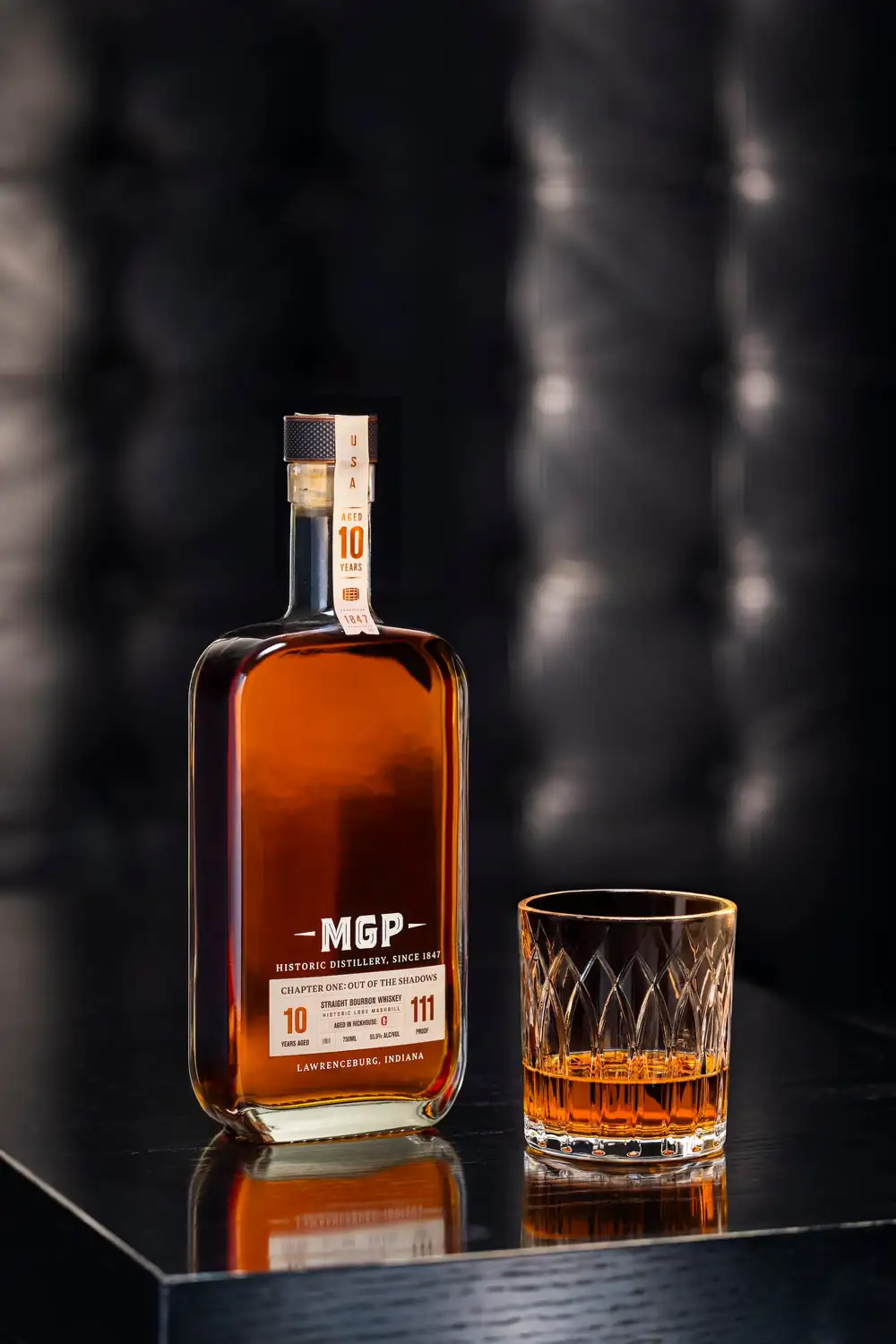
Now, for the first time, the company is putting its own name front and center with the launch of “This is the first thing that’s just us shouting ‘This is from us’ and putting the MGP name actually on the label,” Stirsman says.
Recently, I joined Stirsman and a small group for a rare behind-the-scenes look at what is likely the largest American distillery many people have never heard of (and to try out the new bourbon). As I cross over the Ohio River near Cincinnati, the distillery rises from the surrounding trees like its own industrial cityscape. The campus stretches for about a mile along Tanners Creek, which flows into the river just downstream. Once through the gates, we move between hulking brick buildings. A network of pipes crosses overhead, moving liquid from one step in the production process to the next. The complex includes sixteen active stills and has the capacity to make not only bourbon and rye, but also gin, vodka, and neutral spirits. “We’re by far the most versatile of the big guys,” Stirsman says.
That capability has been built over several generations. Distillation on the site dates to 1847 and the Rossville Distillery, followed later by Squibb. Much of the present-day facility owes its scale and setup to spirits giant Seagram, which arrived in 1933 and rebuilt and expanded it primarily to produce its Seagram’s Seven Crown whiskey, which is blended from multiple components. “That’s why we’re so versatile,” Stirsman says. At its peak in the 1970s, Seven Crown was one of the best-selling spirit brands in America, moving millions of cases annually.
The distillery sits above the vast Great Miami aquifer, which supplies water at a constant 56 degrees that’s used throughout the distillation process, including for cooling. “We pull about 8.5 million gallons out of the ground every day, and we don’t ever touch the water table,” Stirsman says. Corn, most of it grown within a hundred miles, arrives via a choreographed succession of tractor-trailers and is stored in towering silos before being milled and cooked.
Stirsman explains that despite MGP’s reputation for a few famous recipes, the distillery makes more than forty different whiskey mash bills in a typical year. One critical ingredient ties much of that production back to the Seagram’s era: its house yeast strain, The scale becomes easier to comprehend, if no less impressive, inside one of the fermentation rooms. Stirsman leads us across a metal-grate floor set near the tops of several.
Once barreled, the whiskey is aged in historic brick and concrete warehouses that ring portions of the campus, many dating to earlier eras of the distillery. Their different construction, locations, and microclimates each create distinct environments. Several even have basements, where barrels mature below ground in cooler conditions.
Finally, we end up back in a conference room, where a bottle of Chapter One sits on the table. The bourbon is intended as the beginning of an ongoing series, with future releases likely to follow annually.
Delicate aromas of wild honey and marshmallow fluff waft from the glass. I take a sip and am reminded of rich, creamy custard and caramelized sugar, with just enough peppery bite to temper the sweetness. It’s a well-composed whiskey, mature without tasting overly oaked, and impressively lively and nuanced, especially for a ten-year-old bourbon at $70. “It has that cherry-cola note, and all those things people think of when they think of MGP bourbon,” Stirsman says. “I think this is a good example of the best of what we do.”