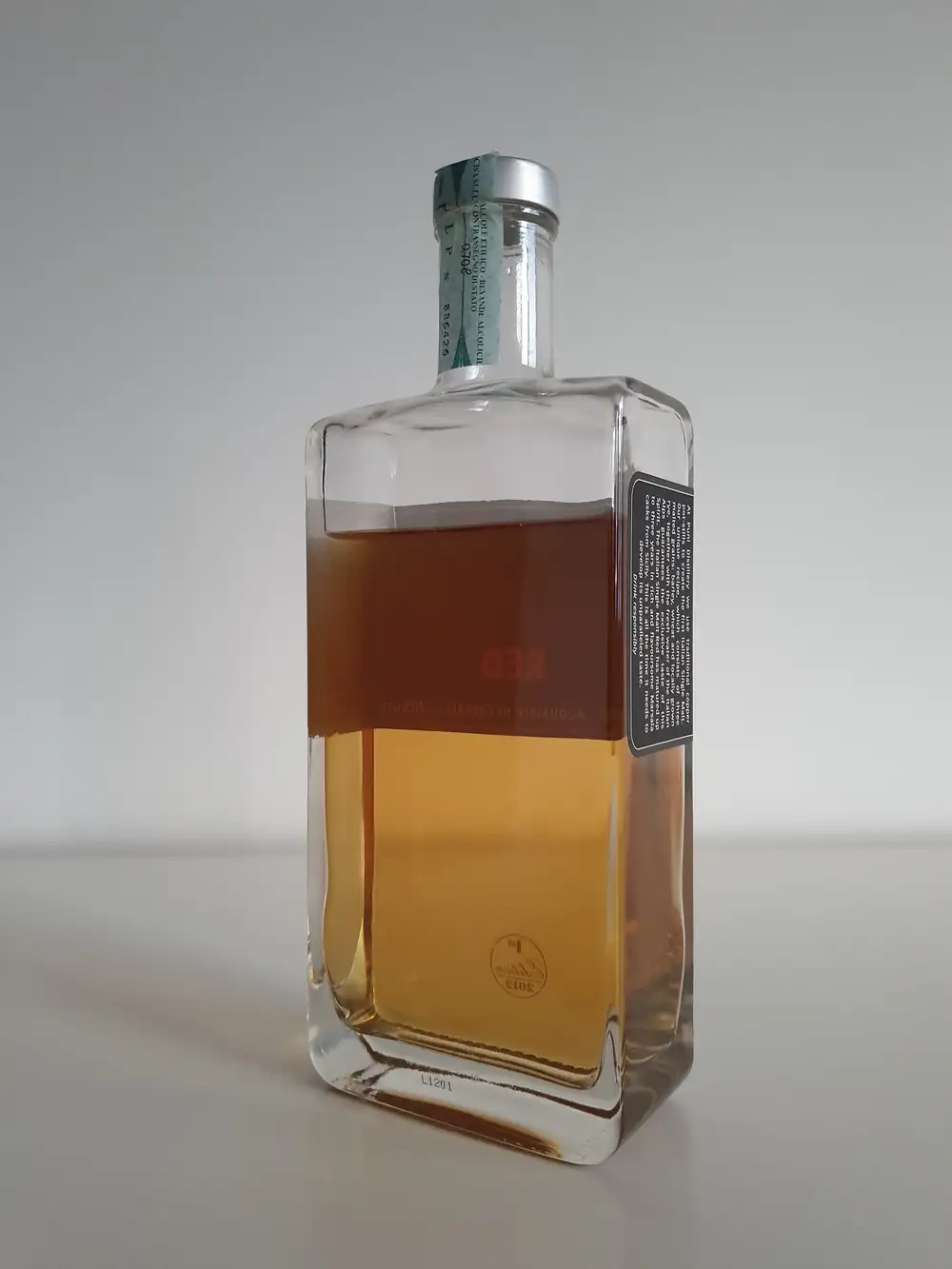
Puni, the Italian whisky from Val Venosta
The Puni distillery in Val Venosta produces four labels with malts from different local cereals, such as an ancient rye grown at 1300 metres.
Say whisky and you think of pre-romantic Scottish landscapes. Of its 115 active distilleries. Of Islay, buffeted by winds and battered by storms, with its peaty, briny whiskies, reminiscent of seaweed and iodine. Just outside the medieval town of Glorenza, in the Upper Vinschgau Valley in South Tyrol, near the Ortler Alps, an Italian distillery, Puni, has emerged. Let's call them the "Highlands of Italy." The name, of Rhaetian origin, refers to the stream that rises at over 3,000 meters and flows near the distillery, which has the distinction of distilling whisky.
Maturation also takes place in World War II bunkers, thanks to the “Scottish” climate.
Founded in 2010, the first distillation took place in 2012, with the first bottle produced in 2015, after three years of maturation. This distillery is steeped in Scottish heritage, using original copper stills custom-designed in Rothes. It is housed in the basement of a futuristic, 13-meter-tall cube-shaped building, which also houses the Visitor Centre and the Puni Shop. A blend of innovation and tradition, highlighted by the red brick exterior that recalls the windows of local barns.
But the aim is to give it a national character, starting with the ingredients. The water used is pure from nearby springs. The grains are local, such as an ancient variety of rye grown in the fields near the Monte Maria Abbey, at 1,300 meters, the highest Benedictine building in Europe. The Venosta Valley was, after all, the "breadbasket of Tyrol."
"We have four whisky labels produced with the same recipe, unique in the world," explains Julia Julia Pedross, Puni brand ambassador. "We use three types of grain: barley, wheat, and rye. The wheat and rye come from Val Venosta, while the barley comes from Germany. This year we tried the Scottish one. If all goes well," she says, "in 2018 we will also use Italian grain: we need to verify that the barley malt, usually produced for beer, is suitable."
The three malts lend complexity to the distillate. Barley provides the spicy base, wheat provides a velvety sweetness, and rye adds body and intensity. Puni, whom we met at the thirteenth edition of the Milano Whisky Festival, is currently focusing on young whiskies, a strategic market. But he also plans to move towards longer maturations. "For now," he recalls, "we have whiskies aged three and four years. Our climate has strong temperature variations, which accelerates maturation. But we will also produce whiskies aged ten years and beyond. For these," he emphasizes, "we will use WWII military bunkers, which offer ideal conditions for longer maturation [some of the distillery's barrels are already maturing in these rented vintage shelters—editor's note]. There, we have 'Scottish' conditions, ideal for maturation: high humidity, being underground, and a constant climate."
With four labels, Puni tries to maintain a broad portfolio. "It's hard to say what the current trend is," Julia reflects. "Some people love peated wines, others don't. Young women have also entered this world. We have four very different labels, like the four seasons. Nova is spring: light, fruity, and fresh. Sole is summer, much sweeter and stronger. Then Nero, which reflects autumn: deeper, more mature, with more intense and bold aromas of dark fruit. And Alba, the winter version, with its peated aromas, is the most difficult to drink. Nova," she specifies, "is the most feminine product. It ages in American oak used for bourbon: the aroma is of soft sweetness, honey, banana, and vanilla. Alba (the Gaelic name for Scotland, ed.) is slightly peated, reminiscent of dark fruit and cloves." We put it in Marsala barrels for two years and then age it for a year in Scottish barrels from the island of Islay, where a peated whisky has rested."
Maturation and refinement are the heart of whisky's secrets. "The aroma," he explains, "has almost exclusively to do with barrel maturation. We use European or American oak, much of it already used. With Marsala barrels, the whisky takes on a beautiful amber color and a sweeter flavor: the aromas shift toward dried fruit, raisins, and plums. While with a Pinot Noir, you can sense berries and spices."
Despite its youth, Puni has already won several awards. For example, in San Francisco, for best design in the world. The Alba received a very high score of 95 out of 100 points in Jim Murray's Whisky Bible.
The products can be purchased through the online shop and are distributed through the HORECA (hospitality and catering) channels, hotels, and wine shops. The distillery is also worth a visit, thanks to the beautiful Puni Visitor Center in Glorenza, where you can take a guided tour of the production area followed by a tasting.