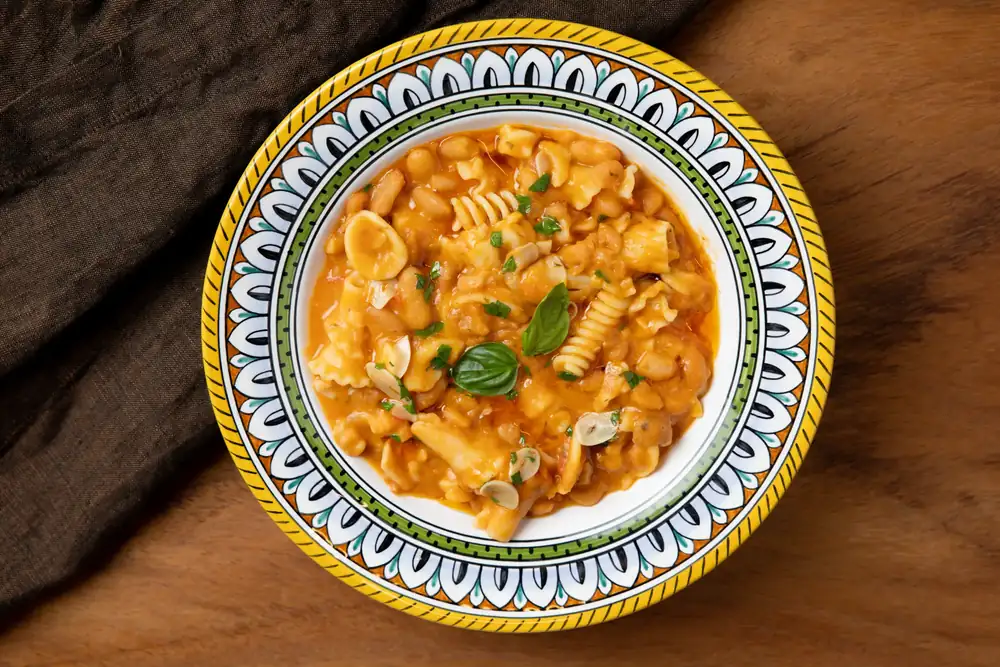
Pizzana chef Daniele Uditi builds his pasta e fagioli on pale yellow Peruano beans
By swapping the traditional cannellini for a pale yellow legume from Mexico, chef Daniele Uditi achieves a thicker, sweeter pasta e fagioli that anchors his West Adams pop-up.
“When you cook them, there’s a sweetness behind these beans. Cannellini beans are more on the plain side, like, nice and bright. But these have an oomph to them, a depth of flavor. That’s why I love these beans.”
At his Lele Dinner Club pop-up in a West Adams warehouse, chef Daniele Uditi ladles a thick pasta e fagioli from a giant clay pot for his seated guests. Instead of the traditional white cannellini, he builds the stew entirely on pale yellow Peruano beans, a legume that costs less than two dollars a pound at Northgate González Market and requires two full bins to keep in stock. The swap yields a sweeter, denser broth than the bright, plain profile of the Italian standard, anchoring a standout dish on his Campania-focused menu and proving worth the journey for anyone seeking a precise study in starch.
A traditional cannellini holds its shape under a rolling boil because its thick skin acts as a rigid casing, keeping the internal starch locked away until the exact moment of service. The Peruano possesses a much thinner skin and a higher internal moisture tolerance, allowing its starch to bleed into the cooking water at a lower temperature and bind the liquid into a stable emulsion without the need for aggressive reduction. The stew thickens itself because the legume yields its physical structure to the broth at the precise moment the broken pasta releases its own surface starch, creating a tolerance between the two elements that holds the dish together.
A stalled business project rarely fails from a lack of sheer labor, but from forcing a rigid component to hold its shape under boiling pressure when it was actually designed to yield. The resolution arrives only when the stiffest element in the daily workflow is swapped for a softer one that breaks down early and binds the surrounding tasks into a single, cohesive mass. A yielding variable placed beside a rigid deadline allows the entire mechanism to run itself.