Pork Ribs Adobo with atsuete
Pork Ribs Adobo with atsuete is another regional version of our classic Filipino stew. This Ilonggo Adobong Pula is easy to make yet loaded with bold flavors.
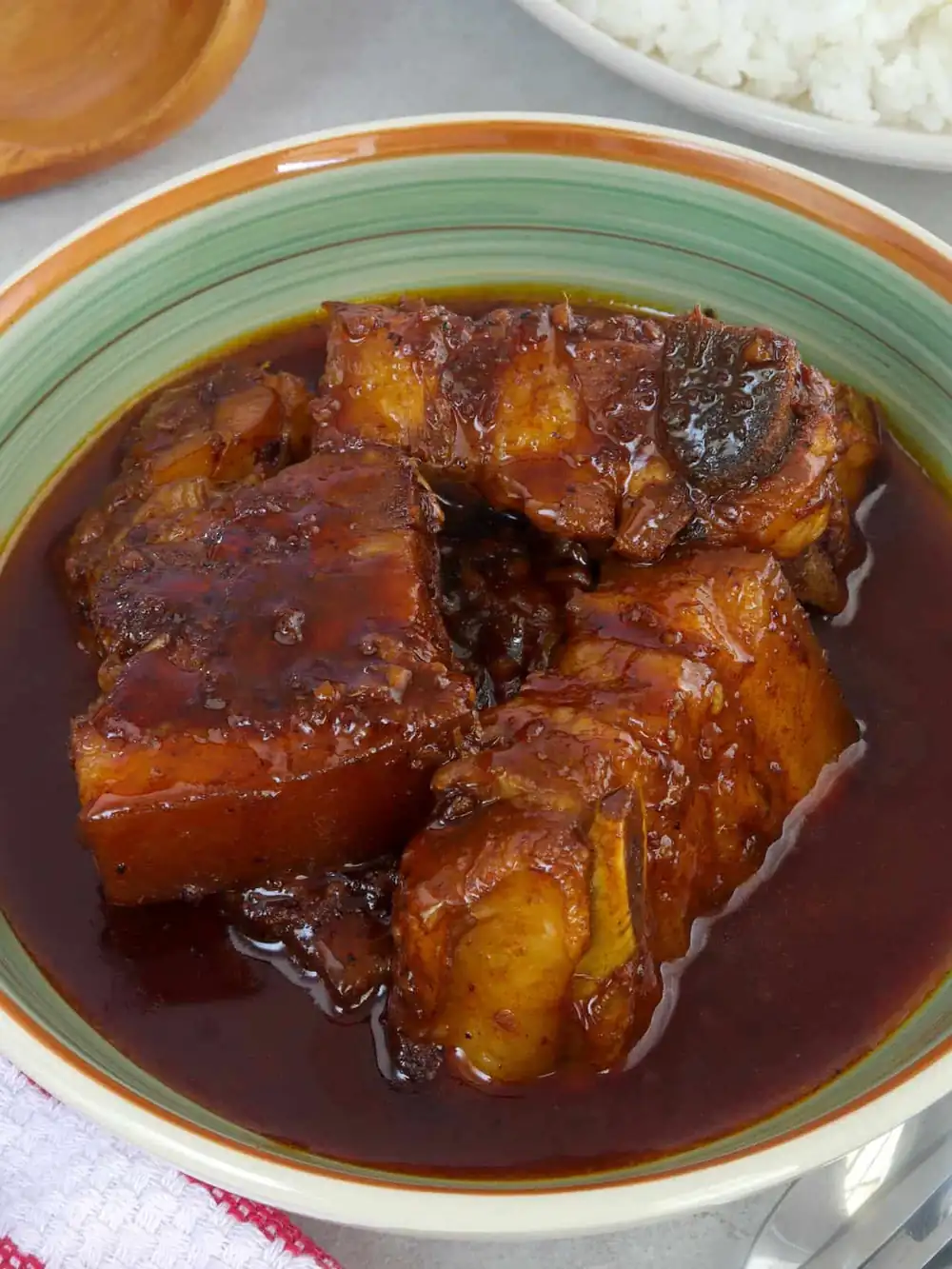
- 2 pounds pork belly with ribs or spare ribs, cut into 2-inch pieces
- 1 tablespoon canola oil
- 1 onion, peeled and chopped
- 6 cloves garlic, peeled and minced
- 1 thumb-sized ginger, peeled and minced
- 1 tablespoon atsuete powder
- 1 cup vinegar
- 1/2 cup soy sauce
- 1 cup water
- 2 bay leaves
- 1 tablespoon brown sugar
- salt and pepper to taste
- In a wide pot over medium heat, heat oil. Add onions, garlic, and ginger and cook, stirring regularly, until softened.
- Add pork ribs and cook for about 3 to 5 minutes or until lightly browned.
- Add atsuete powder and cook, stirring regularly, until meat is evenly colored.
- Add vinegar and bring to a boil, uncovered and without stirring, for about 3 to 5 minutes.
- Add soy sauce and water. Bring to a boil skimming scum that floats on top.
- Add bay leaves.
- Lower heat, cover, and simmer for about 40 to 50 minutes or until meat is fork-tender and sauce is reduced as desired.
- Add brown sugar and stir to disperse.
- Season with salt and pepper to taste. Serve hot.
Perfect with steamed rice! Adobo, especially adobong manok, is one of the most popular dishes in the Philippines and is considered our national dish.
It is not surprising that you'll find variations of this ubiquitous stew from household to household, from one region to the next. you'll ribs adobo with atsuete or otherwise known as adobong pula, is an Ilonggo version that adds minced ginger and annatto to the usual ingredients of garlic, vinegar, and soy sauce for an exciting twist.
The procedure is the same as the classic pork adobo, requiring a simple braise to get the meat super tender and flavorful.
Ingredient notes
This adobo version includes ingredients such as ginger and atsuete, which gives it a distinct flavor.
- Pork- I like to use pork belly with ribs for this recipe, but Boston butt, picnic, or spare ribs are also great options.
- Vinegar- the recipe uses palm vinegar (a Filipino brand). You might need to adjust the amount if you’re substituting white distilled, which has a more pungent taste.
- Soy sauce- adds salty, umami flavor. You can substitute salt, which is the traditional seasoning in Ilonggo adobo.
- Onions, garlic, and bay leaves- these aromatics enhance the flavor
- Ginger- adds a distinct peppery taste
- Atsuete- adds natural coloring and a slight bitterness to the dish, so use it sparingly.
- Brown sugar- When the meat is just about tender and the sauce is halfway reduced, add a tablespoon of sugar to balance the tangy flavors with a sweetness.
Pork Ribs Adobo with Atsuete cooking steps
This is a short summary; check the recipe card below for the ingredient list and detailed instructions.
- Saute the onions, garlic, and ginger until softened and aromatic.
- Brown the pork to add depth of flavor. Pat the meat dry so it will sear properly and not steam. Do not overcrowd the pan, and cook in batches if needed.
- Add the atsuete powder and continue to cook until the pork is evenly coated.
- Add vinegar and allow to boil, uncovered and without stirring, for a good few minutes before adding the soy sauce and water to cook off the strong acid taste.
- Add soy sauce and water and continue to boil, skimming scum that floats on top. Add bay leaves.
- Simmer. Lower the heat, cover, and cook until the meat is fork-tender and the sauce is reduced.
- Sweeten with brown sugar.
- Season with salt and pepper to taste.
Cooking tips
- Cut the pork in uniform sizes to ensure even cooking.
- The flavors of the dish will concentrate as the sauce reduces, so season with salt if needed at the end of cook time to accurately gauge taste.
Frequently Asked Questions
Why do you put vinegar last in adobo? Some recipe versions may add the vinegar last, but I prefer to add mine early in the cooking stage.
Allowing it to boil uncovered and without stirring cooks off the strong acid taste and mellows out the flavor. What is the most important ingredient in adobo?
While vinegar is crucial, adding tanginess and prolonging the dish's freshness, other ingredients, such as soy sauce and aromatics, also contribute to the overall flavor. In this recipe, atsuete adds a distinct color and taste, and brown sugar sweetens the dish.
Serving suggestions
Like our adobong baboy with oyster sauce, this pork adobo with atsuete is delicious with steamed rice.
Serve with pickled vegetables such as atchara, mango, or cucumber to cut through the rich taste, and enjoy!
Storing leftovers
- Adobo is a great make-ahead dish and stores well for days. Transfer to an airtight container and refrigerate for up to 3 days or freeze for up to 2 months.
- Reheat in a saucepan to an internal temperature of 165 F or warm in the microwave at 2 to 3-minute intervals, stirring well after each interval to heat evenly.
- Looking for more delicious ways to prepare this Filipino stew? Try it with luyang dilaw!
Notes
- Browning the meat to add depth of flavor. Pat dry the pork well so it’ll sear properly and not cook in their steam. Do not overcrowd the pan and use a wide pan or cook in batches as necessary.
- Allow the vinegar to boil, uncovered and without stirring, for a good few minutes before adding the soy sauce and water to cook off the strong vinegar taste.
- The flavors of the dish will concentrate as the sauce reduces, so season with salt if needed at the end of cook time to accurately gauge taste.
Nutrition Information
“This website provides approximate nutrition information for convenience and as a courtesy only.
Nutrition data is gathered primarily from the USDA Food Composition Database, whenever available, or otherwise other online calculators.”