The Man Who Cooks the Mountain
Yoshihiro Narisawa left Japan as a teenager to learn the great kitchens of Europe. He came home with a question that has fed his restaurant for twenty years: what does this land taste like, if you listen to it?
He was nineteen when he left, and for eight years he cooked in places whose names are a kind of scripture: in Switzerland, in Lyon, in Paris, in the Italian kitchens where sauce is a religion. He learned, he says, how to be serious. Then he came back to Japan, opened a small restaurant, and began the slow work of forgetting enough of what he had learned to hear his own country.
What he heard was the satoyama, the old word for the worked woodland at the edge of a village, where people and forest have shared the same water for a thousand years. It is not wilderness and it is not farmland; it is the place in between, and Narisawa decided it was the place his cooking would come from. That decision, made quietly in 2003, has become one of the most influential ideas in modern Japanese food.
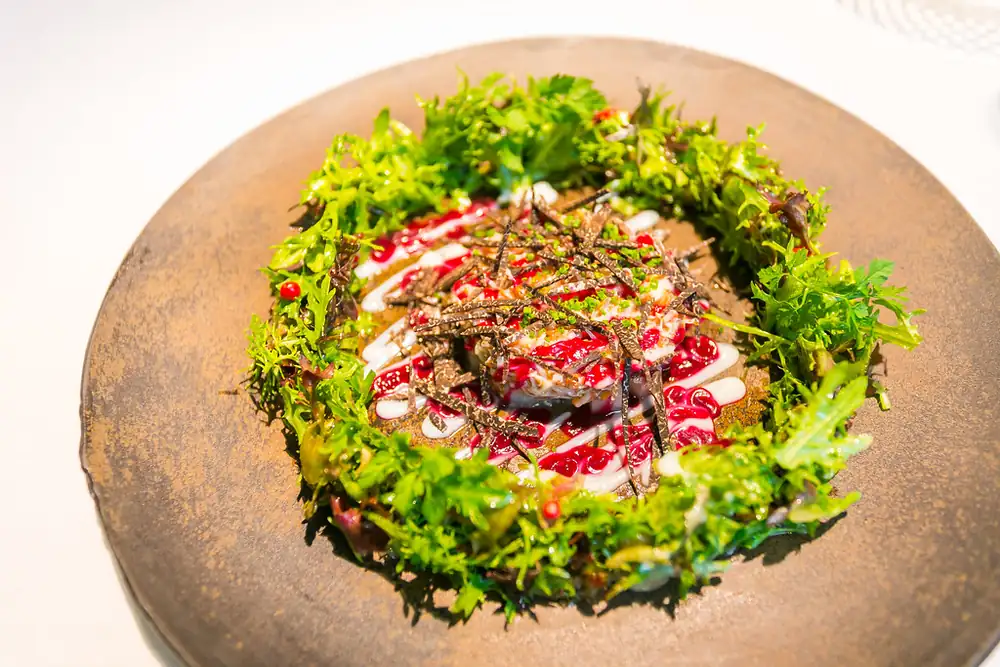
To eat at his table in Minami-Aoyama is to be taken on that walk. The courses move from the cold clean things of the river to the dark sweetness of the soil to the animals of the hills, and at every step the plate is simpler than you expect. He does not decorate. A leaf is a leaf. A broth is a broth. The famous Soup of the Soil, made from clean forest earth, is served in a bowl without a garnish, because a garnish would be a lie about where it came from.
He talks about water more than any chef I have met. The snowmelt of the Tateyama range, the rivers of Toyama, the particular softness of the spring that feeds a certain rice paddy: these are, for him, the beginning of flavour, before any cook has touched anything. The sake he pours comes from that water; so does the rice; so, in a sense, does the soup, since a forest is only water that has been given time and roots. To eat his menu is to follow the water downhill.
And there is his quiet insistence that a restaurant should leave the land better than it found it. The producers he works with are paid to farm in ways that restore soil; the kitchen wastes almost nothing; the ash from the grill becomes the sauce for the beef. None of this is announced at the table. You find it out later, if you ask, and it changes the way you remember the meal: not as a luxury, but as a kind of care.
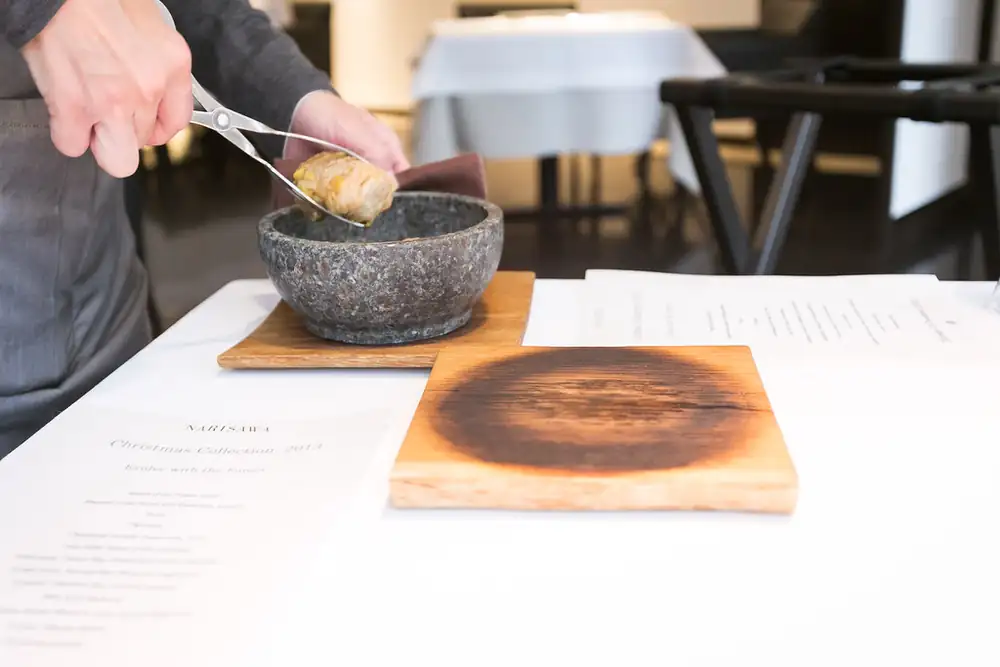
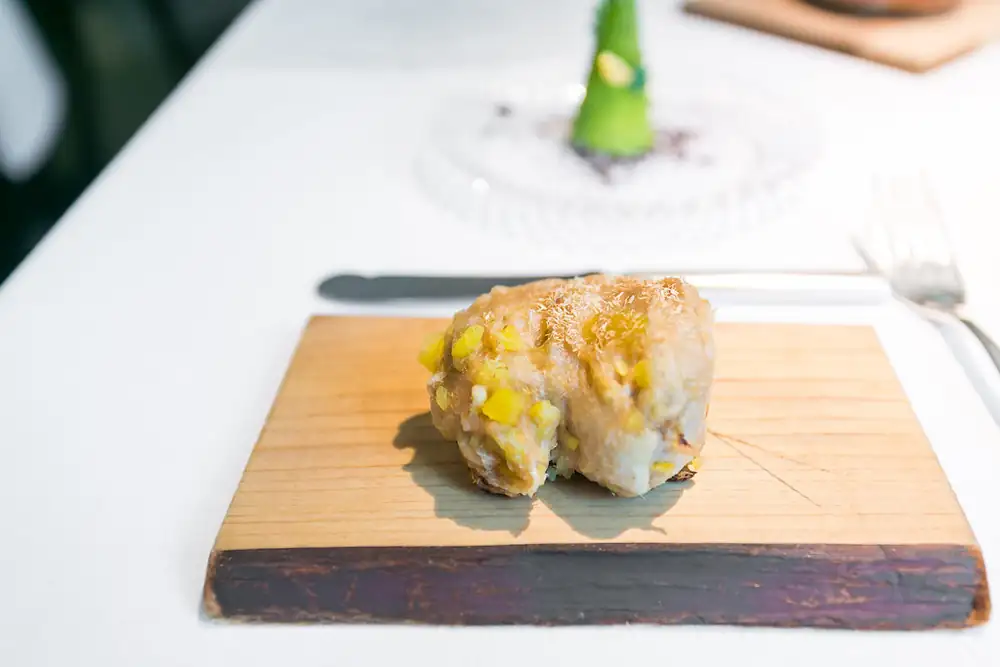
There is a tenderness in the way he treats his producers that you can taste. The beef comes from a single farm in Toyama whose cattle he has visited; the rice from a paddy he knows by the shape of its hills; the yeast that raises his Bread of the Forest was gathered from a tree and has been kept alive in the kitchen for years, fed daily like a pet. When the bread is set beside you to rise, what you are watching is not a trick. It is his way of letting you meet the forest before you eat it.
I asked him once what he wanted a guest to feel. He thought for a while and said something like: that they had been somewhere. Not somewhere fancy. Somewhere real. It is the most honest answer I have had from a chef, and it explains the strange peace of the room, the low light, the pale wood, the staff who move like people in a library.
The desserts, which in his hands are the least sugary and most moving part of the meal, tell you what he means. A chestnut, candied over days until it is almost translucent, with cream and a thread of mountain honey. A sorbet of fermented plum so sharp it makes your eyes close. A cup of tea made from roasted stems. You finish and the taste that remains is not sweetness but a kind of green quiet, and you carry it out into the neon of Tokyo like a secret. That is what he cooks. Not dishes. A place.