The Tokyo Restaurant Where Bread Rises at Your Table and Soup Is Made From the Earth
Narisawa is the reservation Tokyo's chefs make when they want to be reminded why they cook. Here is what the evening is really like, course by course, and how to get a seat.
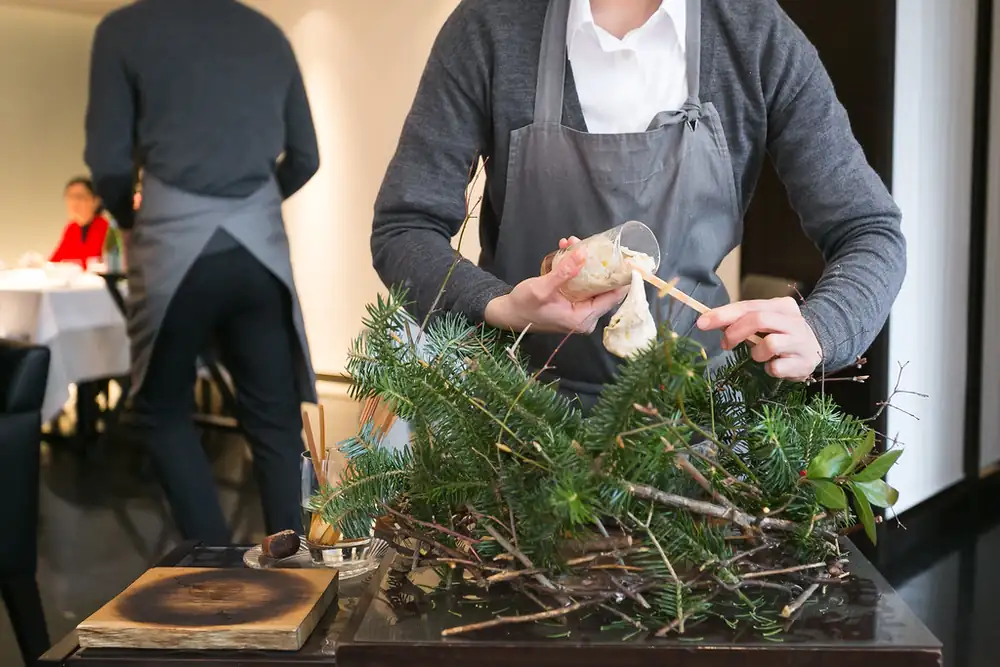
You find Narisawa on a side street in Minami-Aoyama, behind a door that gives nothing away. Inside there are fewer than thirty seats, a wall of pale wood, and a hush that is not stiff, just attentive. The staff greet you by name. Within a few minutes a glass of something cold and slightly cloudy is in your hand, a sake chosen for the season, and the evening has begun without anyone announcing it.
The menu changes with the months, but its shape does not. It opens with water and the things that live in it: on the night I ate, a single oyster from Hokkaido under a spoon of its own frozen juice, so cold it made my teeth ache and so clean it tasted like the sea had been filtered through snow. Then comes the famous soup, a clear dark broth made from forest soil that has been cleaned and simmered for hours. It smells like the floor of a wood in October. Do not let the idea stop you; it is one of the gentlest things you will ever put in your mouth.
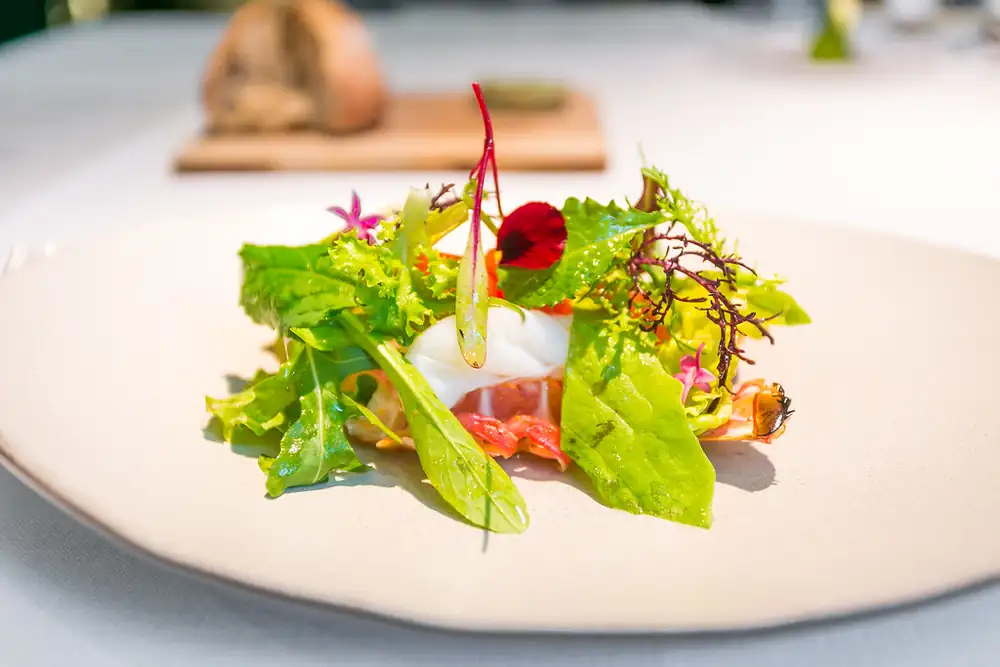
Somewhere in the middle of the meal a bowl of dough is put beside your plate and left to rise while you eat. This is the Bread of the Forest, chestnut flour and a house yeast, and when it has doubled it goes into a heated stone and comes back to you steaming, with a butter that has been whipped with charred leek. Tear it. Do not be polite about it. It is the best bread in Tokyo and possibly the reason half the room booked.
A word about the room, because it matters here. Fewer than thirty seats, arranged so that nobody is looking at anybody else; a wall of pale, unvarnished wood; a corridor lined with sake and wine that you walk through on the way in, lit like a chapel. The light over the tables is warm and low. Phones are not forbidden, but you will notice that almost nobody uses one, and that after twenty minutes you have stopped wanting to.
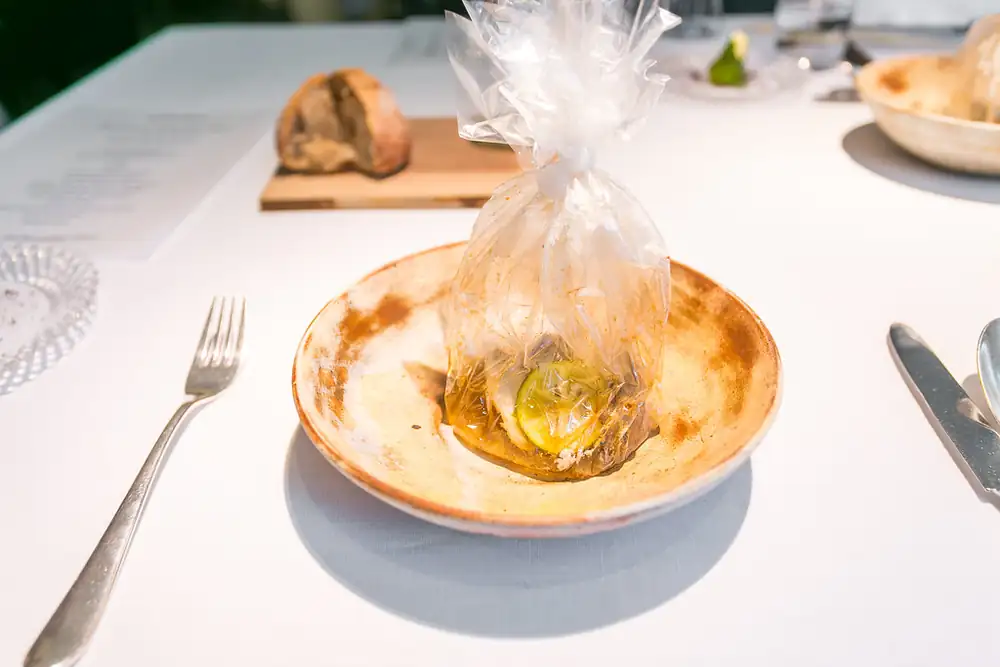
The staff are worth knowing. Ask the sommelier where a bottle comes from and you will get a village, a brewer's name and a story about the water. Ask the cook who brings the bread what the yeast is and you will be told the tree it was gathered from. This is not performance; it is a kitchen that knows its ingredients personally and is happy to introduce you.
The main courses are where you feel how carefully the produce is chosen. A cut of wagyu from Toyama comes off the charcoal pink and glossy, sliced thin, with a sauce made from vegetable ash that tastes of smoke and iron and does something to the fat that I can only describe as waking it up. A piece of eel is lacquered with a reduction of its own bones and set on rice cooked in dashi, and for two minutes nobody at the table said a word.
Practicalities: there are lunch and dinner courses, and in summer a special pairing menu built around the produce of Toyama, with sake and wine, at 70,000 yen before tax and service. Reservations open well in advance and the tables go quickly; a hotel concierge can help, and the restaurant's own site takes bookings. Dress is smart. Allow three hours. Tell them about allergies when you book, not when you sit down, because the courses are built for you from the morning of your visit.
What to order if you are given a choice: there is no choice, and that is the point. What to drink: ask for the sake pairing and let them lead; the sommelier moves from crisp to rich to faintly sweet with a precision that made the fermented plum sorbet at the end taste like a chord resolving. What you will remember a year later: the bread, the soup, the silence when the eel arrived, and the feeling on the street afterwards that the city was greener than when you went in.