“You're Not Going to Find a Paella Like This in a Restaurant”
So fundamental is the role of paella in Valencian life that an entire language has developed around it.
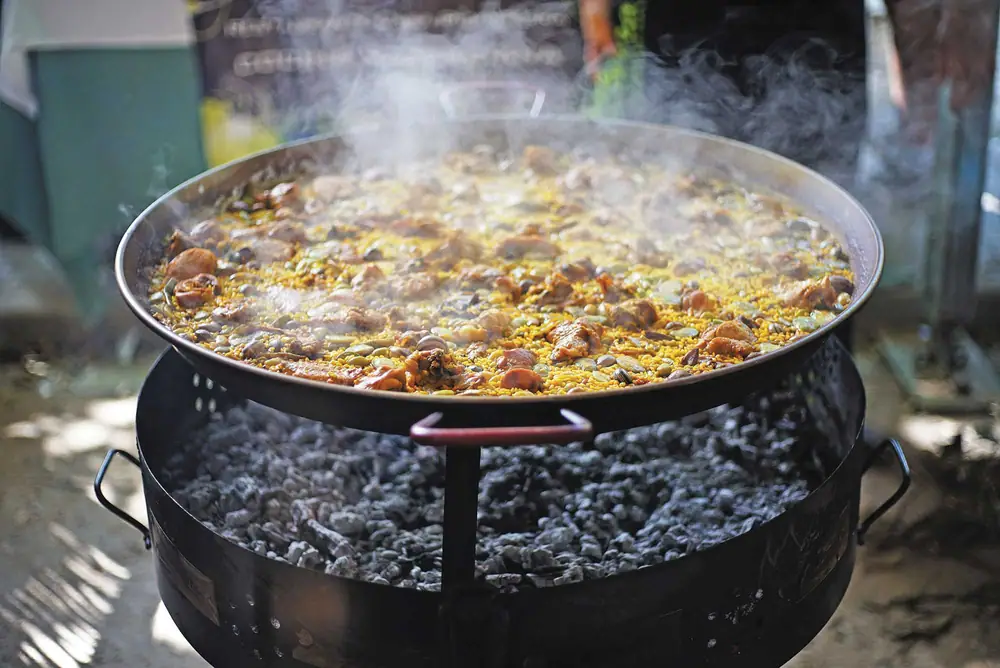
“You’re not going to find a paella like this in a restaurant.”
To pagar una paella, literally "to pay a paella," is to make a bet. When kids are acting up or being indecisive, parents might say: ¿Què farem, paelleta o arròs caldós? "What should we make, paella or soupy rice?"
Most important of all is the word comboi, which Valencians use to describe the entire paella experience: the ritual that surrounds cooking and gathering to eat, drink, and be merry. To fully understand comboi, you need to be born into the culture, a luxury life never afforded me, so I did the next best thing: I befriended Salvador Serrano, a native Valencian, and begged him to take me home with him. I have lived in Spain for six years, but it isn't until I enter his mother's kitchen in Xeraco, Valencia, where she's just about to scatter rice into a bubbling pan of meat and vegetables, that I begin to understand its rice culture.
Mercedes Caballer Tarin represents the best of the Valencian character: huge-hearted, opinionated, hospitable, as devout in her faith as she is in paella. What makes Spain home to one of the world's most underrated rice cultures is its remarkable breadth of rice-based dishes—from soupy, seafood rices of the coast to the rabbit- and snail-studded dry rices of Alicante's interior.
Paella, though, is the undisputed king of the Iberian rice world. Here, it's a way of life.
Baptisms, weddings, family reunions: They all are powered by paella. Born and raised in Alzira, 30 miles south of Valencia, Mercedes cooks a version true to her town: Beyond the traditional base of sofrito, chicken, and rabbit, she adds pork ribs, blistered red peppers, and meatballs peppered with caramelized pine nuts and suffused with the scent of cinnamon.
The rice itself is a textbook study of taste and texture: firm but swollen, generously seasoned, not the rusty color of restaurant rice, but the brighter yellow of Valencian homes, where a few shakes of food coloring is obligatory. I've had near-perfect restaurant paellas, soul-soothing soupy rice, highfalutin arroz meloso made by Michelin-celebrated chefs. But this is different: tradition forged in the comfort of the home, a communion between food, friends, and family.
“I must say, I'm pretty happy with how it came out,” she says, pulling out her smartphone to take pictures of the empty pan. “You're not going to find a paella like this in a restaurant.”
- Who: Paella