How to caramelize onions properly: low heat, salt at the beginning and lots of patience
Caramelized onions add flavor, aroma and sweetness to soups, sauces, meats, stews, salads and hamburgers, and are achieved with slow cooking and time.
Sautéing and caramelizing are not the same thing, and the difference lies in the process and the time. When sautéing, onions soften and become translucent or lightly browned; when caramelizing, they are cooked longer over low heat, allowing them to release their juices and develop their natural sweetness.
The recipe calls for adding a sweetener, such as sugar, molasses, or balsamic vinegar. However, thanks to their natural sugars, onions can be caramelized without adding any sugar.
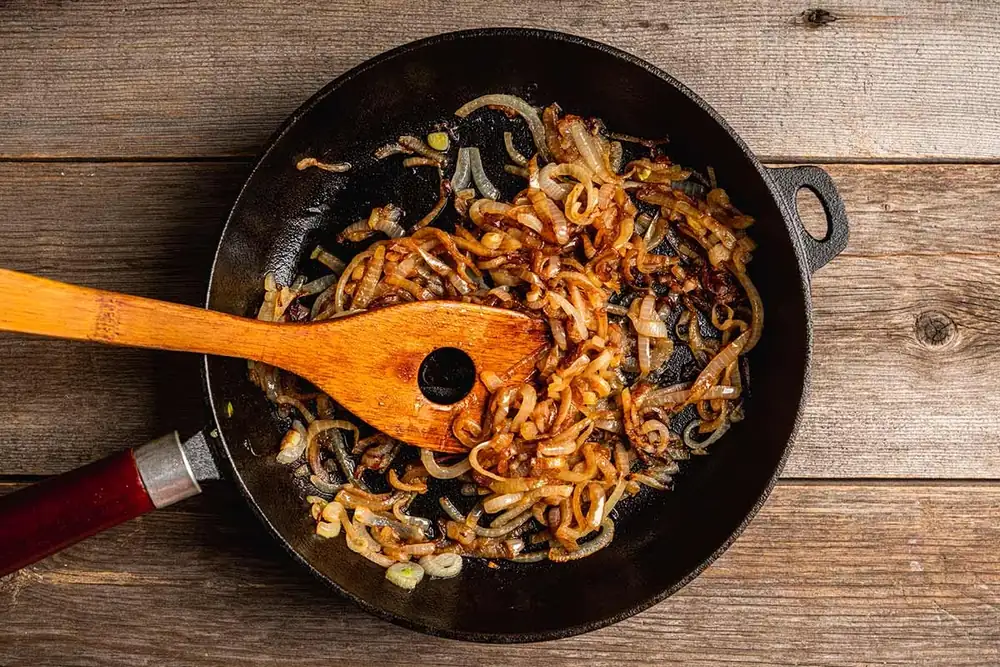
The most important thing is the low temperature and patience. The onions need about 30 minutes to soften, after which they lose moisture and turn a golden to dark brown color with a rich, sweet flavor. Stir them occasionally to prevent burning.
Salting them when you cut them, either before or at the beginning of cooking, helps draw out their juices because they soften evenly. It's best not to increase the heat to speed up the process, because the onions could brown on the outside without caramelizing on the inside.
For caramelizing, dried yellow or white onions are best because they contain enough natural sugars; yellow onions, in particular, develop a deep color and a sweet flavor. Red onions also work, with a milder flavor and a distinctive color.