Where to store sweet potatoes for longer, away from the refrigerator
Stored next to potatoes or in the refrigerator, sweet potatoes can soften; a cool, dry, dark, and well-ventilated place helps to preserve them.
Many people store sweet potatoes in the cupboard next to potatoes, or even in the refrigerator, thinking they'll last longer that way. However, these two methods aren't necessarily the best. A cool, dry, dark, and well-ventilated place is preferable.
Sarah Alvernaz, a sweet potato grower and president of the American Sweet Potato Council, explains: “Sweet potatoes should be stored in a cool, well-ventilated place.” According to her, “They don’t like excessive heat or intense cold. Above all, don’t put them in the refrigerator or freezer: low temperatures harden them inside and alter their flavor.” For this reason, an overly warm environment is also unsuitable.
The ideal place is a cool pantry, a dry cellar, or a well-ventilated storage room, as long as it's not damp or exposed to light. A basket with holes or a perforated container allows air to circulate and limits the humidity that promotes spoilage. A closed, warm cupboard, especially near the oven or stove, is less suitable.
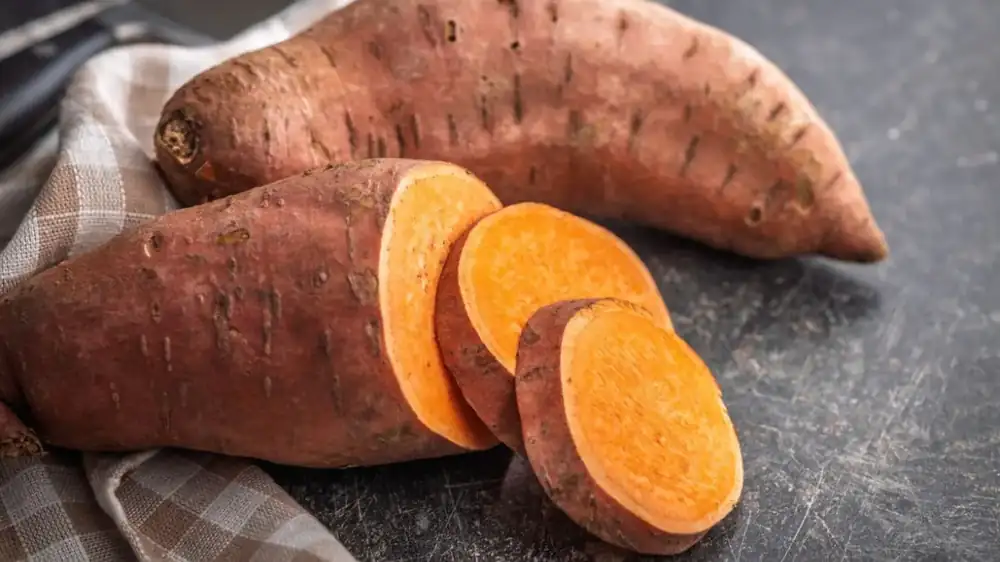
According to Alvernaz, "the preservation methods are identical for all varieties," although shelf life can vary depending on their composition. Those with red skin and orange flesh have more water, so they spoil faster than those with white flesh, which are richer in dry matter. It's advisable to check stored tubers and discard any with soft spots, leaks, or clear signs of rot.
If a sweet potato starts to sprout, the sprouts can be removed, and the sweet potato will still be edible if it remains firm and shows no other signs of spoilage. One grower notes, "The great thing about sweet potato sprouts is that they're edible." He adds that some specialty stores sell sweet potato leaves, similar to fresh spinach, unlike regular potatoes, whose sprouts require more care.
Once cooked, sweet potatoes should be stored in the refrigerator, preferably in an airtight container, or frozen if you want to preserve them longer. If a tuber starts to spoil, Alvernaz recommends removing the damaged part and cooking the remaining good flesh before freezing it.