
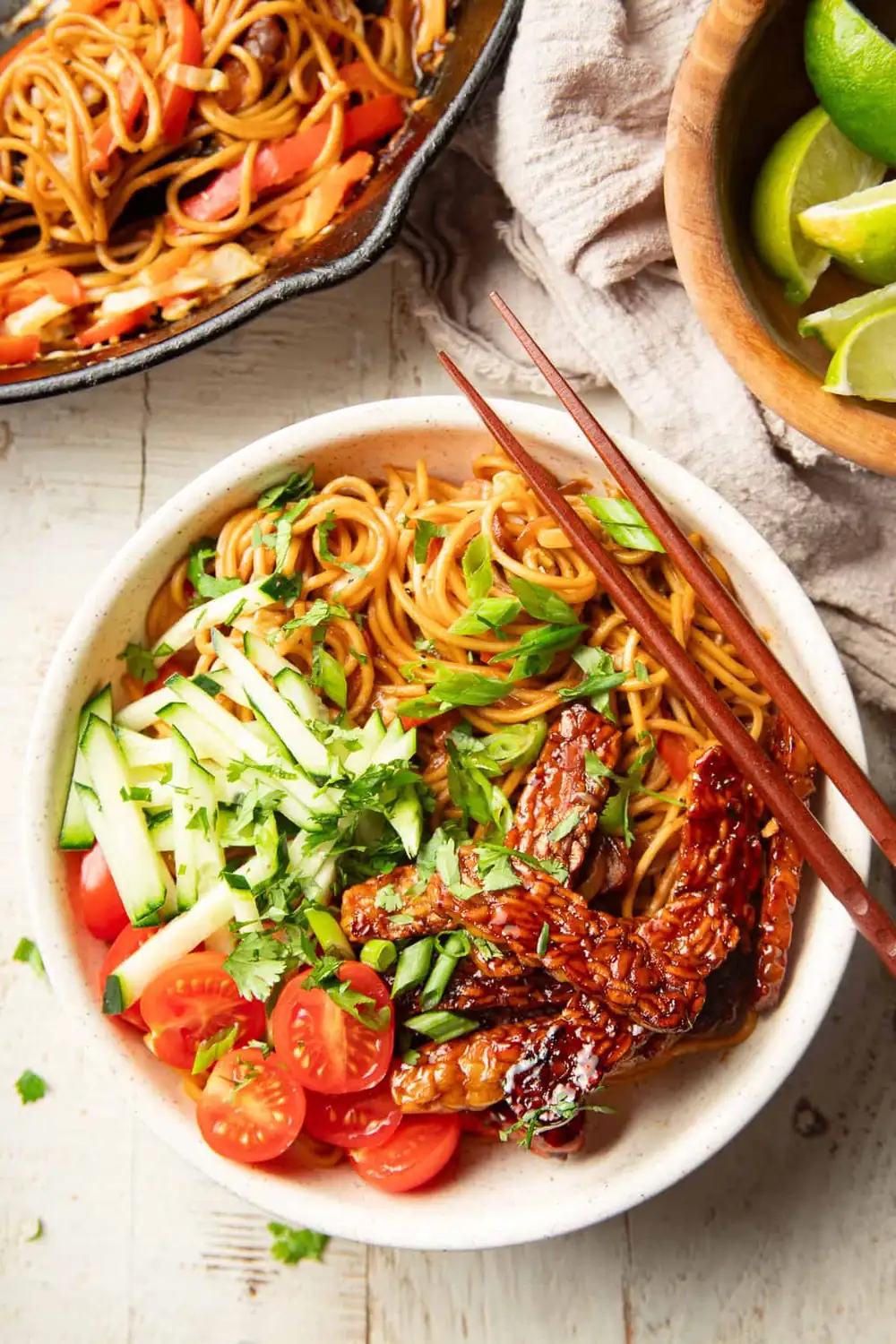
Cuencos de fideos de tempeh picante y dulce
Estos fideos de tempeh se hacen con tiras de tempeh crujientes salteadas en sartén cubiertas en un glaseado dulce y salado, luego se sirven con una mezcla de verduras frescas y salteadas sobre fideos tibios en una salsa de cacahuete ligera.
- 6 onzas de fideos de trigo secos (como los fideos ramen)
- 1/4 taza de kecap manis ((salsa de soja dulce, Nota 1))
- 2 cucharadas de jugo de lima
- 2 cucharaditas de sambal oelek
- 2 cucharadas de mantequilla de cacahuete natural cremosa
- 1 cucharada de salsa de soja
- 2 cucharadas de agua (o la cantidad necesaria)
- 2 cucharadas de aceite vegetal (divididas, más un chorrito adicional si fuera necesario)
- 1 paquete (8 onzas/227 gramos) de tempeh
- 2 tazas de repollo verde en rodajas
- 1 taza de chalotas en rodajas
- 1 pimiento rojo mediano (cortado en tiras)
- 3 dientes de ajo (picados)
- 1 taza de tomates cherry (cortados por la mitad)
- 1/2 pepino mediano (cortado en juliana)
- 2 cebolletas, (picadas)
- 1/4 taza de cilantro fresco picado
- Pon a hervir una olla grande con agua salada. Agrega los fideos y cocínalos según las instrucciones del paquete, hasta que estén al dente. Cuando estén listos, escúrrelos en un colador.
- Prepara la salsa mientras se cuecen los fideos. Primero, mezcla solo el kecap manis, el jugo de lima y el sambal oelek. Añadirás el resto de los ingredientes más tarde. Reserva la mezcla por ahora.
- Coloca una sartén grande a fuego medio y añade una cucharada de aceite. Muévela para cubrir el fondo de la sartén y deja que se caliente durante un minuto.
- Mientras se calienta el aceite, corta el tempeh en unas 18 tiras finas (cortándolas paralelamente al lado más corto).
- Agrega las tiras de tempeh a la sartén en una sola capa. Cocínalas durante unos 4 minutos por cada lado, hasta que estén doradas y crujientes. Vierte con cuidado solo la mitad de la salsa sobre las tiras de tempeh. Cocínalas durante unos 2 minutos más, dándoles la vuelta una vez, hasta que la salsa espese y se caramelice. Retira el tempeh de la sartén y colócalo en un plato.
- Bate la mantequilla de cacahuete y la salsa de soja con el resto de la salsa, luego diluye la mezcla con 2 cucharadas de agua, o la cantidad necesaria para que sea fácil de verter.
- Agrega la cucharada de aceite restante a la sartén y sube el fuego a medio-alto. Deja que el aceite se caliente durante un minuto y luego agrega las chalotas. Cocina las chalotas durante unos 4 minutos, revolviendo con frecuencia, hasta que se ablanden y comiencen a dorarse por los bordes. Retira las chalotas de la sartén y colócalas en el plato con el tempeh.
- Si la sartén está seca, añade un poco más de aceite y luego agrega la col y el pimiento. Cocina las verduras durante unos 2 minutos, removiendo constantemente, hasta que adquieran un color más brillante y queden tiernas pero crujientes.
- Aparta la col y el pimiento hacia los lados de la sartén y añade el ajo. Sofríe el ajo durante unos 30 segundos, removiendo constantemente, hasta que esté muy fragante.
- Agrega los fideos cocidos y las chalotas a la sartén y vierte con cuidado la salsa por encima. Cocina los fideos y las verduras en la salsa durante 1 o 2 minutos, hasta que se calienten y la salsa se adhiera a los fideos.
- Retira la sartén del fuego. Divide los fideos en tres tazones y cúbrelos con el tempeh, el pepino y los tomates cherry. Espolvorea cada tazón con cebolleta y cilantro picados y sirve inmediatamente.
These tempeh noodles are made with crispy, pan-fried tempeh strips smothered in a sweet-and-savory glaze, then served with a mix of fresh and stir-fried veggies over warm noodles in a light peanut sauce. They're hearty, comforting, and perfect for meal prep or easy weeknight dinners.
I love doing all kinds of creative things with tempeh. I make it into tempeh bacon, tempeh ribs, and even tempeh burgers. All delicious! But sometimes it's nice to just let tempeh be tempeh. Tempeh is a staple in Indonesian cuisine, and in Indonesia, you're not likely to find it masquerading in the form of a meat substitute. Instead, you might find it fried and seasoned with ingredients like sweet soy sauce, chili paste, and aromatic spices. That's exactly how I prepared it for these tempeh noodle bowls!
I'm not going to pretend this recipe is 100% authentic Indonesian cuisine, but it's definitely inspired by it, and it's some of the tastiest tempeh I've ever eaten!
Kecap manis, also known as sweet soy sauce, is the star seasoning, and it caramelizes beautifully on pan-fried tempeh strips, giving them delightful crispy edges and amazing flavor. This tempeh is scrumptious on its own, but here we're serving it over warm noodles tossed in a sweet-and-savory peanut sauce with stir-fried cabbage and bell pepper. Juicy cherry tomatoes and crisp cucumber strips add the perfect fresh contrast. It's the most amazing blend of flavors and textures, and I know you're going to love it.
Noodles. You can really use any variety of noodles here, as long as they're vegan. I recommend wheat noodles, and I developed the recipe with ramen noodles. Lo mein and yakisoba noodles are fine (check the ingredients for eggs), and even spaghetti will work in a pinch.
Kecap manis. This is an Indonesian sweet soy sauce. You can buy it in an Asian market or online. A mix of regular soy sauce with some sugar will work if you can't find kecap manis.
Lime juice. Stick with freshly squeezed lime juice for the best flavor.
Sambal oelek. This is an Asian chili paste that a lot of regular supermarkets carry in the international aisle. You can also get it in an Asian market, or substitute sriracha if needed.
Peanut butter. Stick with peanut butter that's natural (runny) and creamy (not chunky). This will give your sauce the best texture and flavor.
Soy sauce.
Water.
Vegetable oil. Any neutral high heat oil will work, such as peanut, canola, or avocado oil.
Tempeh.
Green cabbage. Red cabbage is fine, if you prefer it.
Red bell pepper.
Garlic.
Cherry tomatoes. Feel free to dice up a large tomato instead.
Cucumber.
Scallions.
Cilantro.
Tip: To make this dish gluten-free, substitute rice noodles or 100% buckwheat soba noodles and use gluten-free tamari in place of the soy sauce. In place of the kecap manis, use 3 tablespoons of gluten-free tamari and 1 tablespoon of organic sugar.
How It's Made
Steps 1 and 2: Prepare. Start your noodles, you'll just cook them until al dente. Mix the kecap manis, lime juice, and sambal oelek in a small bowl. You'll add the rest of the sauce ingredients later.
Steps 3-5: Prepare and cook the tempeh. Slice the block into thin strips while you heat some oil in a skillet. Add your tempeh strips to the skillet and cook them for a few minutes on each side, until golden. Pour the sauce over them and cook them about 2 minutes longer, until the sauce is thick and caramelized on the tempeh. Remove them from the skillet.
Tip: If you normally find tempeh too bitter for your taste, try steaming it before cooking.
Step 6: Finish the sauce. Whisk in the peanut butter and soy sauce, then thin it with a bit of water.
Step 7: Cook the shallots. Add some more oil to the skillet, let it heat up, then add sliced shallots. Cook them for a few minutes, stirring often, just until they soften and start to brown. Take them out of the skillet when they're done.
Step 8: Cook the veggies. You can add more oil to the skillet if needed, then add your cabbage and pepper. Stir-fry the veggies for a couple of minutes until they become tender-crisp.
Step 9: Cook the garlic. Push the cabbage and pepper aside, then add your minced garlic to the skillet. Cook it very briefly, stirring the whole time to prevent burning, until it gets very fragrant.
Step 10: Add the noodles and sauce. Add the noodles first, along with the cooked shallots, then the sauce. Cook everything for a minute or two until it's hot, and the noodles are nicely coated in sauce.
Step 11: Finish and serve. Take the skillet off the heat, then split the noodles up among bowls. Add your tempeh, halved cherry tomatoes, and julienne-cut cucumber, then sprinkle everything with chopped scallions and cilantro. Dig in right away!
Variations
Rice bowls. Instead of noodles, add some leftover cooked rice to the skillet in step 10. Do everything else exactly the same. You'll end up with a peanut-flavored fried rice base for the tempeh and veggies.
Veggie swaps. Replace the cabbage and peppers with broccoli, cauliflower, asparagus, or snap peas. Replace the tomatoes and cucumbers with carrots, radishes, or fresh greens.
Add toppings. The sky is the limit here! Add sliced avocado, chopped peanuts, toasted sesame seeds, chili crisp, or basically whatever sounds good to you.
Leftovers, Storage & Meal-Prep
If possible, store the components of this recipe separately, noodles in one airtight container, raw veggies in another, herbs in another, and tempeh in another. Everything will keep in the fridge for 3 to 4 days. The noodles can be reheated in a skillet on the stove or in the microwave, adding a splash of water if the sauce has gotten dry. The tempeh is best reheated in the microwave.
You can prep everything completely in advance if you like, then just reheat and assemble before serving. Alternatively, mix the sauce, prep the veggies, mince the garlic, then just do the cooking parts of the recipe before serving.