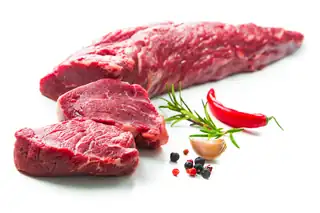
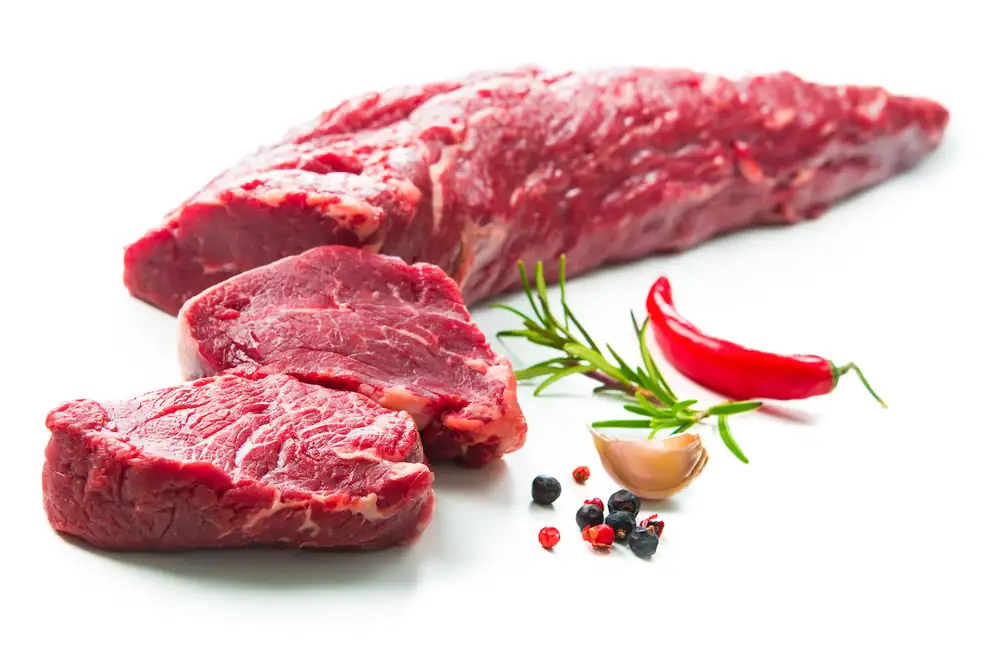
El diafragma, un corte de carne poco conocido, tierno y muy sabroso
El diafragma es un músculo bovino del quinto cuarto que muchos carniceros venden al final del día, después de despachar las partes más valiosas del animal.
Among the animal's anatomical features are some that are little known or underutilized. The diaphragm is one of the smallest cuts: a medium-sized animal yields between 600 and 700 grams. It's a third-grade cut, although it's high in iron and an excellent source of vitamin B12 and other micronutrients.
It is the animal's main respiratory muscle, just like in humans. It is located between the last ribs, near the sternum. Because it is a constantly moving muscle, it is highly vascularized and has a deep, vibrant red color. Unlike other cuts, it has little fat and connective tissue because it performs a specific function without exerting considerable force. This is why the meat is very tender and flavorful when cooked properly.
Although it is little known, in some regions of Italy it is a key ingredient in well-known traditional recipes, such as Ragù alla Bolognese.
Due to its low connective tissue content, cooking must be quick and at a high temperature, preferably in a frying pan, grill, or cast-iron skillet, so that the Maillard reaction occurs promptly. Before cooking, it's advisable to marinate it to create a flavorful and tender marinade. Furthermore, the cut is covered by a tough connective tissue membrane that must be removed very carefully, tearing it directly from the meat, an operation that requires skill with a knife.
The diaphragm can be used to prepare countless dishes and cooking methods. According to Beker, "Anyone can be a good cook, as long as they're passionate about it!"