Por qué una mandolina mejora tus ensaladas caseras
Las ensaladas de restaurante suelen tener más variedad que las caseras, y una mandolina ayuda a acercarlas a ese nivel con cortes finos y uniformes.
When eating out, there are countless options, from microgreens to roasted beets. Homemade salads, on the other hand, are often limited to a mix of bagged salad with some chopped cucumbers and tomatoes. However, they don't have to be boring: almost everything served in a restaurant can be prepared at home.
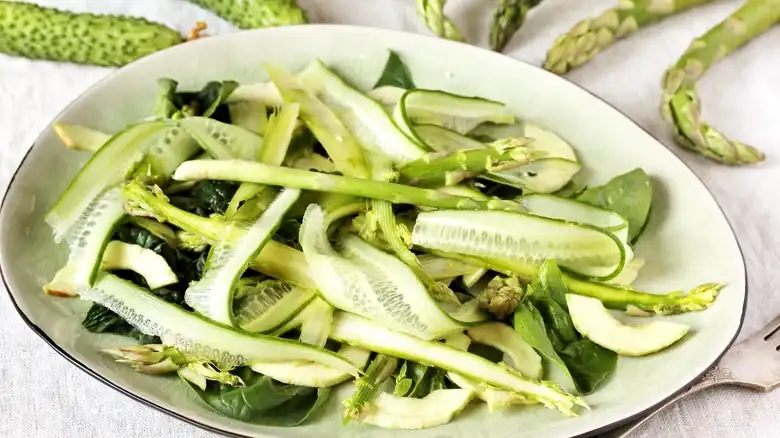
One key is to use unusual fruits and vegetables in salads, taking inspiration from seasonal produce such as Brussels sprouts, asparagus, radishes, peas, carrots, parsnips, squash, and fennel. For harder vegetables like carrots and radishes, chefs slice them very thinly.
A mandoline is a tool that slides food against a blade mounted on a flat panel to produce uniform, very thin slices. Andy Baraghani stated in his cookbook, The Cook You Want To Be, that his Benriner model "is not only more efficient than a knife, but does things no knife can do," according to Bon Appétit.
You don't need a professional mandoline: a small one, for around $20, is perfect for slicing potatoes for gratin, eggplant for Parmesan, julienned zucchini, or potatoes for pancakes. With an extra-thin slice, salads can rival those from the best restaurants. As Jamie Oliver says, with a few passes of the blade, something bland can become spectacular.
A beet becomes translucent slices that offer more surface area for dressing, according to America's Test Kitchen. If you don't have a mandoline, a vegetable peeler will also work, as chef Johnathan Waxman does at Barbuto in New York, according to the Los Angeles Times. In either case, it's advisable to use a guard or a cut-resistant glove, and keep the blades sharp.