Haramboure, el bistró vasco que dará que hablar en la ciudad
Aunque es una afirmación muy discutible y refutable, hay quienes aseguran (e incluso creen) que, actualmente, los 50 son los nuevos 30.
Although it is a highly debatable and refutable claim, there are those who assert (and even believe it) that, currently, 50 is the new 30. It is not known whether the Biscayan chef Patxi Zumárraga (Durango, 1973), recently joined the half-century club, agrees with it or not, but in his case, turning 50 has given a Copernican turn to his already long career.
For twelve years, the chef, trained alongside figures like Ferran Adrià, Aitor Elizegui, and Nobu Matsuhisa, was a partner in the La Ancha group where, together with Nino Redruello, he developed projects such as La Gabinoteca, the original Tatel, and Fismuler, a concept that has enjoyed seven years of uninterrupted success. Until one day he decided that the group's growth no longer fulfilled him, sold his shares, and invested the money in a new personal project, Haramboure, which opened in early September.
The restaurant's unusual name comes from the surname of Patricia Laura Haramboure, an Argentinian of Basque-French origin who has lived in Spain for over 20 years. She is the restaurant's manager and director, a partner in Zumárraga, and also comes from Fismuler. Haramboure, a French adaptation of Aramburu, means "head of the valley" and encapsulates the restaurant's philosophy, which focuses on small, artisanal producers and personally selected Basque fishermen.
The chosen space has been the semi-basement of the Madrid neighborhood of Salamanca where the Asturian Esbardos was located for several years and where Le Kañí, an ephemeral project of the group El Rompido that tried to combine traditionalism, Japanese influences and French influences, later passed through.
The renovation has been complete, transforming the previous almost disco-like atmosphere into a sophisticated and welcoming bistro with seating for around 100 people. And get this: just two days after opening, it was already nearly full at lunchtime.
The long menu ("and it could be three times longer," Zumárraga jokingly tells 7Caníbales) contains 40 savory dishes, which are divided into four different sections, whose titles not only preview the contents of each one but also serve as a summary of the restaurant's philosophy, which is none other than "a natural cuisine based on products of recognizable origin."
The first is titled “To nibble on: individual, just for you” and, as its name suggests, consists of small snacks, meant to be eaten almost in one bite, in which the chef gives free rein to his creativity, always starting with the product. A good example is the leek and prawn mochi, with a texture even more precarious than the Japanese version and an intense flavor (although tempered by a slight sweetness).
Or the chard stalks stuffed with tuna tartare, with an extraordinary and addictive spicy chard sauce. Incidentally, the tartare is only called that because of the cut; the fish isn't raw but cooked inside the stalk. Or, finally, the Ondarroa anchovy with whitebait and whitebait, which goes a step beyond the classic "marriage" to fully embrace the world of polyamory with a trio paying homage to the three classic preparations (fried, salted, and marinated in vinegar) of this oily fish, call it anchovy, whitebait, or whitebait, it's all the same.
“From the vegetable gardens of Bizkaia, Aranjuez, and a little further south” is the second section, dedicated to those vegetables that Zumárraga so admires. Pay attention, because here we find a dish destined to be one of the year's highlights: glazed celeriac like a duck breast, in which the celeriac is presented sliced and covered with a delicious duck jus. I insist: a truly outstanding dish.
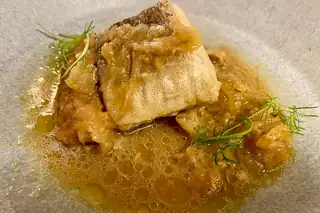
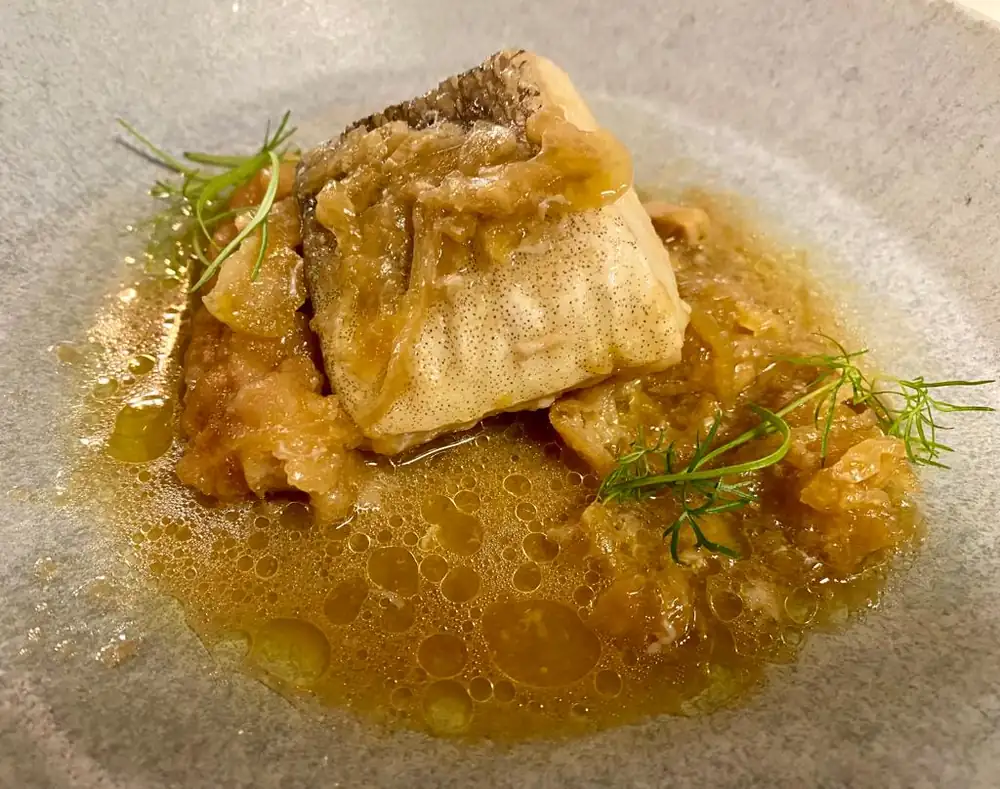
We move on to the third section: “From the inshore fishing ports of the Eastern Cantabrian Sea, today’s specials.” Although the rice with baby squid, clams, and parsley promised great bliss, it remains to be seen, as we opted for a dish that, at first glance, seemed more adventurous: cod ajoarriero with porra and wild fennel miso. Let it be said that the porra isn’t the Antequera-style kind, but rather the classic breakfast porra. Its texture and the slightly bitter note of the fennel give it a different feel than the traditional recipe.
Fourth and final section: “Meat: raised with care, small producers.” It includes eye-catching offerings like grilled milk-fed lamb belly with Biscayan snail sauce, or the revival of a once-luxurious product now a rare find in restaurants: free-range chicken thigh and drumstick, corn, and Sunday sauce. Our choice was grilled veal sweetbreads with lemon, a playful combination that tantalizes every taste bud, especially that exciting tangy-bitter blend of charred lemon.
As a side dish (which, by the way, is the same for all fish and meats), a refreshing sort of country salad with potatoes, egg and red onion.
There is a fifth and final section, served on a separate menu: desserts, of course. Eleven more options, bringing the chef's total to fifty. The Idiazabal cheese ice cream with Oiz strawberry jam and nuts replaces the ubiquitous cheesecake, while the hot cider and Chantilly cream baba is less alcoholic, and therefore less rich, than its rum-based counterparts.
Both are pleasant and suitable even for those with a less sweet tooth. The wine cellar, more than interesting, is quite diverse, combining modern and classic wines, and there are a few real gems (at prices to match, as you'd expect from the Salamanca district). And the service, with a few minor lapses typical of the first few days, has the most important qualities: helpfulness, enthusiasm, and interest, which more than make up for those lapses.
A restaurant that's going to be the talk of the town this fall. And later on, too.