
Palodú se traslada al centro de Málaga con la misma esencia y más libertad
Cristina Cánovas y Diego Aguilar llevan su cocina de Teatinos al centro de Málaga, con menús degustación que cambian según el mercado.
Around the Atarazanas market in the center of Málaga, a throng of tourists moves among the tables piled high on the sidewalk, where food arrives nonstop from the stalls. On the terrace of La Malagueña, they're still serving churros, even though breakfast time has passed. Four kilometers away, in the university area (Teatinos), the tasting menus of Cristina Cánovas and Diego Aguilar were already, to say the least, an exceptional find.
They started cautiously, barely in their twenties, with their savings and a bank loan. At first, they offered an internationally inspired tapas menu, suitable for all tastes, and focused on the neighborhood. Then they stepped on the gas: "Being on the outskirts, our potential clientele was local. Little by little, we moved away from tapas and half-portions, changing the dishes, until we arrived at tasting menus. It was a big risk," explains Cánovas.
They had to give a lot of explanations when they moved the kitchen to Teatinos. "The neighbors didn't care about the product, where we got it from, or who was behind it: they only cared about the price. But it wasn't ethical for us to prepare that kind of food. It wasn't our philosophy." They lost some customers and gained others, until they became the place every good friend recommends when someone asks where to eat in Málaga.
“Even so, we felt the city wasn’t listening to us” Cánovas laments. The final blow came from the City Council, which ordered them to remove the terrace after a neighbor complained, in a city where terraces are practically mandatory and where, on other streets, they’re piled up like Lego bricks. Balancing the books was a struggle, but the kitchen kept going.
Like the licorice root, the sweet, woody root of the licorice plant that gives the restaurant its name and which several generations have nibbled on, the project endured and sought a new location. Now the restaurant has moved to the city center with the same essence: it still offers its oyster with smoked chili, its codium with Iberian pork jowl (which has replaced the sea anemone, something they regret), and its lamb meatballs.
“We wanted to bring what we were doing in Teatinos to the city center, to start there. We’ll continue working on new dishes, but right now we wanted people to appreciate the ones we already have” they explain. Their two menus, with 13 courses (€75) and 16 courses (€90), will hardly be printed: they will change frequently depending on what’s available at the market and their desire to experiment. “This will give us more freedom and the diners the opportunity to return and find a different offering each time they visit.”
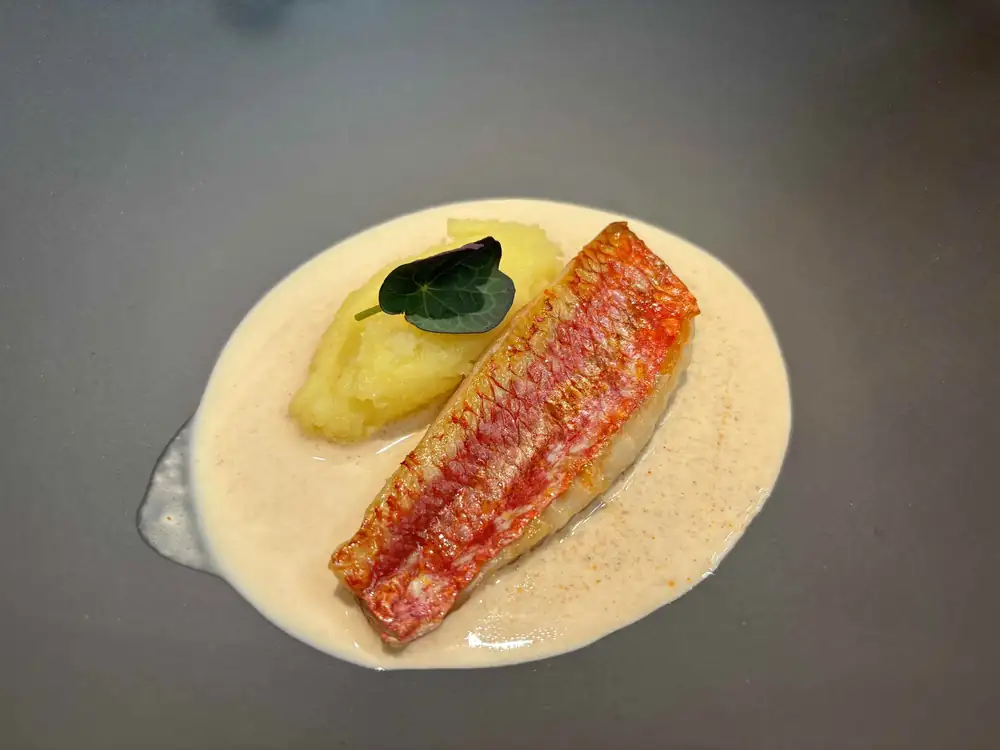
The cuisine is simple and practical, with no more than three elements on the plate, relying on broths, sauces, marinades, and infusions made with seasonal, locally sourced ingredients from committed producers. For example, the grilled red mullet, incredibly juicy, is served with a gazpachuelo made from its bones, and the peppered squid with mushrooms combines a sauce traditionally associated with meat with a delicate piece grilled on the robata grill. The Iberian pork knuckle broth remains a classic, and their pil-pil sauce with honey accompanies a perfectly cooked leek.
Much of the cuisine evokes the Málaga that now welcomes them. The appetizers include a wheat, onion, and anchovy tartlet, a pringá profiterole, and a zoqué malagueño, one of the hundreds of names, perhaps the most typical, for gazpacho in some towns of the province. "There's nothing to rescue from Málaga's gastronomy; we just have to remember it," says Diego, a descendant of a family of restaurateurs from Campillos. The couple, trained at La Cónsula, have spent more than ten years striving to make their cuisine speak its own language: they call it dual cuisine. Their suppliers, such as the Iberian ham from Dehesa de los Monteros, the vegetables from La Despensa D'lujo, and the bread from Ana La Fantástica, have also moved with them to the city center.