Zuara, direct connection to Ginza
While Japan is abuzz with such quintessentially Spanish treasures as flamenco, sherry, and Iberian ham, Spain has long been captivated by the cuisine of the Asian country (declared, incidentally, an Intangible Cultural Heritage of Humanity by UNESCO).
While Japan is abuzz with such quintessentially Spanish treasures as flamenco, sherry, and Iberian ham, Spain has long been captivated by the cuisine of the Asian country (declared, incidentally, an Intangible Cultural Heritage of Humanity by UNESCO). Today, few cities outside the islands can boast a Japanese gastronomic scene like Madrid's, with a dozen top-tier restaurants, no fewer than four of which have been awarded a Michelin star: Ricardo Sanz Wellington, Yugo the Bunker, Ugo Chan, and Zuara.
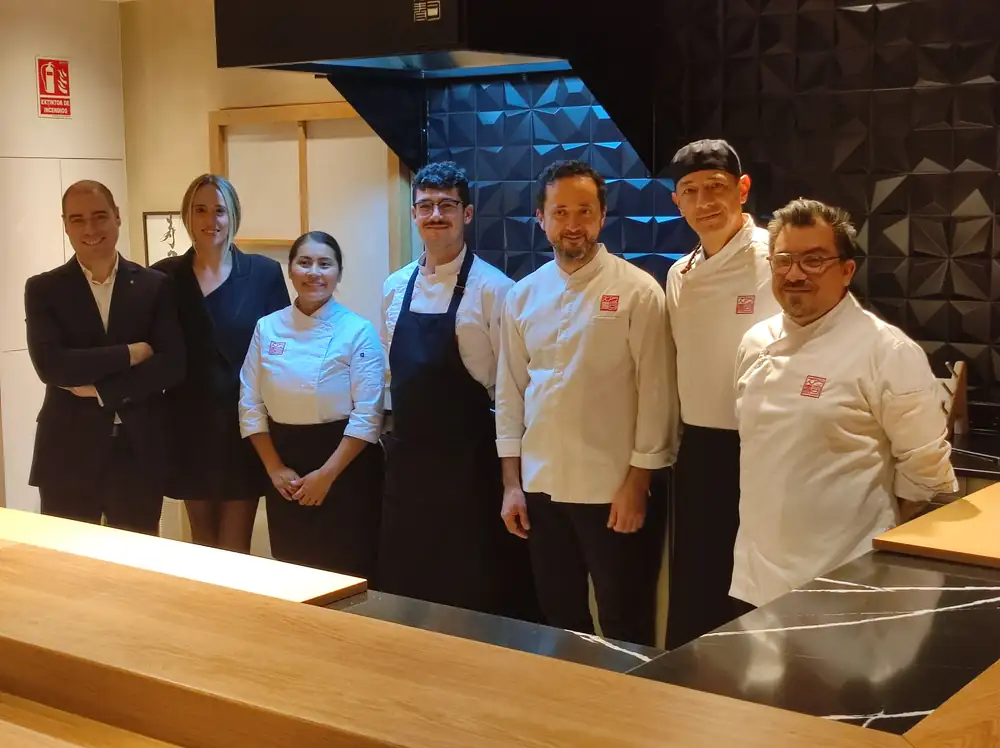
This last one is David Arauz's very personal project, so much so that its name is simply his surname spelled backward. Arauz is a familiar face in the capital's restaurant scene, who first made a name for himself alongside Ricardo Sanz at what was then Kabuki, before going independent with the Bambú group with 99 Sushi Bar and that ephemeral jewel in the crown, 99 KO Sushi Bar, which was tragically cut short by the cursed Covid after having been awarded a star by the Michelin Guide.
In the spring of 2022, together with one of the great dining room professionals in this country, Álvaro Prieto (from Club Allard), he launched Zuara, which became a corner of the Ginza district, the most iconic in Tokyo, in a premises on Pensamiento street that was also distinctive, which was the headquarters of the second location of Dabiz Muñoz's DiverXo before its move to the NH Collection Madrid Eurobuilding Hotel.
The philosophy is to embrace an almost radical Japanese aesthetic, starting from the entrance itself, where a small sign written in katakana is the only sign. Once inside, you enter a small waiting area where you can enjoy an aperitif, accompanied by fried crystal prawns. At 2:15 pm, for lunch, and again at 9:15 pm, for dinner, you move to the bare-walled sushi bar, where a maximum of 12 diners occupy the counter behind which Arauz and his team work, preparing a single omakase menu (which essentially means the chef serves whatever he wants, because we trust him), served simultaneously to everyone for 180 euros.
Western cultural conventions might suggest starting with sushi, going from cold to hot, but no, sushi is the star and it's saved for last. So let's proceed in order.
The menu begins with a bento box containing four types of pickled dishes: roasted eggplant with plum, cucumber sorbet with pickled oyster, scallop with fermented rice and yuzu, monkfish liver with a reduction of its pickling liquid, and shredded spider crab with ponzu sauce. These four preparations, each with varying degrees of intensity, play with contrasting flavors of sweet, sour, salty, and bitter, and among them, the "foie gras" stands out, displaying an elegance and subtlety rarely tasted.
The king crab au gratin with its coral hollandaise is a small but intoxicating nod to classic French cuisine, leading into a robata-grilled eel with a fermented vegetable sauce (leek, carrot, saffron) with a pleasant smoky note. This first course concludes in grand style with a dashi of parrotfish spine (or wrasse) with classic dashi and the fish fillets. A delicate delight.
And now, it's time for the sushi. As they say in Japan, when it comes to judging it, the quality of the fish and the sushi chef's knife skills are like courage in the old military service, they're taken for granted, and here they border on excellence. What truly makes the difference is the rice. And Zuara's rice is one of those that makes a world of difference. Arauz uses a koshihikari variety of rice grown in the Kyoto marshes. He follows a traditional washing process and pairs it with a house-made vinegar crafted from wheat malt and koji, which has a high salinity. With perfect cooking, whole and fluffy, it would be among the best in Tokyo, Osaka, or Kyoto.
Japanese wasabi is incorporated directly into the nigiri, and soy sauce, that great flavor masker, is neither served nor expected, thankfully. As for the fish, it's treated with various techniques, from aging to marinating, to enhance the characteristics of each one. And now, let's begin with the nigiri, which, of course, are eaten by hand.
Pompano (butterfish) aged for 10 days. Mackerel marinated in a kombu and koji ferment. Squid with yuzu. Scallop from Hokkaido (Japan's second largest island). Prawn from Murcia. Marinated sardine. Tuna aged for 13 days and marinated. Skipjack tuna smoked over vine shoots with caviar. Robata-cooked sea bass with nori seaweed. Flamed toro in temaki. And, as a spectacular finale to the festival, spicy tuna temaki with Galician blonde beef bone marrow.
If we were in Japan, the meal would end here. But we're in Spain, and most customers don't understand a menu without a sweet ending, so it's time for dessert: tofu milk ice cream with yuzu and praline crumble. It's not cloying, and the unusual texture, almost like a proto-mochi, is surprising and delightful.
To say that Zuara is probably the most in-form Japanese restaurant in Madrid at the moment would be reckless, but it is not so reckless to say that, among those I have visited (which obviously are not all of them), he is the one who has come closest to transporting me to the very heart of Ginza.