Where to enjoy tuna season in the Canary Islands
The Canary Islands are a privileged location because five of the world's most commercially important tuna species pass through their cold Atlantic waters: three tropical species, the yellowfin tuna (Thunnus albacares), the Atlantic bluefin tuna (Thunnus obesus), and the skipjack tuna (Katsuwonus pelamis), as well as two temperate species, the bigeye tuna (Thunnus thynnus) and the albacore (Thunnus al
The Canary Islands are a privileged location because five of the world's most commercially important tuna species pass through their cold Atlantic waters: three tropical species, the yellowfin tuna (Thunnus albacares), the Atlantic bluefin tuna (Thunnus obesus), and the skipjack tuna (Katsuwonus pelamis), as well as two temperate species, the bigeye tuna (Thunnus thynnus) and the albacore (Thunnus alalunga). These migratory fish travel great distances in search of food and to reproduce, "arriving at different times of the year in the archipelago, so we can enjoy them year-round," explains marine biologist Agustín Espinosa.
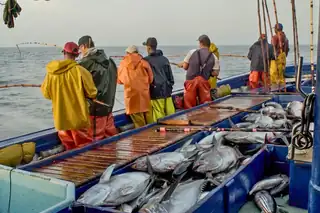
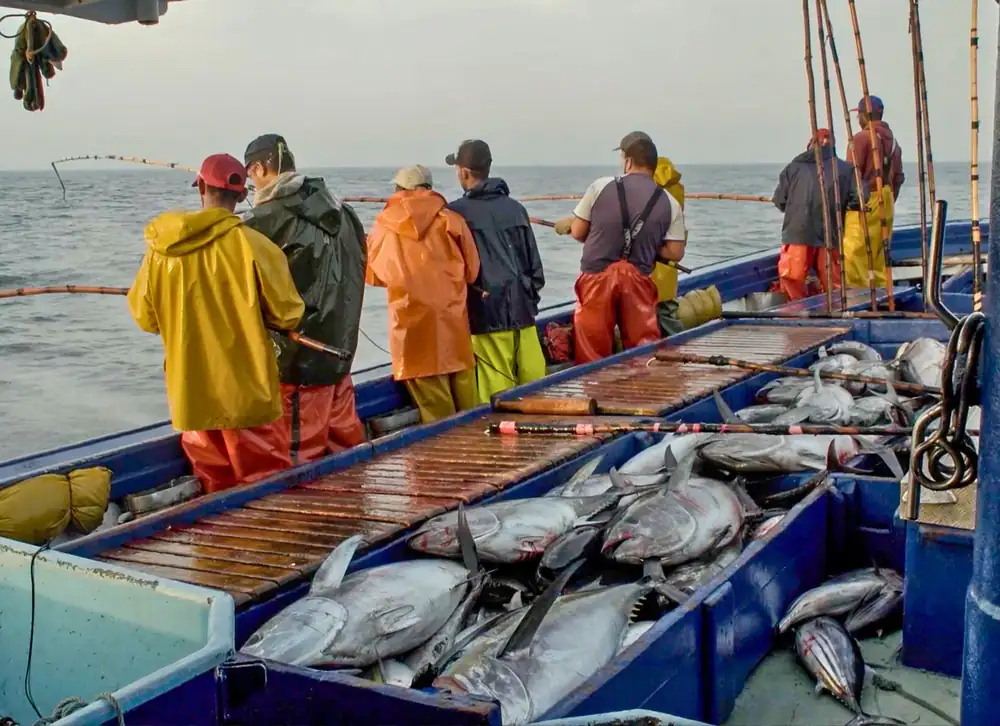
The most prized, the bluefin tuna, passes through the islands at the beginning of the year on its way from North America to the Mediterranean (Coczena/Sardinia) to spawn, “precisely when they are in their best shape and have the most infiltrated fat, with specimens weighing between 300 and 400 kilos being caught.” The fishing method used is the pole and line, with a hook to attract and selectively hook them. “Each tuna is caught individually, guaranteeing artisanal and sustainable fishing” Espinosa emphasizes. As they pass through the Strait of Gibraltar, other fishing methods await them: those of the ancient almadraba traps in the Gulf of Cádiz.
Their catch quota is determined annually by the size and history of each vessel, from February/March until mid-June, at which point the season for recreational fishing is closed. However, rising water temperatures and changes in the feeding habits of the fish used as bait are making the task increasingly difficult, with the quota falling from 8,000 tons annually in 2016 to approximately 2,000 tons in 2024, on the island of Tenerife alone.
“It is believed that Romans, Phoenicians, and Carthaginians already followed their route through the Canary Islands, skirting the African continent” explains the biologist. Tuna fishing has been practiced in the Canary Islands for just over two centuries, and at the beginning of the 20th century, a significant network of companies dedicated to salting and preserving fish emerged in the south of Tenerife and La Gomera. In the 1970s, these businesses began to close due to the high price of olive oil and the increasing popularity of home refrigeration, among other factors.
Exploitation
Exploitation
One of the chefs who has researched the most about the culinary uses of different types of tuna in the Canary Islands is Juan Carlos Clemente, a consultant for several restaurants. He launched the only themed restaurant in Tenerife almost 10 years ago, with Suso Marrero as head chef. El Ancla, in El Médano (Tenerife), bases its menu year-round on dishes featuring tuna and oily fish from the islands, according to their seasonal availability. “We like to list them on the menu by their scientific name, with the common name in parentheses” Clemente explains.
The menu stands out for its use of different cuts of tuna: smoked loin with truffle and raw egg yolk, sirloin steak with Béarnaise sauce, tuna belly in toasted broth, tuna belly with pumpkin and orange, or slow-cooked tail glazed with red mojo sauce. But classic dishes are also featured, such as marinated tuna, which at El Ancla is prepared with skipjack tuna. After blanching it in water, vinegar, and salt, it is marinated in traditional spicy red mojo sauce and served with pico de gallo and a sprout salad. The restaurant hosts an annual gastronomic event, preceded by a tuna cutting demonstration on the terrace, which celebrated its ninth edition this year. Clemente, who gives numerous talks and lectures throughout the year, champions the motto of "spreading the culture of the complete use of the animal." Toasted bones used to flavor broths that then go into rice dishes or sauces with a sea aroma, salted and dried heart to grate and season, skin very rich in collagen that is fried, puffed or candied… Or the powdered flavoring, a product of roasting and dehydrating the sangacho (blood found in the loin), among others.
Classics and innovators
Chef Fabián Mora, a great champion of traditional recipes from the island of La Gomera, features the various tuna varieties of the Canary Islands year-round on his menu at Caprichos de La Gomera. He favors simple, practical preparation methods that allow diners to enjoy the product for a long time. The most delightful is canning, for which Mora uses skipjack tuna, readily available between May and October, and which can fetch prices of no more than €2.50 per kilo in stores. Once cleaned and headless, he cooks it in a large pot, tail fin facing upwards, in plenty of water with bay leaves. After two hours, he turns off the heat and lets it cool until he extracts the meat and packs it in oil. He explains that this way he can use it for "fifty thousand things," including a delicious salad with organic vegetables.
Aridani Alonso, from the Casa Romántica restaurant in Agaete, Gran Canaria, presents it in a guava and almond escabeche, upon which rest the chunks of bluefin tuna loin, previously cured for 2 to 3 hours in a blend of 3 parts salt to 1 part sugar and plenty of lemongrass, preserved in extra virgin olive oil infused with ginger and citrus. The dish is finished with toasted almonds and a foam of vegetables and lemongrass.
In Arrecife, Lanzarote, there is Lilium by Orlando Ortega, where his grilled yellowtail has become legendary, which he paints with homemade ponzu while cooking it and finishes with a traditional green mojo sauce.
Also on the island of volcanoes, in 2018, Conservas Toledo was founded, a company specializing in high-quality semi-salted and preserved fish products, now unique in the Canary Islands, largely targeting the Horeca channel (hotels, restaurants, and catering). Luis Toledo, along with his father Francisco, descendants of several generations of fishermen from La Graciosa, decided to start the business together and have established agreements with fishermen from all the islands, producing high-quality products packed in olive oil, such as tuna and yellowfin tuna loins, fish migas (a type of fish), and tuna belly.
On the neighboring island of Fuerteventura, Rigoberto Almeida, chef and owner of the El Pellizco restaurant in Costa Calma, has created a kind of sushi, in which he replaces the rice with a fried quenelle of gofio, on top of which rests a sheet of tuna belly with a goat cheese emulsion and an Indian prickly pear gel.
The future of tuna fishing appears uncertain due to climate change, and the progressive decline in annual catches speaks volumes. This year, several consecutive storms brought rough seas to the start of the season. Furthermore, Canary Islanders, paradoxically, are not big fish eaters. Therefore, according to Agustín Espinosa, among the pending tasks are “improving the promotion of a top-quality, incredibly fresh product that we enjoy year-round and promoting processing plants for its optimal use.”