Ryokou serves pasta at its Atlanta omakase, with ice imported from Japan
At Ryokou, Adair Park's new omakase, pasta is served alongside ice imported from Japan and unusual sake pairings.
Ryokou's omakase, in Adair Park, is a two-hour, eight-course culinary journey through different regions of Japan, priced at $205. Its newly launched menu includes pasta, a rarity at a restaurant of this type.
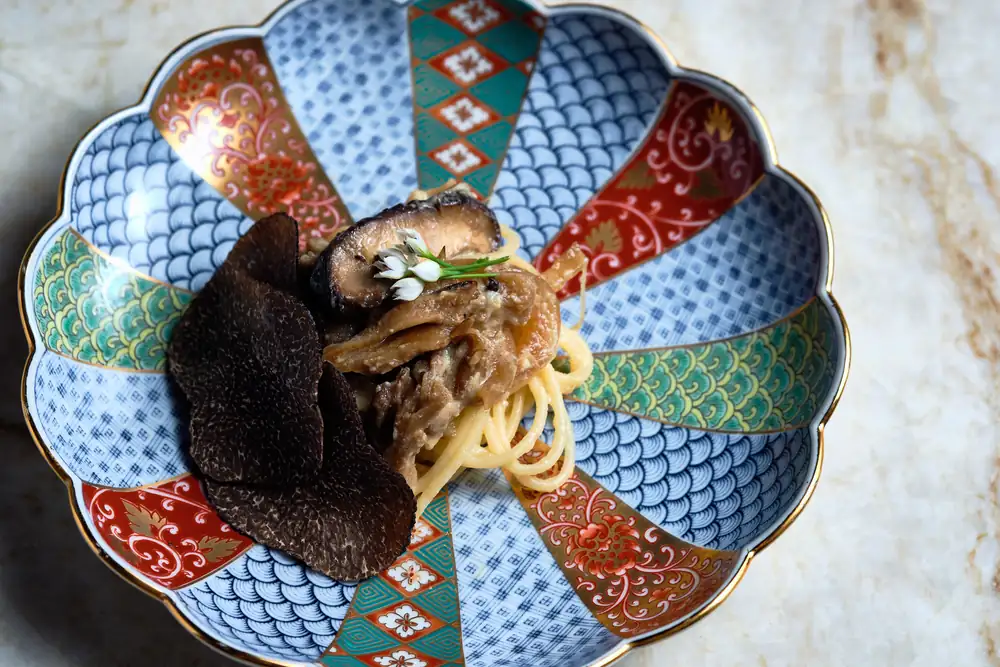
Halfway through the menu, chef Paul Gutting plates mushroom capellini with miso and shavings of Australian winter black truffle. Gutting explains that chef Leonard Yu, a Michelin-starred chef at Omakase Table and owner of Ryokou, worked in Italian restaurants early in his career, including at Ritz-Carlton hotels in Jakarta and Kuala Lumpur. He also notes that Japan has a great fondness for Italian cuisine, known as itameshi.
The restaurant is located in an industrial building. After a dark hallway lit by tall candles, a cozy and elegant dining room features an exposed brick wall adorned with gold and white ceramic koi fish. The service on both sides of the bar is impeccable: they anticipate diners' needs, clear glasses before the next course, and politely explain the cuisine and ingredients.
The pace of the meal is measured: it doesn't rush, but neither does it force you to remain seated for hours. The akami zuke tuna nigiri, the second item on the menu, is a cut marinated in soy sauce that combines a velvety texture with a touch of saltiness. Gutting explains that soy sauce was used as a preservative before refrigeration, and that the marinating process originated from that practice.
The somen, thin Japanese noodles, is served in a broth with shrimp, clams, and ice plant. The small ice plant imparts a very salty flavor, and the broth is diluted with ice imported from Japan for its mineral content, although its transport leaves a large carbon footprint. Yu maintains that this ice noticeably alters the flavor of the broth.
Sake pairing is the best option. Beverage manager TC McNeill combines junmai daiginjo and koshu sakes with the dishes. The Boken “Ringo” Junmai, with its green apple notes, complements the somen and is light enough for those new to sake. The Amabuki “Pink Lady” Gin No Kurenai Junmai, made with ancient black rice, has a purple hue and a floral-earthy aroma that harmonizes with various cuts of fish.
The jewel of the menu is the dessert sake. A light strawberry panna cotta is paired with Kanbara “Ancestral Treasure” Junmai Genshu Koshu, a 12-year-old sweet sake with notes of dark honey, dried fruit, figs, and a finish of toasted sesame oil. McNeill serves it in small o-choko cups. The non-alcoholic options are also noteworthy, with hot teas and a sparkling blend of jasmine, white tea, and Darjeeling tea from Copenhagen Sparkling Tea Company.
Ryokou offers a high-end express omakase experience, featuring eight courses in two hours. Those seeking more can visit the recently relocated Omakase Table in Buckhead, with 20 courses for $295. Ryokou's concise menu tells a story through Italian influences, seasonal ingredients, and Gutting's ideas, which pay homage to Yu.