Chambacú, a lesson in cooking and history between Africa, America and Spain
Santiago Sánchez Arango presents his new Chambacú in Barcelona, a restaurant with history and flavor, featuring three spaces for different occasions.
Those who prefer labels will need a lot of paper, because it's not easy to summarize what this restaurant offers. You could say its cuisine is Afro-Latin-colonial, but it also boasts three distinct spaces, designed for different occasions and types of diners. "Memoria" has a more gastronomic focus, with an à la carte menu and a tasting menu. "Candela" serves simpler dishes and focuses on street food from various regions of the Americas. "El Patio," at the entrance, is a good place to sample the cocktail menu.
It's an ambitious project, both in terms of the restaurant's size and the family investment it requires. Their comprehensive vision seeks to tell, through their dishes, the story of African and Spanish colonial influences on American cuisine. Cooking with a sense of history and offering a fusion of cultures is their goal, they explain.
Skepticism is understandable when faced with such a challenge. But Sánchez Arango's track record, with experience in restaurants like Mugaritz, Nerua, and Arrea, among others, inspires confidence. What's most convincing is hearing him speak about the project and sensing the passion with which he reveals the story and purpose behind each dish.
The name Chambacú comes from the Cartagena de Indias neighborhood where the descendants of slaves lived, and the restaurant takes on a somewhat educational role for diners. The idea of the three continents serves as a guiding thread. Even in a seemingly simple stuffed potato, you'll find the American potato, the Moorish influence in the wrapping (the origin of empanadas), and local nods to the Barceloneta "bomba" (a type of pastry).
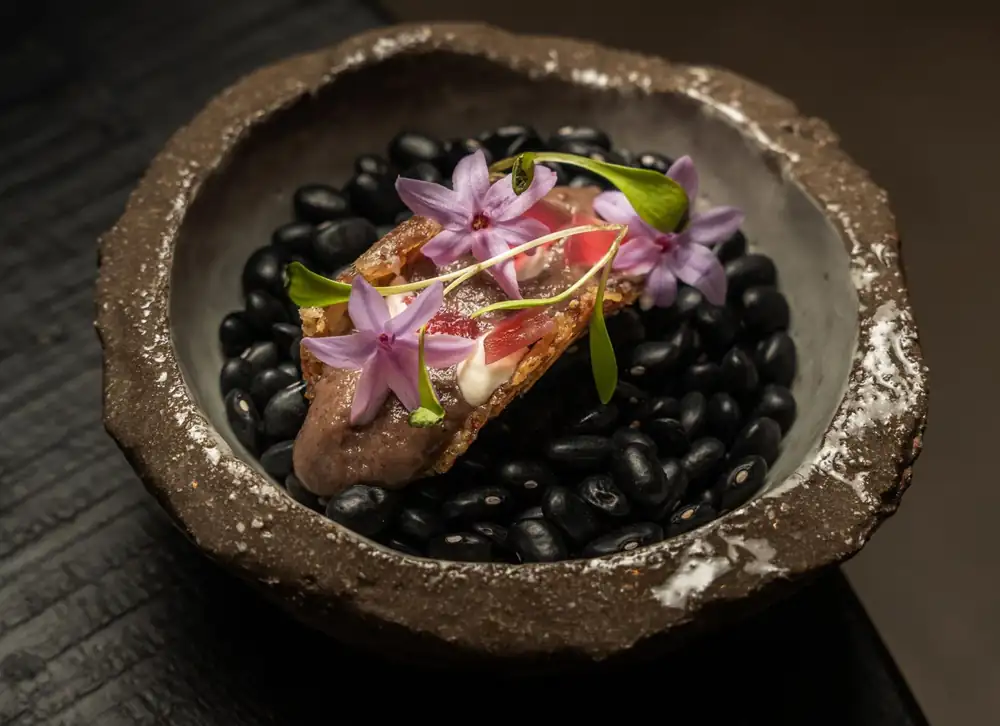
Highlights from the Afro-American journey include a pork sandwich with sweet potato and huacatay, and a gelatinous, well-toasted cap i pota taco filled with beans and guacamole. The sancocho is a refined version, with a very light and clear broth, a good touch of spice, and a crispy-skinned chicken leg.
The mole with roasted avocado and egg yolk is intriguing, and the restaurant's signature ceviche, served hot and topped with a La Rapita prawn, is delicious. The savory dishes are rounded out by grilled fish and two meat options: lamb with sweetbreads and grilled ribs with tamarind. For dessert, a lucuma alfajor uses this rich Andean fruit to create a version of the Argentine cookie, which likely originated in Spanish and Muslim pastry.
In the Chambacú gastronomic area, they offer an à la carte menu and two tasting menus, priced at 55 and 95 euros. It's also worth trying the cocktails and house-made drinks, and Catalan wines take center stage in the tasting menu. It's a unique and daring restaurant where you can eat well and learn something new. That's not something you can say about many places.