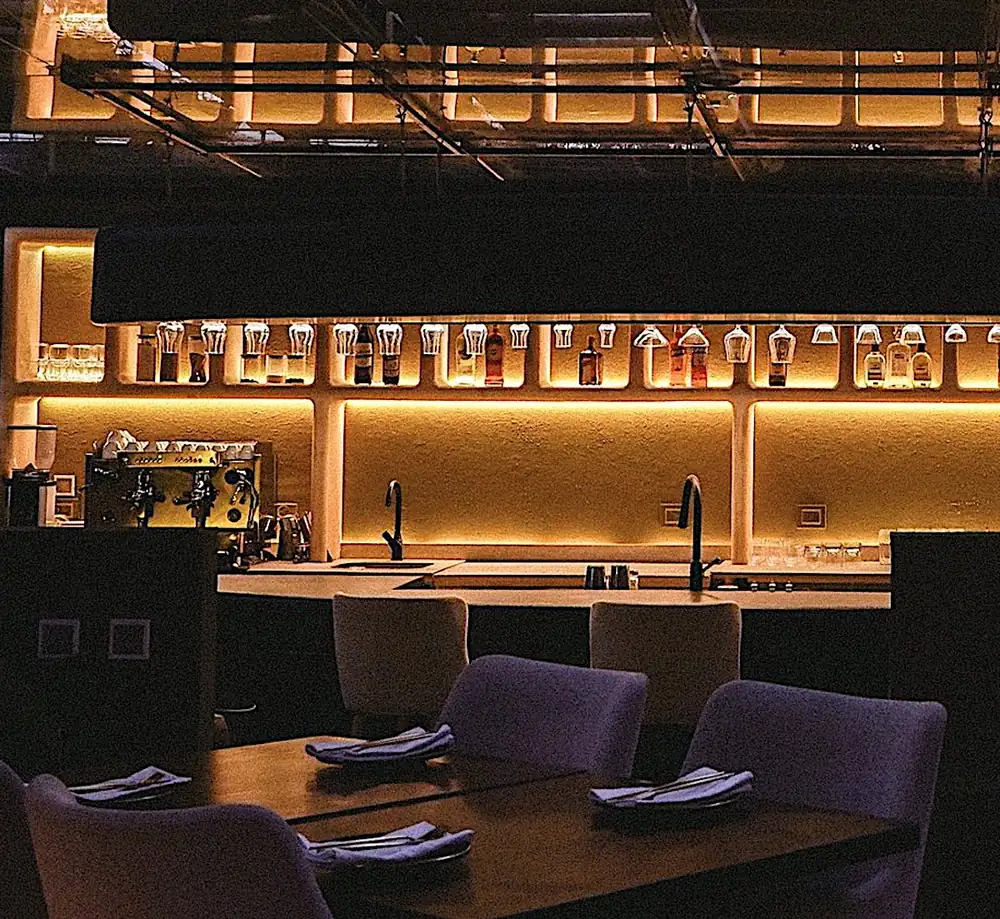
Ecuador's kitchens are preparing to withstand the crisis brought on by the internal war against drug trafficking
The streets of Quito were almost completely deserted last Wednesday, January 10th. Just twenty hours after President Daniel Noboa declared a state of internal armed conflict, Quito resembled the worst days of the pandemic.
The city descended into chaos starting at noon on Tuesday, following the President's declaration and the announcement of a curfew from 11 p.m. to 5 a.m., initially set to last for the next two months. Unexpected traffic and the shortcomings of the public transportation system resulted in endless gridlock, with residents walking home. The vast majority of businesses gave their employees the day off and closed their doors. By mid-afternoon, five hours before the curfew began, only one or two international fast-food chains were open, serving pizza and little else. By Wednesday, the number had increased to include local options.
The city's restaurants once again felt the vertigo of the early days of the pandemic. The threat of establishments only being open for half a day and the absence of customers, confined to their homes thanks to remote work, was a reality that each one faced in a different way.
Chez Jérôme, a city classic, announced it would only be open for lunch on Wednesday. Quitu and Nuema, ever optimistic, insisted on their usual hours on social media. “Open,” read one of Nuema’s Instagram stories, followed by another describing their hours as “11 a.m. to 3 p.m. and 6 p.m. to 11 p.m.” Quitu’s post, meanwhile, was slightly more accurate: “Today we are open from 12 p.m. to 9:30 p.m.”
Quito residents experienced the psychosis of armed conflict with organized gangs in their streets (a common occurrence in the outlying neighborhoods of Guayaquil, but not in the capital), and tourists and business travelers were not spared. While they were scrambling to move up their return trips home, they preferred to stay in hotels, waiting to see what would happen. The consequences of the political and social crisis in Ecuador were especially noticeable in restaurants that cater to culinary tourism.
Clara, the latest addition to Quito's culinary scene, initially announced a mid-afternoon service, but later changed its announcement to a complete closure on Wednesday, pending further evaluation of the situation. Like others, they have decided to reopen at midday on Thursday. In just two or three weeks, Clara had already captured the attention of locals with its locally sourced cuisine.
There were also different responses among neighborhood restaurants, such as those in Las Casas, an area undergoing a revitalization for urban life where three establishments—Shibumi, Plural, and Chulpi—are located within a single block. Until recently, they focused primarily on the late afternoon and evening shifts. Shibumi closed on Tuesday and announced a return to normal operations on Wednesday, Plural combined its two shifts into a single continuous shift, and Chulpi announced a split shift with a closing time of 9:30 p.m. A clientele that is mostly from Quito, and often from the neighborhood itself, allows for more flexible hours.
Cuenca still has tourists
Cuenca, the country's third-largest city, nestled in the Andes Mountains south of Quito, is experiencing these first days of conflict amidst conflicting narratives. Dos Sucres, one of its most popular restaurants, has remained open all day, closing early at 9 p.m. so that staff can return home by 10:30 p.m. It's a small city, which makes things easier.
The entry of an armed group into a television station on Tuesday prompted businesses to close at 4 p.m. and Cuenca residents to return home. Yesterday, most restaurants opened and were busy (even late into the night, as was the case with Dos Sucres) thanks in part to the remaining tourists in the city. The Turi prison remains occupied by inmates (reports indicate 60 hostages), and the army's presence is visible at hospitals and media companies.
Costa versus sierra
In Guayaquil, where gang violence is a palpable reality (729 violent deaths were recorded in the city limits alone in 2023, compared to 292 the previous year, representing a 249% increase) and where changes in schedules and habits have long been noticeable, restaurants were even more cautious. Some announced their closure for Wednesday, as Marrecife did, without giving a reopening date, in a message that read: “Saddened by everything we are experiencing, we have decided to protect the identity of our team. We will reopen with prior notice.”
Iván Grain, owner and manager of Marrecife, tells me that he is reopening for lunch service today, Thursday. He explains that fishermen are going out to sea less frequently due to the uncertainty and the expenses associated with each fishing trip. Even so, he has a guaranteed supply of fresh fish for the coming days. For years, artisanal fishing has suffered from an added wave of insecurity due to the impact of smuggling and increasing piracy. Iván is optimistic and calls on the sector to work together and contribute to restoring normalcy. "People must overcome their fear of going to places they consider safe."
The sector needs it. The changes in habits and schedules experienced since the pandemic have affected everything. Nighttime restaurant activity practically ended at ten o'clock at night, but now, with the curfew, the door is closed to the cocktail service, which accounted for most of the profit for many restaurants.
The views of Guayaquil's business community are divided. One prominent representative of the sector, who preferred to remain anonymous, positively assesses the army's involvement, which is making its presence felt on the streets of the coastal city, and especially the change in attitude of a police force that has been under scrutiny for years. "And the judges are up against the wall," he said, referring to a judicial class that has traditionally favored the leaders of local gangs, now considered terrorists.
There is fear, and many business owners in the sector prefer to remain anonymous. The fear, and the idea that people might lose their minds, hangs over the conversations.
Back to delivery
Business owners are reliving the pandemic era and beginning to see food delivery as a way to weather the looming crisis. The problem is that many associate the term "delivery" with insecurity. They want home delivery, but they need to be able to trust the person doing it. "The solution is delivery," agrees Iván Grain, "but it has to be with our own staff."
The conflict in Ecuador is determined by the struggle between the major Mexican cartels for control of cocaine trafficking through the country's three major ports: Esmeraldas, Manta, and Guayaquil.
The dispute has manifested as open warfare between some of the 22 local gangs, with which the cartels have formed alliances. The takeover of prisons, with thousands of inmates crammed together, reprisals against security forces—whether or not they are involved with rival gangs—bribes extorted from small and large business owners, attacks on educational institutions, and deep ties to the political class are the breeding ground that defines life in Ecuador today.