The Dagnino pastry shop in Rome is closing: could it have been avoided?
Today, July 27, 2026, the shutters fall on seventy years of Sicily in Rome. The eviction order from the Dagnino pastry shop, under the arcades of the Galleria Esedra on Via Vittorio Emanuele Orlando, has come to an end after months of delays, appeals, and bureaucratic battles.
Dagnino wasn't a pastry shop: it was an embassy, the oldest Sicilian pastry shop in Rome. Opened on December 13, 1955, by Andrea Dagnino, it brought Palermo to the heart of the capital, a stone's throw from Piazza della Repubblica and Termini Station. The founder entrusted the project to architect Giuseppe Contino and called upon true artists of postwar Italy to decorate the rooms: the glass paintings of Alfonso Amorelli, the works of Herta Schaeffer, the wooden sculptures of Italo Mangiameli. Sitting in the grand tea room was like having breakfast in a piece of art history, which is why the cinema loved it so much: Ettore Scola referenced it in "The Family," and Michele Placido, Daniele Luchetti, Mario Martone, and Pupi Avati all filmed in those rooms.
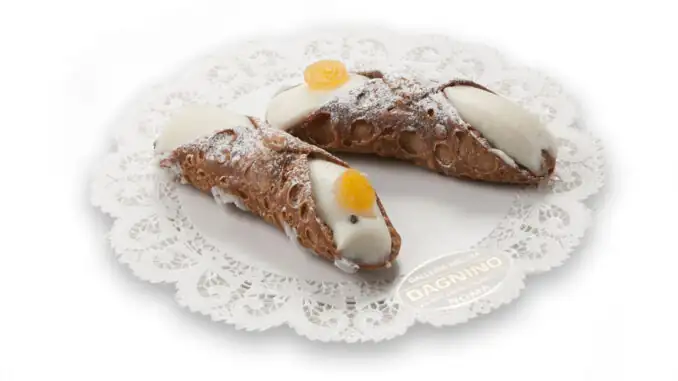
Okay, maybe it was out of fashion, maybe it didn't fit the mold of contemporary pastry making. But we went there, simply, for the cannoli. The classic, first and foremost: a crispy wafer hand-made in the shop, filled to order with fresh sheep's milk ricotta, chocolate chips, and candied Sicilian orange. And then the cassata and cassatine, the fried iris filled with ricotta in the morning, the arancini and panelle for lunch, the anelletti timbale, and the pasta with sardines. Dagnino followed the liturgical calendar of Sicilian flavors: marzipan fruit for All Souls, cuccìa for Saint Lucy, olivette for Saint Agatha in February, and melon jelly in the summer. It was the place where a Palermitan on a trip cured homesickness and a Roman discovered that breakfast could be a serious matter.
Why is it closing? Not for lack of customers, but because of a real estate transaction. The owner of the walls, Finaval (Feltrinelli Group), did not renew the lease: the entire block between Piazza della Repubblica and Via Orlando is at the center of a major urban regeneration plan involving Feltrinelli and Allianz. Dagnino, recognized as a "historic shop" by the City Council since 2012, has found itself an obstacle to be removed rather than a defining element of the project, as Italia Nostra had requested.
Giannandrea Dagnino spoke on Facebook: "The most surprising thing is that a worthy institution that has done so much for Italian culture – Feltrinelli – is at the root of this potentially sad outcome for a bastion of memory, tradition, and culture. But we are confident in a last-minute rescue. Thanks go to the Cola family, managers of Pasticceria Dagnino, and to Italia Nostra, who have been fighting tirelessly for months to prevent the closure. For those of you who haven't already done so, please sign the petition for its rescue. A heartfelt thanks to those who have signed and to those who will sign."
And here lies the answer to the title's question: yes, perhaps it could have been avoided. The artistic restriction on the works from the 1950s was only requested from the superintendency in July, with the eviction imminent; the appeal to Minister Giuli arrived on the eve of the eviction. Recognition as a historic workshop, without any real protection, proved futile. The owners had said they were ready to participate in the redevelopment "with their jewels," but their pleas fell on deaf ears. Rome continues to celebrate its historic sites only when it loses them.