A feast steeped in history on the banks of the Urola
It's been years since he last went out to sea, but the small fishing boat Josemari Iriondo used to fish for elvers at the mouth of the Urola River, just outside Zumaia, is still moored there. Today, with the species critically endangered, it seems like a distant memory.
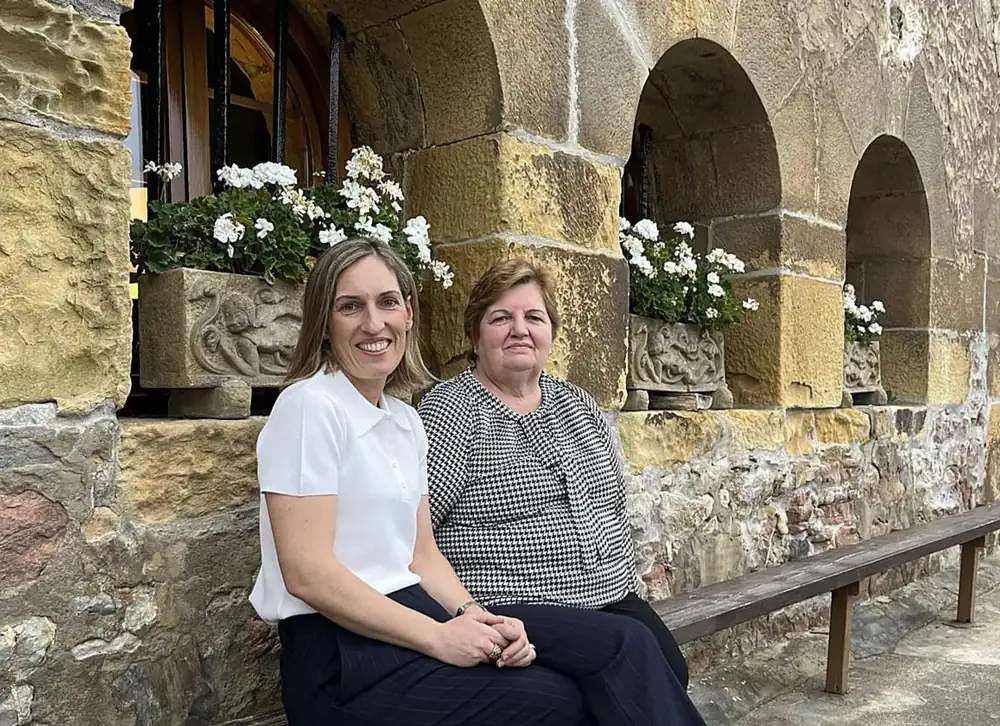
Throughout its history, this imposing manor house with its sturdy walls and arched windows has served as a fish market, toll house, customs house, and blacksmith's shop, until Marian Iriondo's great-grandmother transformed it into a roadside eatery. There, next to the small stone bridge that crosses the estuary, she served tortillas and peppers to summer visitors from Zarautz to help balance the farmhouse's accounts. Her daughter, María Ángeles Lopetegui, understood that this could be more than just a seasonal source of income, but it would be her granddaughter, Isabel Antía, who would turn Bedua into what it is today: a restaurant featuring seafood and traditional recipes, on par with the best in the Basque Country.
Now it's Marian who has taken the reins of a restaurant where the cuisine has changed very little in recent decades – "if it ain't broke, don't fix it" – but where every year details of service, tableware, and cutlery are refined, while a wine list as ambitious as it is coherent is developed. Were it located on the other side of the border, in ever-proud France, Bedua would probably boast a Michelin star in recognition of its excellence in the treatment of traditional cuisine. Around here, however, if you don't serve a tasting menu adorned with challenging techniques, it seems you're practically invisible to the guidebooks.
And yet, peeling and cooking borage with the delicacy that Isabel Antía demonstrates deserves a masterclass. The vegetable, grown in the garden across the street, was picked that very morning; its texture confirms it. It's served with parmentier potatoes, a poached egg, and plenty of grated truffle. Who said borage was a poor man's vegetable?
The restaurant is famous for its seafood, baked fish, and pigeon stew, among other delicacies, but let me recommend an almost childlike indulgence: the breaded langoustine tails. They represent that very Basque way of indulging in a treat as if it were the most natural thing in the world. And speaking of indulgence, if there's anywhere it would make sense to eat elvers—when the species recovers—it's at Bedua: not as an act of ostentation, but as a tribute to its history.