Montia: extreme radicalism
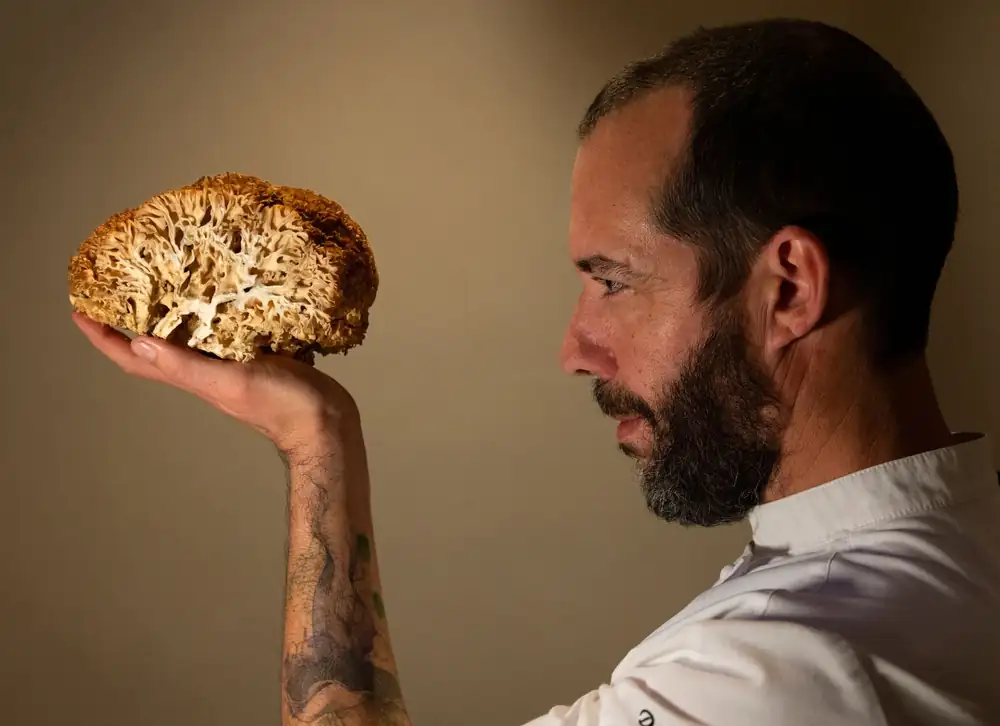
The word "radical" has a dozen definitions in the Royal Spanish Academy Dictionary, several of which apply to chef Daniel Ochoa, owner and mastermind behind the Montia restaurant in San Lorenzo del Escorial, a town in the Guadarrama mountains near Madrid.
The word "radical" has a dozen definitions in the Royal Spanish Academy Dictionary, several of which apply to chef Daniel Ochoa, owner and mastermind behind the Montia restaurant in San Lorenzo del Escorial, a town in the Guadarrama mountains near Madrid. Specifically, these include: "Fundamental or essential," "Belonging to or related to the root," and "Extreme, decisive, uncompromising."
A chef since 2000 and trained in restaurants such as Mugaritz (the great world temple of radicalism), Ochoa is responsible for a unique and inimitable restaurant, brimming with personality and offering an exciting, transgressive, disruptive and provocative experience (in this case, this currently prostituted expression actually makes sense), with Kilometer Zero and the most seasonal biological and ecological products as its banner.
In a venue with two atmospheres, a Nordic-style dining room with a fireplace, lots of wood and a flood of natural light, very mountainous, and a greenhouse-terrace, the offer consists of two tasting menus (Montia, 15 courses for €115, and XL, 17 for €130) - in addition to the Short menu from Monday to Friday (11 courses €80) - about which the diner receives rather little information before starting.
The only thing you can be sure of is that you'll find vegetables from our own garden, herbs and flowers personally gathered along the surrounding streams or on the slopes of nearby Mount Abantos, the mushrooms and game that are in season, and freshwater fish from small, local artisan suppliers. And the presentations are aesthetically pleasing, greatly enhanced by the ceramic tableware designed by local artisans.
Regarding the drinks, the restaurant's wine pairings range from €48 for the Corto to €78 for the XL, with the Montia starting at €70, and include natural wines, craft beers, sake, and house-made vermouth. It's essential to pause and consider them. Since Montia's inception, much has been said about its unique relationship with the world of wine and its extreme commitment to "cloudy, extreme, unfiltered, sulfite-free, and sometimes even flawed" natural wines, which has made it the subject of heated debate, garnering as many devoted supporters as vehement detractors.
Without judging it, because it's their proposal and as such it must be respected, whether one agrees with it or not, it must be said that the fact that the wines included in the pairing are presented almost as another element of the dishes is, in some cases, unfair to those who don't order them (either because they don't drink alcohol, or because they don't like these wines), because they may end up with "incomplete" courses. This is especially true in two cases, as we will see: the trout and the first course of tripe.
The meal begins with breads (rye, corn baked on a cabbage leaf, durum wheat, and ciabatta) from the Abantos bakery in San Lorenzo del Escorial and an exceptional goat's butter from La Cabezuela, made in Fresnedillas de la Oliva, seasoned with flaked salt from the Saelices flower in Guadalajara, and served very cold, so that it has almost the texture of cheese. This is a clear statement of intent: we won't be traveling far, and all the products will have a name and origin.
The trio of appetizers gives us another, very important, clue: concessions to fussiness are kept to a minimum. From least to most intense in flavor and power, there's a shallot omelet with truffle mayonnaise, a biscuit where the eggs are replaced with pig's blood filled with pigeon pâté, and a crispy crayfish in dark beer with stracciatella and tarragon cream and oxalis flower, the best of the three, complex, long, and quite spicy thanks to a generous touch of cayenne.
The first main course on the menu is the heart of tomato with riverside herbs. The fruit comes from Valdemoro and is of the Los Molinos variety. Only the heart is served; the rest is used to make a tomato water infused with wild celery and garnished with herbs such as basil, purslane, or lantana, and a drizzle of extra virgin olive oil from Villaconejos. Beyond the intense sweet-and-sour flavor of the tomato, the dish's charm lies in the fact that each bite tastes different depending on the accompanying herb, which can impart more bitter or more acidic nuances.
We'll only encounter the sea once, in the oyster pickled with elderflower and plum, and spheres of wild blackberry. Basically, it's about transforming the bivalve into something that tastes like the mountains.
After this brief foray into the sea, we return to the garden with the white eggplant from Jarama. Cut into three pieces, it's first cooked sous-vide and then grilled, which alters its texture, giving it a firmness similar to that of a roasted potato. The flavorful and aromatic nuances come from the shallot and garden herbs (tulsi basil, Greek oregano, oxalis, and nasturtium) and a cheese whey made with water and sheep's milk from Chinchón. Another superb dish.
“A trip to Japan without leaving Guadarrama” could be the name of the next dish, which is trout, watercress, and mushroom. It consists of a slice of cured fish painted with a reduction of roasted mushrooms and mushroom salt that tastes, quite literally, of soy sauce. As a garnish, there's a slightly spicy green cream that sounds like wasabi but is made with watercress. A fascinating dish, full of substance and clearly the result of a lot of technical work and research, which is complemented by a nigori junmai sake from the Ebro Delta… but only for those who have requested the pairing. Perhaps it should be included with the dish itself, with or without the pairing.
Delving into the world of mycology, one of Ochoa's greatest strengths, although this year the mushroom season is running late due to the lingering effects of an endless summer, it's the turn of the chanterelle, butter, and saffron, with the autumnal orange hue as its leitmotif. The chanterelle is sauteed in meat jus and accompanied by a hollandaise sauce of saffron, pumpkin, and butter. It's finished with slices of pumpkin and a dusting of Caesar's mushroom powder. Aesthetically beautiful, it smells and tastes like autumn.
Shall we go hunting? Roe deer, fig leaf, and aged wine butter. Bursting with flavor, the meat, cooked wrapped in a caprifig leaf (a male fig tree that doesn't bear fruit) and finished on the grill, melts in your mouth. A few drops of caprifig oil and a ripe fig add the final, highly aromatic touch to a dish whose days are numbered more than the film that launched Ruth Gabriel to fame.
Finally, two diptychs, one dedicated to lamb and the other to the tripe that, from the very beginning of Montia's existence, has been and continues to be the hallmark of the restaurant. As for the lamb, the roast suckling lamb from Colmenar Viejo was splendid, with a touch of embers that gave it a smoky note and a crispy texture, served in its own juices with a green salad dressed with plenty of vinegar.
Less impressive was the rice ravioli filled with braised offal (kidneys, liver) in onions and pine oil with a very reduced onion broth, which gave it an overly sweet flavor. The texture of the ravioli was reminiscent of gummy candy, and the taste of the filling was somewhat harsh and rustic.
Montia's tripe is something truly special; we'd almost dare to call it The Tripe, with a capital T. It's served in two courses: Tripe, in a modern version, and More Tripe, in a traditional version. The first course arrives as a meatball made from trimmings and wrapped in its own casing, with tripe sauce and the omasum fried in chickpea flour as a topping. They're not spicy... but there's a trick: the heat comes from a kind of sangria, an infamous and technically flawed concoction (due to its extremely high level of volatile acidity, it's practically vinegar) that contains infused chili peppers, and, combined with the other bites, it incredibly works. This is only for those who have ordered the wine pairing, so the reflection is exactly the same as we had with the sake paired with the trout.
This is the classic, traditional Madrid-style tripe recipe, complete with tripe, morels, tripe, trotters, snout, chorizo, a touch of spice, and a memorable burst of richness. It's some of the best Madrid-style tripe you can find in the Community of Madrid, which is practically the same as saying it's some of the best Madrid-style tripe in the world.
A pre-dessert and three desserts make up a sweet section whose main characteristic is that the sweetness is combined with other flavors to avoid being cloying. In fact, they could almost work if strategically placed in the middle of the menu. The goat cheese ice cream with honey crisp and spinach granita, a sweet salad, was clean and very fresh. Despite its originality, the cantaloupe and seaweed ice cream sandwich was rather uninspiring. The interplay of red berries with strawberries, raspberries, aged wine, and bitter almond meringue was pleasant. And, to finish, a very fun combination of sunflower, artichoke, and black olive.
A short walk to the Monastery to stretch your legs after at least three hours of sitting completes one of those days that you mark on the calendar as "it was worth it".
Restaurant Montia
Address: Calle Juan de Austria, 7, San Lorenzo Del Escorial, Madrid.