Roberto Sihuay opens Macambo, his first restaurant in Barcelona
After working in Lima, Ibiza and London, Roberto Sihuay opens Macambo in Barcelona, a restaurant of signature Peruvian cuisine.
Sihuay returns to Barcelona after a solid career in kitchens in Lima, Barcelona (Ceviche 103, Nikkei 103, and La Turuleca), Ibiza (Cantina Canalla), and London (Lima London). "Returning to Barcelona with my own project is very special," says the chef. Macambo was born as a tribute to the diversity of Peru and as a declaration of intent: to showcase a technically impeccable, flavorful, and contemporary Peruvian cuisine.
The name encapsulates their vision. Macambo is an Amazonian fruit, related to cacao, which in the Peruvian rainforest is roasted and eaten like an almond. “It’s an ancestral food, a superfood. Its name means ‘food of the gods,’” explains the chef. The logo represents the seed, and its scientific name, Theobroma bicolor, reinforces the natural sophistication that inspires the project.
"Macambo represents the diversity of Peru that is not always seen: we are not just ceviche and chili peppers. We are also the Amazon and the Andes, regions that are often overlooked and deserve to be recognized."
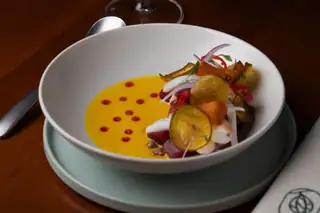
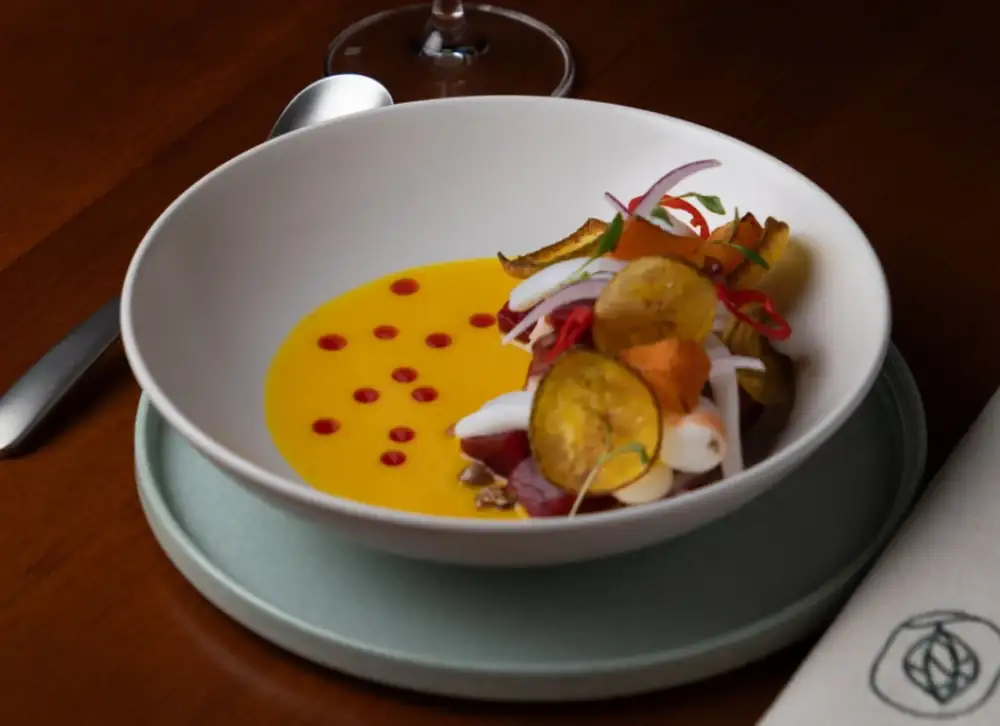
The menu is designed for sharing, with medium-sized dishes. "I didn't want to create an extensive menu or enormous plates. I preferred a more local and informal approach, like tapas, as is customary here, where you can try several things," explains Sihuay. He explores flavors from the coast, the highlands, and the jungle, relying on memory, technique, and a desire to reinterpret rather than imitate.
In the kitchen, they carefully select fresh chilies imported directly from Peru, such as the yellow chili, the rocoto, and the charapita chili, as well as Andean corn and loche squash. The corn cake is a reinterpretation of the Arequipa-style stuffed rocoto pepper, and the pickled confit suckling pig, which is not found in any Peruvian home, is one of their most distinctive dishes.
The desserts are the work of her sisters, pastry chefs trained at Espai Sucre and the Basque Culinary Center. The cocktails include the pisco sour and creations like the Bruma Andina, with gin and elderflower, or the Sol de Ají, with tequila, mango, and ají amarillo. For wines, she collaborates with Vila Viniteca and includes Peruvian selections.
Macambo isn't a formal restaurant, but it is ambitious. "For me, haute cuisine is about achieving balance: delicious, technically impeccable, and with top-notch service. You don't need €3,000 wines or linen tablecloths to offer something special." The restaurant seats 75 diners between the dining room and the terrace, and the average bill is around €50-60.
It is also a tribute to his father, the first chef he admired. “My father didn’t cook just one dish. He cooked five or six, always with sauce, like a banquet. And I’ve inherited that.” Sihuay has taken Peruvian cuisine to ten countries on three continents, and some of his projects have received praise from the Repsol Guide (Cantina Canalla, Ibiza) and Michelin (Lima London, London).