The science behind cooking “with water”
Water is the most underrated ingredient in cooking. We always talk about fermentation, smoking, dry aging, and enthusiastically revived ancestral techniques, but then we forget that much of what happens every day in our homes and restaurants involves a pot of water.
The 100°C boiling issue
When water reaches 100 degrees Celsius at sea level, it boils. This clarification isn't meant to be pretentious: the boiling point of water isn't an absolute value and depends on atmospheric pressure.
Water boils when its vapor pressure equals the pressure of the outside environment. At sea level, the average atmospheric pressure is 1 atmosphere, and under these conditions, water boils at 100°C. But as you rise in altitude, the pressure decreases. And when the pressure decreases, the boiling point also drops.
In the mountains, for example at 1,000 meters above sea level, water can boil at around 96-97°C. At 2,000 meters, the temperature can drop to around 93-94°C. This means that food immersed in "boiling" water at high altitude is cooking at a lower temperature than the same pan on a beach.
Does this small change make a difference in the kitchen? Not much, but yes, there is a difference: pasta can take longer to cook, legumes can remain firmer, and protein coagulation reactions occur at slightly different rates. This is also why the pressure cooker completely changes the kitchen landscape. By increasing the internal pressure, water can exceed 100°C without evaporating, reaching temperatures as high as 120°C. This accelerates the gelatinization of starches and the breakdown of plant fibers, drastically reducing cooking times.
The secrets behind boiling
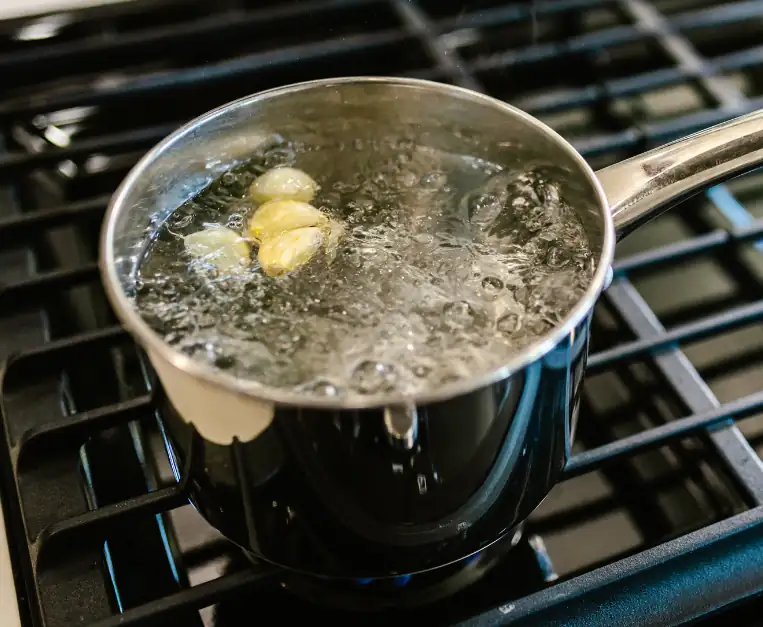
Energy. Boiling water isn't still; it's a turbulent system in which vapor bubbles continually form and collapse. This constant motion transfers heat more quickly and efficiently than a still liquid. This is why a pot at full boil cooks faster than one barely simmering. The difference isn't insignificant: heat transfer can also be
Two or three times more efficient. This is why passive cooking allows you to serve a perfectly cooked pasta dish, but it takes longer.
The difference is even greater for vegetables. A quick immersion in boiling water allows the color and texture to set, provided you stick to the right timing. This happens because plant tissue contains microscopic air pockets that scatter light. Boiling water collapses them and fills them with liquid: the light reaches the chlorophyll more directly, and the color appears more intense.
Blanching, followed by rapid cooling in ice water, interrupts the cooking process and preserves structure and color. In large kitchens, the concept has been taken to the extreme with digitally controlled thermostatic baths, where the water doesn't boil but maintains stable and precise temperatures. It's another interpretation of the same science: using water as a medium for heat transmission, but in a controlled manner.
Boiling, however, has obvious limitations. One hundred degrees Celsius is a high temperature for delicate proteins like eggs, fish, or poultry. Proteins denature and coagulate at a lower temperature: exceeding this temperature means the fibers stiffen, expelling liquid, and losing tenderness. A few extra seconds can transform a creamy egg into a rubbery white or a fish fillet into a dry fiber.
There's another, often overlooked, aspect to flavor. Many flavor-producing molecules are water-soluble, meaning they dissolve in water. The sugars in carrots, such as sucrose, glucose, and fructose, dissolve easily. If you boil carrots for a long time, some of their sweetness lingers in the pan. The result is a seemingly more neutral, less flavorful vegetable.
Steaming is also a “water” method
And this is where steam cooking comes in. Steam is water in a gaseous state that condenses on the surface of the food, releasing heat uniformly but without direct contact with the liquid. The temperature remains high, but the environment is less aggressive. There is no dilution of sugars, mineral salts, and water-soluble vitamins. This is why asparagus, spinach, carrots, and delicate fish benefit from steam cooking.
Water isn't just a neutral medium. It's a tool. And like any tool, if we learn to understand it thoroughly, it can radically change the way we cook every day.