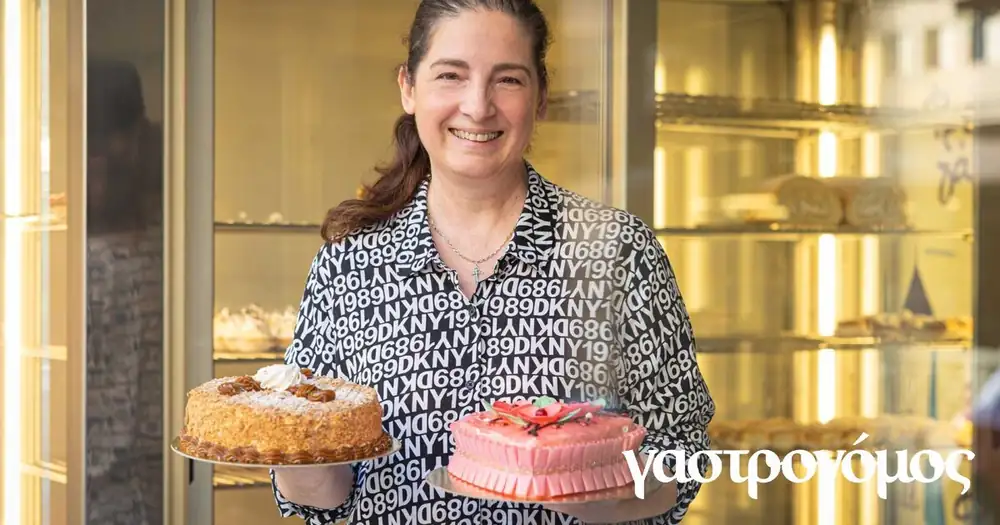
Mendovik or kartoski? We found rare Russian sweets in this neighborhood shop in Kallithea
Anna Savvoulidis does not negotiate the quality of the sweets she makes, so if someone asks her if they are fresh, she will strictly answer "of course they are!". She makes them daily in her workshop at the back of the shop and the whole neighborhood smells of them when she prepares them.
The shop was opened in 2005 by Anna and her mother Aphrodite. Mrs. Aphrodite had studied pastry making in Kazakhstan. When the family came to Greece as repatriates in the early 1990s, she worked in Athenian pastry shops and then opened her own. “My mother and I decided to open our own shop. We called it “Aphrodite’s Sweets” in her honor and the name stuck,” says Anna. Their budget was low, so they decided to invest in state-of-the-art machinery and leave the decoration for later. Anna attended some seminars, but most of them were taught by her mother, who taught her all the secrets. “I was always messing around with sweets. I remember my mother coming home from work, finding ready-made sweets and saying to me, "Oh my, aren't the sweets I bring enough for you?" I've loved the process since I was little. Turning ingredients into beautiful sweets. The first sweet I made was mentovik."
As Anna tells us their story, the supplier comes to bring them fresh eggs every day. “My mother had learned to use good ingredients and it’s something we don’t negotiate.” In their desserts, they use cream with 48% fat, as Anna emphasizes. “We add granulated sugar, just reduce the amount where we can, flower honey, smetana (ed. Russian sour cream).” Many recipes come from a 1970 Russian pastry book. That’s where Anna gets ideas for decorating her cakes. She insists on retro elements that she admits make them beautiful and special. Like the Kiev cake, which she makes to order, and the famous mendovik cake, which is made from sour cream yogurt cream and has five layers of honey sponge cake. The "bird's milk" soufflé made of white cream, biscuit and chocolate icing or the "Napoleon" cake with 10 layers and pastry cream or the "day-night" cake which is called so because it is half chocolate and half vanilla. There is also the sweet "nieznost", which in Russian means purity, a foamy dessert, light as a feather and very tasty, with real whipped cream and delicate fresh sponge cake. She also makes delicious rolls with coconut, raspberry or walnut cream and the famous "kartoski", a biscuit that in shape and color reminds children of potatoes, which is what its name means in Russian.
The shop became known by word of mouth, initially among the community of repatriated Pontians who have been living in Kallithea since the early 1990s. Later, the residents of the neighborhood found out about it and it became their favorite pastry shop.