Masta: A tavern of the highest gastronomic level in a town on the Basque coast
I'd say it's almost a game of misunderstandings. You feel like you're walking into a village tavern, but once you're seated, you're treated like you're in a fine dining establishment. In essence, Masta has a bit of both.
Despite its neighborhood bar feel, the wine list gives it away. An impressive collection of unusual selections, many of which will only be appreciated at first glance by true oenophiles. They are arranged by price, a discreet way of gauging how far each person is willing to go when trying new things. The labels from small, undiscovered winemakers are selected—I dare say curated—by Judit Ayago, who provides impeccable service without any pretension, perfectly in keeping with the spirit of the project. In the brief conversation to choose the wine—where she drops gems like "a great vintage"—she displays a talent for reading the customer and adapting her approach, something sometimes lacking at high-society tables.
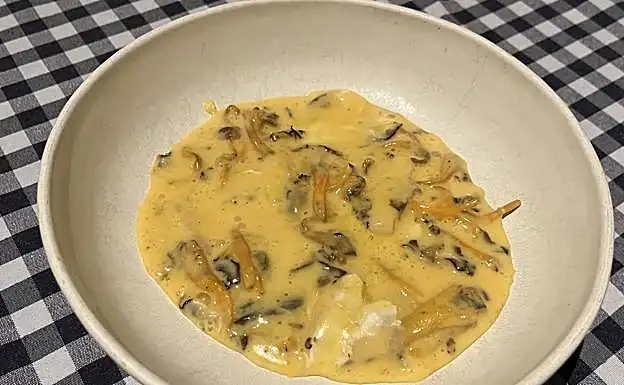
The menu, concise and ever-changing, is an ode to traditional cuisine without a trace of nostalgia or stiltedness: a demonstration that "traditional" also encompasses the present. Although Gari Arruabarrena and Javier Ochoa's approach is rooted in classic flavors, their technique and meticulousness are contemporary. Brilliant ideas include bathing a heart of lettuce in ribeye fat to evoke the small salad that accompanies the meat at the end of a hearty meal. Or mixing wild eels with hake cheeks in pil-pil sauce in a scramble with an indescribable texture. Or adapting repápalo—an Extremaduran recipe for using up stale bread—to the Gipuzkoan palate by adding spider crab.
They pass the croquette test with flying colors. Their trick? Adding the ham at the end to avoid overcooking it and opting for an ultra-thin coating, the complete opposite of the panko armor so common these days. The cardoon with artichoke, chestnut cream, and lemon is a quintessential winter dish presented in a novel way, and the grilled red mullet on zurrukutuna (a traditional Catalan sauce) displays equal parts delicacy and deep maritime character.
With the wild boar meatballs – their early big hit – melting in your mouth, you might think that the future of Basque cuisine shouldn't be sought in stars and global lists, but in these young taverns that, like their grandparents of the New Basque Cuisine, dare to look at the past in a different way.
Far from the noise
Their case is not isolated. In recent years, a handful of young professionals trained alongside some of the biggest names in national and international gastronomy are leaving the big cities to seek refuge in more modest establishments, distinguished by the culinary skills and service honed over years of training. Gari, from San Sebastián, and Javier, from Navarre, had been working in various Madrid restaurants for some time until the opportunity arose to take over this tavern in Zarautz, where Gari had studied at Arguiñano's school. Judit's arrival has helped them refine the service and elevate the wine list.