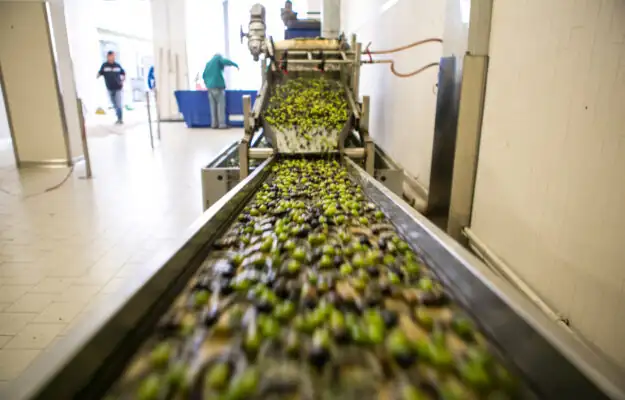
Oil mills, €40 million at zero interest to provide liquidity. Coldiretti: “Only for those producing Italian oil.”
Forty million euros to provide immediate liquidity to olive oil mills, support domestic production, and strengthen the competitiveness of Italian extra virgin olive oil.
"The 'Cambiale Frantoi Oleari' (Olive Oil Mills Bill) is a concrete and immediate response to the needs of the sector," stated Agriculture Minister Francesco Lollobrigida. "We are providing our agricultural businesses and processors with a simple and accessible tool, capable of injecting direct, zero-interest liquidity to support production activities, protect farmers' incomes, and maximize the value of Italian oil. Ensuring the financial stability of oil mills means protecting the entire national olive oil supply chain and strengthening the competitiveness of our Made in Italy products on the markets. Alongside emergency measures, we are continuing to implement structural policies," the Minister continued, "we are strengthening olive oil traceability systems to protect both farmers and consumers, ensuring the full distinguishability of 100% Italian products from those from other European and non-European countries. Furthermore, we recall that €300 million has been allocated through ColtivaItalia (the government's plan for the revitalization of Italian agriculture, with measures dedicated to various strategic sectors). to the olive sector to combat plant diseases, increase high-quality production, and increase Italy's competitiveness on global markets."
Coldiretti also commented on the measure. During a meeting with the Minister, attended by David Granieri, national vice president and president of Unaprol, along with Vincenzo Gesmundo, general secretary, and representatives of the main olive-growing regions, the organization welcomed the allocation, but requested that the resources be allocated exclusively to companies that produce and process authentic Italian olive oil. The agricultural organization emphasized the need to prevent public funds from falling into the hands of operators involved in speculative or shady commercial practices and called for an extraordinary campaign of inspections at storage facilities, olive mills, factories, and large-scale retail outlets, which account for 80% of the product. Among its requests are greater transparency on shelves to allow consumers to easily identify the oil's origin, rigorous checks on the provenance, quality, and traceability of stocks in warehouses, and a financing system that rewards those who collect and correctly remunerate Italian olives.
Coldiretti has also called for detailed checks on national stock data, noting that Italy produces 234 million liters of extra virgin olive oil, compared to domestic consumption of 461 million liters, exports of 318 million liters, and imports of 545 million liters annually. These figures, according to the association, highlight the risk of a portion of foreign product being marketed under the guise of "Italianness."
Finally, the organization reiterated its support for the implementation of the measures envisaged by ColtivaItalia and the introduction of new control systems based on magnetic resonance imaging, genomic mapping, and isotopic mapping, with the creation of a dedicated database to ensure greater protection for consumers and producers.