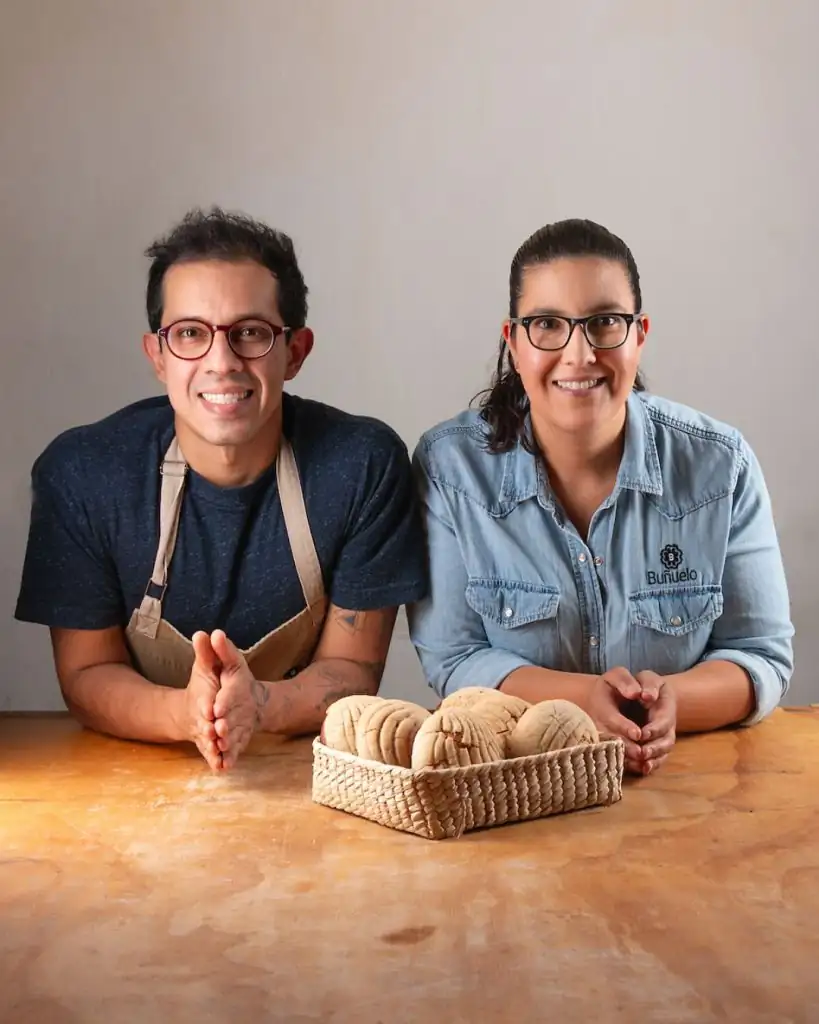
Create perfect shells in the Buñuelo style
According to Buñuelo, the concha comes from the sponge cake family, meaning the dough is beaten, resulting in a fluffier, airier pastry. Its origins, with European influence, date back to the late 19th century, stemming from the production of French brioches.
They were named "conchas" (shells) because of the markings made on top during baking. These markings are achieved with a tool placed on the pastry, and its waves resemble the curves of a seashell. Therefore, for true foodies, any "conchas" lacking these specific markings cannot be called such. In other words, to be called a concha, this sweet bread must have the traditional markings.
Currently, you can find conchas in different flavors and presentations, both in their dough and in their sugar coatings. So you can enjoy this delicious bread at home and share a special moment with your family while making it, here's the recipe for Buñuelo.
For the dough:
- 3 eggs
- 150 ml of milk
- 500 g of flour
- 6 g of salt
- 10 g of dry yeast
- 125g of butter (at room temperature)
- 125 g of sugar
- oil to taste
For coverage:
- 50 g of butter
- 25g of butter (at room temperature)
- 125g of icing sugar
- 125g of flour
For the dough:
- In a large bowl or mixer with a dough hook, add the egg and milk.
- Add flour (previously sifted), salt, and yeast. Mix until the ingredients are combined.
- When it's at the medium speed (a little sticky and elastic), add the butter and continue beating.
- When the butter is well incorporated, add half of the sugar and continue kneading.
- When the dough is at ¾ strength (firmer and more elastic), add the remaining half of the sugar and knead until you have a fine mesh. (This may take 10 to 20 minutes if done by hand.)
- Cover the dough with plastic wrap and refrigerate for 12 hours.
- Portion into 60-gram balls and place them on a tray lined with waxed paper.
- Leave them to ferment in a cool place or in the refrigerator for 12 hours or until they double in size.
For the sugar coating:
- Mix all the ingredients in a mixer until you get a homogeneous dough.
- Portion into 30-gram balls.
- Roll them out with a rolling pin or use a tortilla press.
For assembly:
- Place a little oil on each ball of fermented dough so that the sugar coating (previously portioned and spread) sticks properly.
- Place the topping on top and mark the shell design with a special cutter or a knife.
- Once assembled, ferment at room temperature for 40 to 60 minutes.
- After fermenting, bake at 175ºC for 18 minutes.
TIP
Enjoy it with a rich cup of hot chocolate.