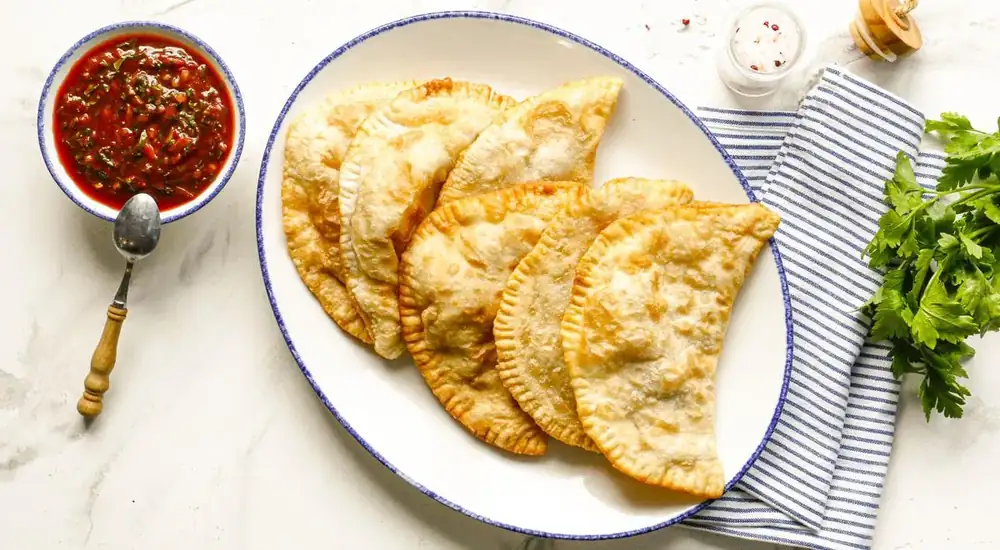
Lavash Chebureki
Chebureki (Crimean Tatar: çüberek) are deep-fried, unleavened dough pastries with filling. They likely originate from Crimean Tatar cuisine. However, similar deep-fried pastries...
In Soviet times, crispy chebureki were incredibly popular. But finding truly delicious fried meat pies was no easy task, even though the dish wasn't (and still isn't) particularly sophisticated or difficult to prepare. Experts recommended trying chebureki exclusively in Crimea, which is understandable: this dish is a distinctive Crimean Tatar dish. However, vacationers returning from resorts in the capital (including high-ranking officials) wanted to enjoy fried pies at home. Perhaps that's why, "at the request of the working people," the first chebureki shop, with the simple name "Druzhba," opened in Moscow in 1957. Chebureki later found their way onto the menus of highly respected Soviet restaurants, such as "Uzbekistan." And Muscovites would line up early in the morning to enjoy these fried pies in the evening! Times have changed, but crispy chebureki still abound. Want to make them at home? Use our proven recipe.
Lavash strudel with apples and nuts is a true gift for those with a sweet tooth who don't want to spend too much time at the stove. This recipe is also a lifesaver when guests forgot to call ahead and threaten to show up in the next half hour. Then you quickly head to the nearest store, pick up some thin lavash bread, and some apples if you don't have any at home. And then everything happens incredibly quickly! Slice the apples, spread them on the buttered lavash, roll them up, and pop them in the oven. Put on the kettle, set the table, greet your guests... And then, with a flourish, serve the lavash strudel with apples and nuts—appetizing, fragrant, and incredibly delicious!
Lazy lavash khachapuri with cottage cheese and cheese filling is a unique dish that can be served for breakfast or as an appetizer with a glass of red wine. It's easy to make and incredibly delicious. You won't need to fuss over the dough: the base of the khachapuri is thin Armenian lavash. Simply cut it into strips, spread the filling, wrap it in a special way (see our detailed instructions), and fry in a pan.
Ivlev-style chebureki are something special. Although chef Konstantin Ivlev calls his recipe "Soviet-style," it differs significantly from the standard USSR GOST (State Standard) recipe. For example, the recipe back then called for a 6:5 dough-to-ground meat ratio. Understandably, few followed it. There was less meat, but the broth was perfectly fine. Ivlev's recipe uses even less ground meat, with a significant portion coming from onions, vegetable oil, and water. These ingredients provide a flavorful broth, but they also significantly increase the filling's fat content. However, the result is magnificent—chebureki made with vodka-infused dough are bubbly and crispy. Be prepared to use a lot of oil when frying. Ivlev's chebureki are literally swimming in it. You can reduce the amount slightly by choosing the right saucepan or pot—a not-too-wide vessel in which the butter forms a thick layer. This isn't too difficult, as Ivlev-style chebureki are quite compact, again compared to Soviet-style ones.