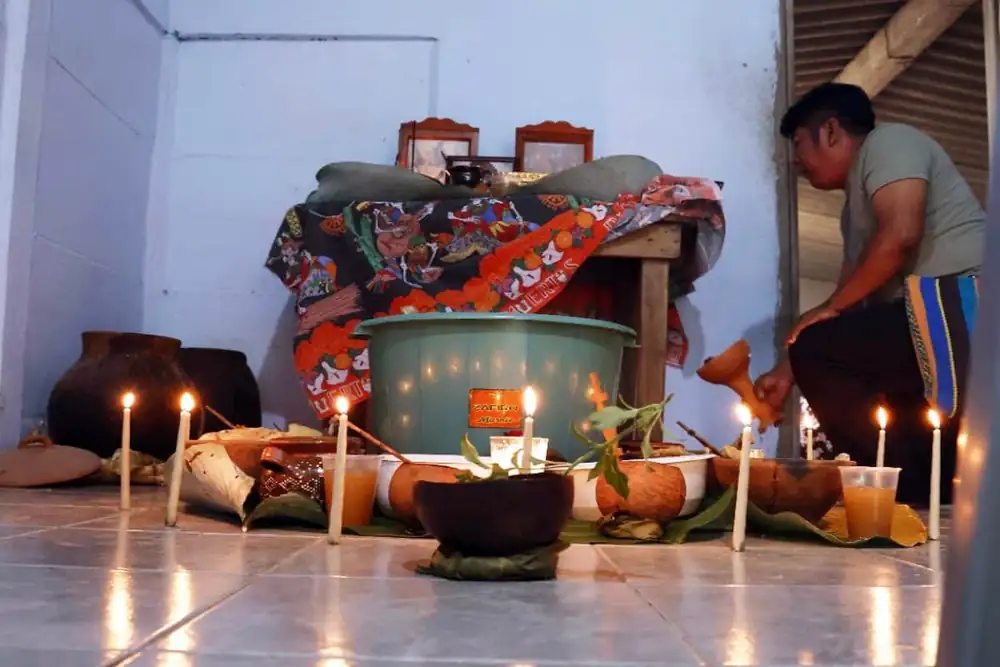
Between atol, uliche and guarapo: This is how the Month of the Souls is celebrated in Tabasco
Mexico is filled with color and tradition on November 1st and 2nd to celebrate the Day of the Dead. The festivities vary from state to state, depending on regional traditions, ingredients, and recipes.
Discover the offerings of the Month of the Souls
In Tabasco, the Day of the Dead is celebrated as the Month of the Souls, and tradition dictates that they are welcomed throughout the month of November. Chef Lupita Vidal and photographer Jesús David have documented and described the festivities in their book, Agua y Humo (Water and Smoke).
Pages 246-249: During the month of November, the Yocotan ancestors come to visit and wander around the villages and houses where they lived. Their living relatives make offerings to honor them and ask them to bestow their blessings upon the crops, the animals, and the family members, who are responsible for "refreshing" the altars with fruit, pozol, uliche, and other ceremonial dishes.
The altars are usually very simple; some are decorated with leaves, others only with fabrics, photos of their deceased loved ones, and figures of the saints and virgins to whom they are devoted.
Not all yocotanes set up the altar at the beginning of the month; they can do it any day in November. It all depends on the time, the disposition, the economy, and the promise that each person has made to their souls.
On the altar there is always placed a container with water and a ball of chorote (pozol with cacao), which represents the heart of the offering.
These offerings are not only for the deceased to eat, but also for visitors who, upon departing, take their "itacate" of sweets and tamales. The altars are refreshed until the night of November 29th, when the souls depart guided by the light of candles and the copal incense.
Special dishes for the festivities of the Month of the Souls
According to the compilations of José Francisco Jiménez, researcher of the Yocot'an culture, these are the main dishes that are usually prepared during the month of the souls.
Ancestral drinks:
- Pozol with sweets: It is made from nixtamalized and dried corn to which roasted cacao is added. It is served with sweet fruits such as sweet potato, pumpkin, plantain, or lime.
- Atol: It is prepared with boiled corn, ground, dissolved in water and strained, then anise, pepper, cinnamon, panela and cocoa are added.
- Guarapo: This is a fermented sugarcane juice beverage. The juice is extracted at the sugar mill and placed in a clay pot with a little water, toasted corn kernels, and a log called a "drunken stick." It can be drunk like fresh water, but the idea is to let it ferment for 10 days or more.
Ceremonial dishes:
- Uliche: This is a ceremonial broth to comfort the souls of the departed after their long journey. It is usually prepared with some type of protein (turkey, duck, and nowadays beef), thickened with masa, and seasoned with a sauce that typically includes achiote, tomato, onion, garlic, and sometimes bell pepper. It is served in a clay bowl, topped with pumpkin seed powder and mashito chili, and accompanied by a thick tortilla or manea, a tamale without salt or meat that is wrapped in a banana leaf and steamed.
- Ichil Kab: This dish is made with corn dough, achiote, onion, salt, green plantain slices, and chili. It includes grilled or toasted pejelagarto (alligator gar) and shrimp. It is served with manea (a thick, rolled tortilla).
- Totopostes, sixgua, and turuletes: A totoposte is a very thin, toasted tortilla about 20 cm in diameter. A sixgua is a type of bread typically made with fresh corn, lard, sugar, and egg. A turulete is made with cooked and drained corn that is left to dry in the sun. Once ground into flour, lard, sugar, egg, cinnamon or anise are added, and it is then baked over hot coals until it becomes a crispy cracker.
Each dish reflects the connection between life and death in the Tabasco worldview, highlighting respect and love for those who have passed away.