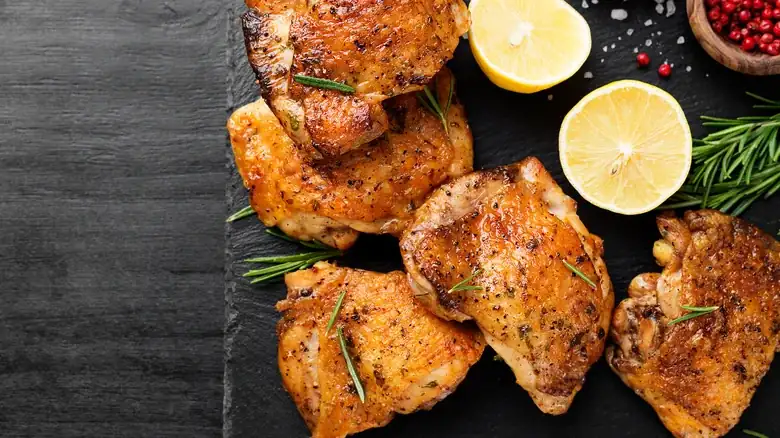
12 Tips To Get The Best Browned Chicken
And if you're really worried about cleanup, know that you can put all of those charred bits in the bottom of your pan to good use. Once your chicken is cooked, all of those caramelized pieces left can be lifted from the pan by sizzling them into gravy or pan sauce.
“If the pan is only medium, it's going to render out the fat behind the chicken skin without crisping it,”
Luckily, with this top tip, you'll be getting a perfect brown chicken every time. Buy your chicken the day before you're going to cook it and then pat it dry with some paper towel. Then, place it in the fridge without covering it and leave it to rest overnight. This will help the skin to dry out slightly, meaning that when you put it in the oven, it will crisp up instead of steaming and becoming soggy.
Importantly, while this trick is great for getting brown chicken, it's also slightly risky hygiene-wise and could increase the risk of cross-contamination. As such, be very careful that your chicken doesn't touch any other meat or produce in the fridge, warns Food Standards Scotland . Make sure you don't undo all your hard work by putting it in to cook straight from the fridge, too: Leave it to rest at room temperature for an hour or so before cooking it.
Choose your chicken wisely
While some chefs seem like magicians, the truth is that they can only be as good as the ingredients they have at hand. We all are. And that's why if you want the best browned chicken, you have to make sure you're choosing the best meat for the job. A key thing to check is the amount of added water your chicken has. Some packs of chicken and raw chicken carcasses contain a surprising amount of liquid, with broth sometimes added to improve the flavor of the meat. This is a process known as plumping, with the injection of flavored water also serving to make the meat more tender. Unfortunately, this then creates a problem when you come to cook it, as this liquid (which can make up almost a sixth of the chicken's weight) is then released into the pan, stopping the chicken from becoming browned and delicious. And that's before you consider the fact that chicken injected
Make sure it's room temperature before cooking
To get that perfect shade of brown on a piece of chicken, you've got to get it to a certain temperature. And to help your meat on its way, make sure that you're not cooking it straight out of the fridge. If you take a piece of chilled chicken and put it into your hot pan, you'll end up reducing the overall temperature of the skillet, and this can mean that not only does the food take longer to cook, but it also leaks its moisture content out, leaving you with a pale, unappetizing piece of meat. This also creates issues with cooking the chicken properly throughout; if your meat is colder on the inside, it'll take longer to cook through, potentially meaning it can still be raw within when the outside is cooked. The solution? Just think ahead a little. Around 20-30 minutes before you're planning on cooking your chicken, take it out of the fridge and leave it t
Heat up your pan
Okay, so we're not talking about delicately poaching chicken breasts or passing them through a sous vide machine here, folks. We're talking about browning. Searing. Getting a perfect, crispy, golden crust on your meat. And to do that? You're going to need some serious heat in your pan before you introduce your chicken to it. It might seem logical to heat your chicken and pan at the same time, but if you do this, the meat will just release all its juices as it starts to cook, leaving you with a soggy, white, disappointing result. So, get that pan sizzling and then drop in your meat. This high heat straight off the bat is crucial to get your chicken up to the temperature needed for the Maillard reaction to start occurring. Ideally, for searing, your pan surface temperature should be 400 degrees Fahrenheit or above, so that when you add the chicken, the heat doe
Pat your chicken dry
Look, no one likes dry chicken. At some time in our lives, a lot of us have had to gamely chew our way through stringy, moisture-less mouthfuls of chicken breast, and it's really not that fun. But somewhat curiously, if you want to get the best from your meat, you have to make it a little drier before you cook it. Although this might seem counterintuitive, a relatively dry surface on your meat is one of the best ways to ensure that you get a good brown. When your chicken is moist on the outside, the excess water turns to steam when it comes into contact with the hot pan, explains Foodal. This steam then prevents your meat from browning properly. To make things drier, though, all you need is some paper towels. Take a piece and pat your chicken dry with it. Make sure you pat it all over, to remove as much moisture as possible. Remember to do this before you sea
Keep the skin on
We will never, ever, stop advocating for skin-on chicken pieces. And while we know that there's a time and place for everything, and skinless chicken may be preferable for a variety of culinary and nutrition-related reasons, keeping the skin in place is one of the secrets of good chicken. Chicken skin, when browned, can crisp up deliciously, with the fat in the skin searing to add flavor, as well as locking in moisture. To get crispy chicken skin, you just have to follow a few simple rules. One of the most important is heat, which is especially crucial to get right due to chicken skin's higher fat content. "If the pan is only medium, it's going to render out the fat behind the chicken skin without crisping it," states chef and Los Angeles campus president for the Institute of Culinary Education Lachlan Sands. Get your pan super-hot, pat the skin dry with some paper
Use the right oil
When it comes to searing meat, you'll need oil to help you. Using oil when browning chicken is essential, not only to add flavor and help the meat to develop its color but also to prevent it from sticking to the bottom of your pan and drying out. The type of oil you choose, however, is super important, and some are more suited to the job than others. Ideally, you'll want to choose an oil with a high smoke point, like canola or vegetable oil. These oils are particularly good for browning chicken as they stay stable at the high temperatures required to get a good sear on your meat. Other oils, like extra virgin olive oil, have a lower smoke point, which means that they essentially start to burn when they get too hot. And when this happens when you're trying to brown meat, it can imbue your food with a charred, acrid flavor. Bear in mind, though, that you don't ju
Add your seasoning at the right time
If you've ever had bland chicken, one of the reasons it could have been so unappetizing was due to a lack of seasoning. As a meat with a mild taste, chicken needs salt, pepper, and spices to truly make it pop — but it's important to know that the point that you add them in the cooking process can also change how much it browns. If you're looking for the perfect sear, you should add your salt and other seasonings to the meat before cooking, states Laura Fuentes. It may be worthwhile to add spices that are particularly susceptible to burning when the meat is already in the pan, on the uncooked side, before flipping it over. This side usually takes a little less time to cook, so your spices won't char. For a next-level sear, you may also want to brine your chicken before you cook it, as Lodge Cast Iron recommends. This will help make the meat more tender. Throwing some s
Don't put too much in your pan
We get how annoying it can be when you're catering for a crowd, and you read that the recipe says "cook in batches." Surely, you don't have to do that, right? if you have a big pan, can't you just throw it all in at once and hope for the best? Well, if your recipe includes browning chicken, not quite. One of the cardinal sins when it comes to browning chicken meat is overcrowding your pan, which will only produce a watery result. When you place meat in a hot pan, it will start to release any moisture on its surface and from within as steam. However, if your pan is overcrowded, this steam doesn't have the space to rise away from the pan as it should, allowing the meat to brown up, and instead starts to pool and create water. That's why you should make sure your chicken has enough space in the pan to cook. If you're cooking a few pieces at the same time, leave enou
Leave it alone
If you're the type of cook that likes to be hands-on in the kitchen, you might find this next tip a little tricky, but trust us, we promise it'll help. Once you add your chicken into your pan, don't touch it, states Laura Fuentes. Your meat needs to stay exactly where it is for a few minutes, without prodding or poking, so that it can form a crust and brown effectively. If you start to poke, prod, and move it around the pan, you'll stop the Maillard reaction from happening, warns Institute of Culinary Education LA campus president and chef Lachlan Sands. Your chicken will cook, but it might not brown. So, how do you know when it's okay to move it? Watch out for when the meat starts to lift away from the pan a little, says Sands. When this happens, it should be okay to flip it over. Remember that while you might be concerned about the meat sticking, if you're using e
Finish it in the oven
Eating undercooked chicken is no joke, y'all. With raw chicken potentially hosting bacteria that can cause food poisoning, we always want to make sure this meat is fully cooked throughout. But if you're cooking at high heat, how can you ensure that your chicken cooks all the way through before it gets burned on its outside? This is where your oven comes in. By putting your chicken in a hot oven to finish off, you avoid the risk of either overcooking it and ending up with a dry piece of meat or undercooking the middle and getting sick. This is particularly useful with thicker cuts of chicken that can take longer to cook through. Preheat your oven before you start frying your chicken, so you know that it's ready to go, and then once your chicken has developed a nice browning on each side, place it onto a baking sheet and pop it inside. As your chicken has be
Opt for stainless steel
Without the right pan, your quest to get perfectly browned chicken can be thrown off course pretty fast. But with as many pan materials out there as there are meats, knowing which style of pan is best to use is crucial. And in our opinion, stainless steel is the ideal choice if you're trying to get the perfect sear. This is because stainless steel is designed to get seriously hot, especially when compared to other pans like nonstick varieties, explains Meyer. Although stainless steel can take a bit longer to heat up, it retains heat effectively, so when you introduce your meat, it will achieve the Maillard reaction fast. Although you might benefit from an easier cleanup with a nonstick pan, they're also more likely to lose heat quickly. And if you're really worried about cleanup, know that you can put all of those charred bits in the bottom of your pan to good use
For roast chicken, refrigerate it uncovered
While getting well-browned chicken in a pan is one thing, achieving it for an entire roast chicken is another. And too often, roast chickens come out of the oven looking anemic, undercooked, and like they deserved better. Luckily, with this top tip, you'll be getting a perfect brown chicken every time. Buy your chicken the day before you're going to cook it and then pat it dry with some paper towel. Then, place it in the fridge without covering it and leave it to rest overnight. This will help the skin to dry out slightly, meaning that when you put it in the oven, it will crisp up instead of steaming and becoming soggy. Importantly, while this trick is great for getting brown chicken, it's also slightly risky hygiene-wise and could increase the risk of cross-contamination. As such, be very careful that your chicken doesn't touch any other meat or produce in the fridge