Why you should avoid ordering one dish per person at Chinese restaurants
If you grew up eating American-style Chinese food, you're probably familiar with the standard combo meal: a generous portion of fried rice with pork, smothered in five-spice beef sauce, and broccoli, accompanied by a spring roll.
If you grew up eating American-style Chinese food, you're probably familiar with the standard combo meal: a generous portion of fried rice with pork, smothered in five-spice beef sauce, and broccoli, accompanied by a spring roll. While the specifics of each combo meal may vary (steamed rice instead of fried, General Tso's chicken instead of beef and broccoli, etc.), the essence of the combo meal remains the same in many Chinese restaurants.
However, this combination plate is the antithesis of family dining, something very common in traditional Chinese cuisine. If you're only familiar with Chinese combination plates, you're missing out on a unique cultural experience if you don't share five or six dishes with an equal number of people. In other words, you should pass around the spring rolls and generous portions of fried rice, allowing everyone at the table to share the experience.
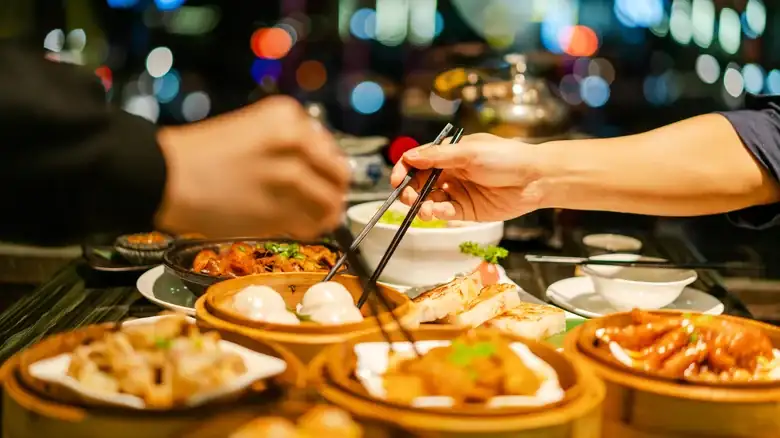
Having dinner as a family at a Chinese restaurant.
While they don't exactly encourage sharing with family and friends, Chinese set meals often have a lot to teach us: how to choose what to order when eating Chinese food with the family. Most set meals include some type of rice or noodles, a protein dish, a vegetable, and possibly an appetizer, such as spring rolls or pork with seeds, with variations depending on the dish ordered.
You can enjoy all these dishes, and even more, when eating at a Chinese restaurant. The difference lies in the fact that each food item is served on its own plate. That is, you'll have a plate of rice or noodles, a protein dish, a vegetable dish, and a variety of appetizers, also on separate plates. Imagine the table as one big platter, and you'll get the idea.
There are good reasons to share Chinese food (or any other food, really). Sharing plates of dumplings and kung pao chicken creates strong social bonds. Sociological research confirms this. According to a survey conducted by Oxford University, people who regularly eat with others are happier and more satisfied with their lives than those who don't, and 76% of respondents agreed that sharing a meal is a great way to bring people together.
Possible dishes to share with friends and family.
The most satisfying family dining experiences come from ordering a variety of dishes that offer contrasting flavors and textures. If you're unsure where to begin, you can use the restaurant's set menus as a guide. Alternatively, you can apply the concept of the five tastes, salty, sour, sweet, bitter, and umami, to your dish choices to increase variety. For example, a sweet and sour chicken or Szechuan beef dish offers sweet, sour, and spicy flavors (in the case of the beef). Broccoli with ginger and sesame combines bitter and umami flavors. Pork fried rice combines umami, salty, and sometimes sweet flavors in a single dish.
As for appetizers, pork with seeds, with its spicy mustard and sweet ketchup, combines bitter, sweet, and umami flavors, along with a touch of spice. Rangoon crab offers a wide variety of sweet and umami flavors, as do many egg roll and spring roll recipes.
Of course, personal tastes are what most determine what you and your family will order, not the list above. However, what's important isn't the individual dishes you order, but the reason you order them. Sharing a meal gives you, your family, and friends the opportunity to create special bonds, united by Chinese noodles and bottles of Kikkoman soy sauce.