What Does It Mean To Proof Yeast?
Unlike diamonds, yeast doesn't last forever, and if you try baking with yeast that's gone off, you're going to have a bad time. Yeast is a single-cell living organism responsible for making bread and other baked goods rise.
Fortunately, you can avoid the pain of accidentally using bad yeast while baking and ending up with an unleavened product. This is where proofing comes in. Simply put, proofing is a method of checking whether or not yeast is alive. Like proofing your bread, which is when you place the dough in a warm environment to let it rise, proofing yeast can be essential and it's easy to do. To start, add a small amount of yeast to a bit of warm water, about 80 degrees Fahrenheit; you want it warm, not hot, which could kill the yeast. Then, add some sugar for the yeast to feed on and wait a few minutes. The mixture should look creamy and be full of tiny bubbles, signaling that the yeast is alive. If you don't see any bubbles, it's likely the yeast is dead.
While most yeasts last longer than they used to, proofing can be a crucial step in the baking process that can save you a lot of disappointment. That said, it is more important to do if you're using yeast that has been sitting around or opened for a while.
Not all types of yeast need to be proofed
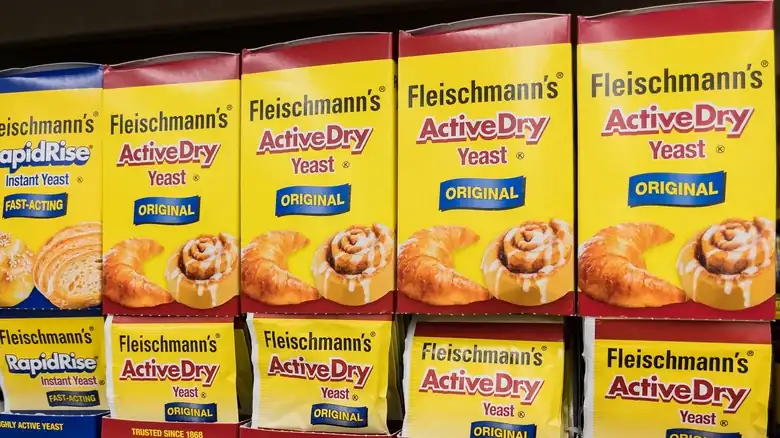
While baking bread at home may save you some money it will all be for naught if you're using bad yeast. However, not all types of yeast need to be proofed before you use them. For instance, rapid-rise, bread machine, and instant yeast don't require proofing because they will lose their fast-rising capabilities if you dissolve them before adding them to the dough. Instant yeast is less perishable and rarely dies as it is more resistant to temperature changes and does not require activation. Likewise, rapid yeast includes enzymes to speed up rising but is otherwise a type of instant yeast and just as resilient. On the other hand, bread machine yeast is formulated to work with machines and is similar to instant yeast.
The types of yeast you need to worry most about proofing are active dry yeast and fresh active yeast, also known as "cake yeast." Active dry yeast needs to be dissolved in a liquid to activate it, unlike its instant cousin, which can be added straight into a recipe. This type of yeast is sensitive to temperatures above 110 degrees Fahrenheit and is often found in packets or small glass jars. Once activated during proofing, you should begin seeing bubbles with active dry yeast in five to 10 minutes. This yeast is highly perishable but is the best for baked goods that need to rise more than once. Fresh active yeast is usually found in compressed blocks, and it must be refrigerated and used within weeks of purchase. Easily one of the most perishable types of yeast, it's crucial to proof it before use to ensure it hasn't died off.