Here's Why Your Sauteed Spinach Is Bitter And What To Do About It
Sauteing spinach is a smart way to treat this versatile ingredient, whether you are serving it on its own or as part of a more complex dish. But when your sauteed spinach comes out bitter, it can ruin your best-laid plans for a chef-worthy meal.
Spinach is a delicate ingredient, one that doesn't require much cooking, but it is a bitter green by nature, so you'll have to take a few precautions to make sure the flavor is appealing and appetizing when you serve it. Spinach contains something called oxalic acid, which is actually the culprit of its bitterness. When this compound reacts with our saliva, it creates a bitterness in our mouth, thus giving this leafy green vegetable its reputation.
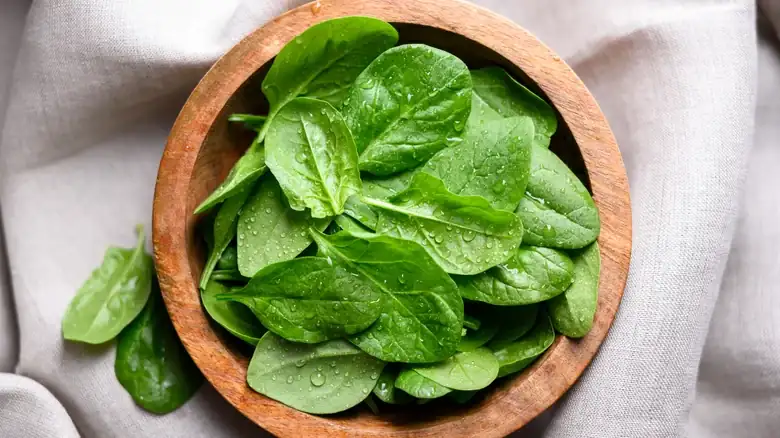
The longer spinach sits in the ground before it is harvested, the bigger the leaves get, resulting in higher levels of oxalic acid. The best practice for avoiding bitter spinach is choosing small crisp leaves that have a beautiful green color. Although the large leaves may be tempting from an economical point of view, it is the small, tender greens (what is often sold as baby spinach) that will give you the best flavor and least amount of bitterness.
Preparation is just as important as choosing the right greens
No matter how you prepare spinach, it is important to respect the delicate nature of the leaves, and that means giving them the proper treatment when preparing and cooking them. Start off with washing your spinach well to remove any dirt or pesticides, and remove the stems from larger leaves, as those thick stalks tend to hold more oxalic acid than the leaves.
When it comes to the actual cooking process, the most common faux pas when sauteing spinach is overcooking the greens, which can cause them to turn even more bitter than they would naturally taste. Spinach is delicious and easy to eat raw, so it stands to reason that it doesn't require a lot of cooking to perfectly saute these greens. When it comes to spinach, it's safe to say that less is more. You only want to cook the greens until they start to wilt so you not only maintain the flavor and the high nutritional value, but also avoid unnecessary bitterness.
Once you've mastered the cooking technique, the next step is to conquer the flavor palate. Pairing the right ingredients with your spinach will elevate your dish, but you really don't need much to give it that extra spark. A little lemon, for example, will add just the right acidity to create a next-level sauteed spinach, or a little bit of crunch can change the texture profile to give your dish an unexpected mouth feel that will surprise the most discerning palate.