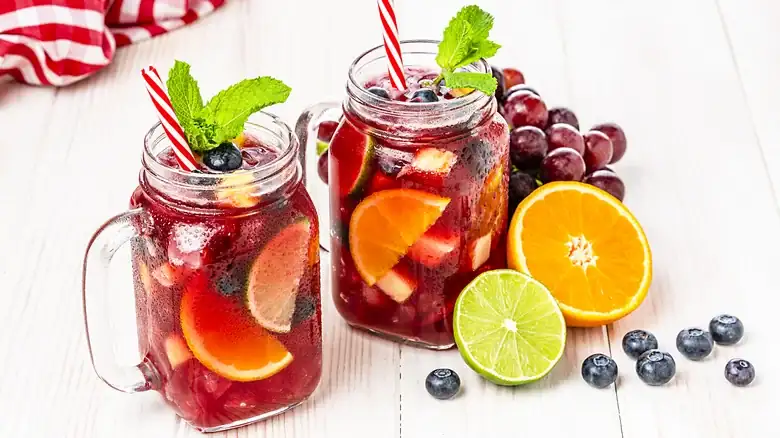
For The Best Sangria, Fruit Choice Really Matters
Sangria is the perfect balance between a glass of wine and a cocktail. It's an easy choice if you're looking for a fruity, refreshing drink, and the fruit combinations are seemingly endless.
The bottom line: As the fruit gets infused into the wine and vice versa, the flavor pairings will mean the difference between guests coming back for a second glass or your sangria pitcher remaining pretty full at the end of the night.
How to make the perfect white sangria
There are two elements to the perfect sangria: wine choice and fruit choice. Of course, if you add any juices or other liquids to the mixture, that also makes a difference, but it's most important that proper fruits pair with the proper wine. White wine, a lighter, brighter sangria than its red wine counterpart, shines well with summertime fruits like peaches and pineapple. Apples are also a good addition, but don't go with a variety that's overly sweet; the wine itself is already on the sweeter side, and you want your guests to feel like they can handle more than one glass.
You can also bring in a fizzy addition, such as sparkling water (although ginger ale is a slept-on beverage that steps up any sangria game) to create a sparkling variety of the drink while also watering down the alcohol content a bit. If you choose to go the sparkling route, let the fruit and wine blend together on their own for about an hour, then add the fizz to the pitcher just before it's served to prevent it from going flat.
How to make the best red or rosé sangria
Fruit pairings mean just as much in darker sangria as white sangria, but since the wines have such different flavors, different fruits work better. Red sangria has a dryer, more bitter flavor than white, so to complement, try adding darker fruits like cranberries or blackberries. Citrus works well here, too, since it adds brightness. And if you're looking to sweeten up the drink, don't be afraid to add some sort of fruit juice (or ginger ale) to help it appeal to both dry and sweet wine lovers.
Rosé is generally on the sweeter side compared to red wine, but still dryer than some whites. One fruit that pairs well is the blood orange, which also looks great floating in a rosé-filled pitcher. Red fruits — such as strawberries and raspberries — work well, too. Ultimately, the fruit pairing comes down to personal preference, but keep in mind that not all fruits pair well with all wine varieties.