El ingrediente picante que da nombre a los cócteles mule
Si bien cócteles populares como el Old Cuban y el Cosmopolitan son conocidos por la mayoría, sus historias de origen pueden resultar desconocidas incluso para los bebedores más frecuentes. Tomemos como ejemplo el Moscow Mule.
While popular cocktails like Old Cubans and Cosmopolitans are familiar to most, their backstories might be elusive to even the most frequent drinkers of the beverages. Take the Moscow mule, for example. Many of us know this drink is composed of a healthy combination of spiced ginger flavor, vodka, and a slice of lime for garnish. But what does this simple mixture have to do with either Moscow or mules? Well, the story behind the name of this cocktail is more straightforward than you think.
The Moscow aspect of a Moscow mule came about thanks to America's association of vodka with Russia. (Yes, the Moscow mule originated in America, not Russia). Some people also call the Moscow mule a vodka buck since most vodka in the U.S. does not actually come from Russia.
As to how the term mule came to be, it's alleged that the name comes from the very first drinkers of the cocktail who agreed that the ginger beer from the drink packed a strong kick — much like that of a mule. Unlike other more straightforward mixers, such as ginger ales and cranberry juices, ginger beer has the potential to mask any type of spirit thanks to its extremely pungent smell and taste. It's spicy, sweet, and just as strong as the most emphatic kicks from a mule.
How the copper mug reinforces the title
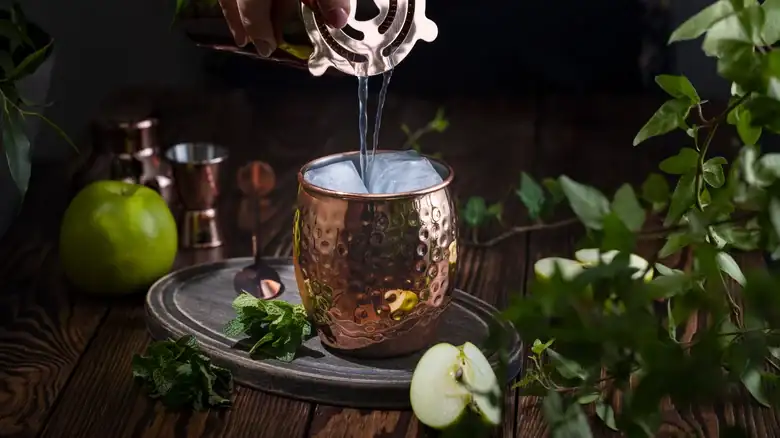
The copper mug also plays a part in creating that "packs a punch" label. Mules are distinct in appearance because of the familiar copper mugs used to contain each drink — but the use of the cup is for more than just its good looks. The copper metal of this unique drinking vessel adds another element to a mule's simple yet strong taste. This is because vodka and other spirits oxidize in copper mugs, which opens the beverage to even more flavors.
The benefits of the copper metal spill over even more and apply to the ginger beer in the cocktail, too. The copper stabilizes the intense carbonation of ginger beer as it reacts to the metal, which leads to a more surprising flavor profile. Plus, a copper mug is just a great vessel for cold drinks. The copper becomes frosty in cold temperatures, which makes it a great choice for cocktails best enjoyed in warmer weather.
London, Mexican, and how the other mules got their names
The origin stories behind some of the other varieties of mules follow a similar pattern to the original mule. Much like its Moscow counterpart, the London mule gets its name from the deep ties gin has with London. The most basic iteration of this drink consists of gin, ginger beer, and lime. (It is also known as the gin gin mule for apparent reasons). This same backstory applies to the Mexican mule, which uses tequila in lieu of gin or vodka, and the Kentucky mule, which uses bourbon.
So overall the names of these mules are more self-explanatory than you think as they stem from simple connotations — the alcoholic element used in the drink and the region in which that alcohol is commonly indulged. No matter the reason, we couldn't imagine enjoying a mule cocktail in anything else but a copper mug. (Or calling it anything different.)