How To Pick Out The Best Blueberries
You'd be hard-pressed to find a food as delicious and nutritious — with disease-fighting potential — as the blueberry. Blueberries are often called a superfood, and it's easy to see why.
They can also seamlessly fit into every meal (and snack) of the day. Throw a handful on top of your favorite Greek yogurt with a sprinkle of granola for breakfast. Add them to a fresh strawberry spinach salad at lunch. Stew them with a bit of lemon juice to spoon over easy homemade pound cake for a delectable dessert.
Naturally, you'll want to find the highest quality berries to enjoy the highest quality benefits. So how can you identify the best of the lot? Fortunately, it can be as simple as a look and a touch.
Picking the Perfect Blueberry
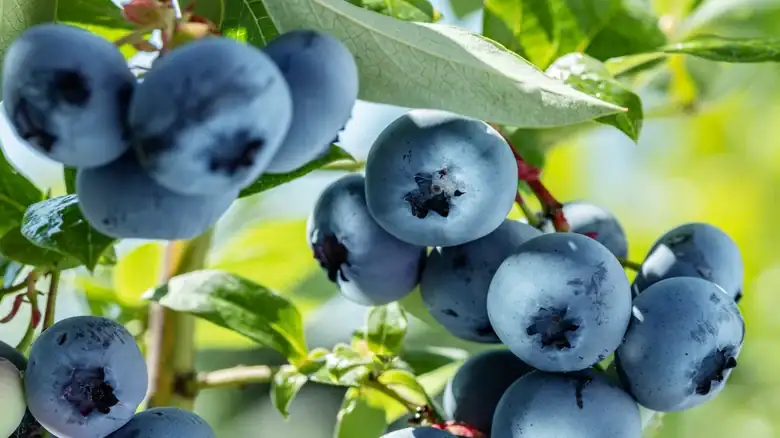
When picking the best-tasting, best-quality berry, your senses of sight and touch are equally important. First, the berry should look deep, bluish-purple to almost black in color. You're looking for a uniform hue among your selection without those partially green or white stowaways. Those little guys won't ripen after being picked, so avoid containers with too many green berries or almost-blue berries since quality isn't improved from there. The dusty gray coating on the dry berries (called the bloom) is a natural botanical occurrence, not a sign of pesticide residue or poor quality.
Next, check the skin of the berries: are they wrinkled, bruised, or split? If so, keep looking. Give them a gentle squeeze. The ideal berry will boast a plump, firm exterior with no signs of damage, and it won't bruise under gentle pressure.
And finally, check carefully for any signs of mushiness or mold. Blueberries are as fragile as they are delicious, so one moldy berry can ruin the whole container in just a day or two.
Fresh or Frozen?
Certainly, nothing beats the flavor of a fresh-picked blueberry at the peak of its season, but fresh isn't always an option the rest of the year. Blueberries have a short growing season in many parts of the U.S., so the off-season lot you'll find in grocery store aisles is likely imported from afar. Since the nutrient degradation process starts as soon as the fruit is picked, the fresh options you buy out-of-season have already lost some nutritional value during transport.
Frozen foods, on the other hand, are usually frozen within hours of being picked, so nutritional losses are minimal. That means your frozen blueberries have about as much antioxidant power as the basketful you just plucked off the bush. The downside about frozen blueberries, however, is the texture change they exhibit after thawing. Because water expands as it chills, blueberries' fluid-filled cell walls burst in the process of freezing. And broken cell walls equal mushy fruit.
However, don't miss out on the many uses of this frozen gem. Frozen blueberries blend perfectly into a smoothie to add a thicker texture, while fruit cobblers and pies won't suffer from a slightly softer texture. Dietitians even recommend snacking on them right out of the freezer to crush an ice cream craving.
Blueberries are a nutritional powerhouse you shouldn't miss. So be sure to pick the highest quality of this superfood, whether you're at the grocery store freezer section or the U-Pick farm.