That golden thread that embellishes every dish
Say Tuscany and you think of the masterpieces of the Middle Ages and the Renaissance, the genius of Dante Alighieri and Leonardo da Vinci, and hills dotted with cypress trees or covered in vineyards.
From the sea to the hills, olive trees grow everywhere in Tuscany, and each area boasts unique soils, microclimates, cultivars, and agricultural practices that produce consistently excellent products, each with subtle nuances of flavor and character. Suffice it to say that there are over 80 native olive varieties, the most famous of which are Frantoio, Leccino, Moraiolo, Maurino, Leccio del Corno, Pendolino, and Correggiolo. To promote this heritage of biodiversity and flavor, since 1998, the region's olive oil production has been protected by the Protected Geographical Indication (PGI) label. To earn the Toscano PGI mark, the regulations stipulate that all stages of the production process (from olive harvesting to pressing to oil packaging) must take place in Tuscany.
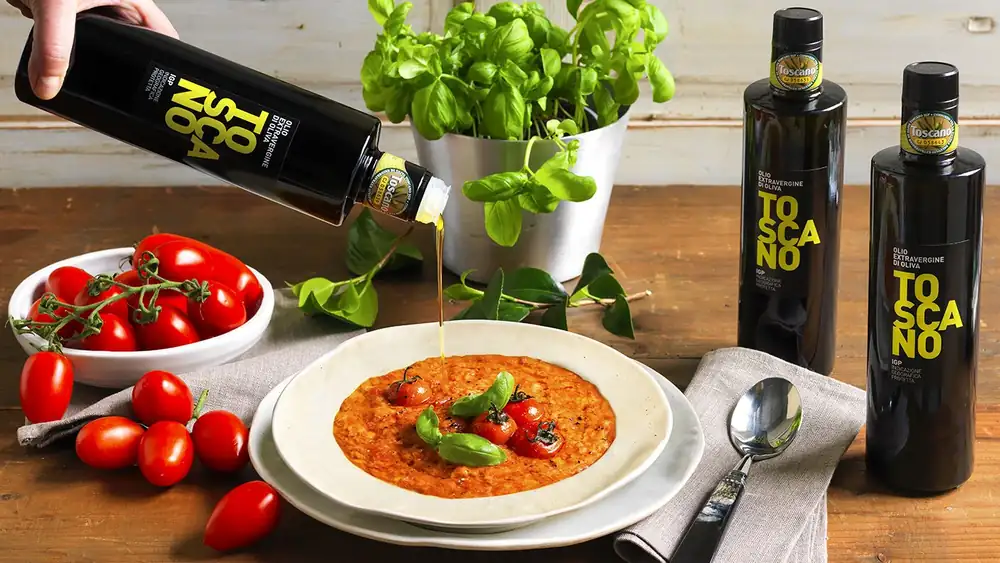
Freshly pressed, Tuscan PGI Extra Virgin Olive Oil has a more or less intense green color, which turns yellow over time. It has vegetal aromas reminiscent of artichoke, freshly cut grass, and aromatic herbs, and an intense, balanced flavor with pleasant bitter nuances and a spicy finish. Excellent for cooking, it is at its best when used raw to flavor soups, legumes, meat, fish, and vegetables. We offer it in a traditional Tuscan recipe, perfect for the arrival of summer.
Effort: Easy Time: 1 hour 30 minutes Vegetarian.
Ingredients for 6 people 1.5 kg tomatoes for sauce 350 g stale Tuscan bread in slices vegetable broth – sugar garlic – basil Tuscan PGI Extra Virgin Olive Oil salt – pepper.
Directions: Score the tomatoes with a cross and immerse them in boiling water for less than 1 minute, drain, peel, and puree. Rub the stale bread slices with a clove of garlic. Arrange a layer of stale bread slices in the bottom of a large saucepan, cover with some of the pureed tomatoes, and season with 4 tablespoons of oil, a pinch of sugar, a pinch of salt, a pinch of pepper, and a few basil leaves. Add another layer of bread and repeat the seasoning, then baste everything with 3 ladles of hot broth. Place the saucepan over low heat and cook for 1 hour, stirring occasionally to break up the bread. Serve the pappa al pomodoro garnished with fresh basil leaves, raw oil, and a pinch of pepper.