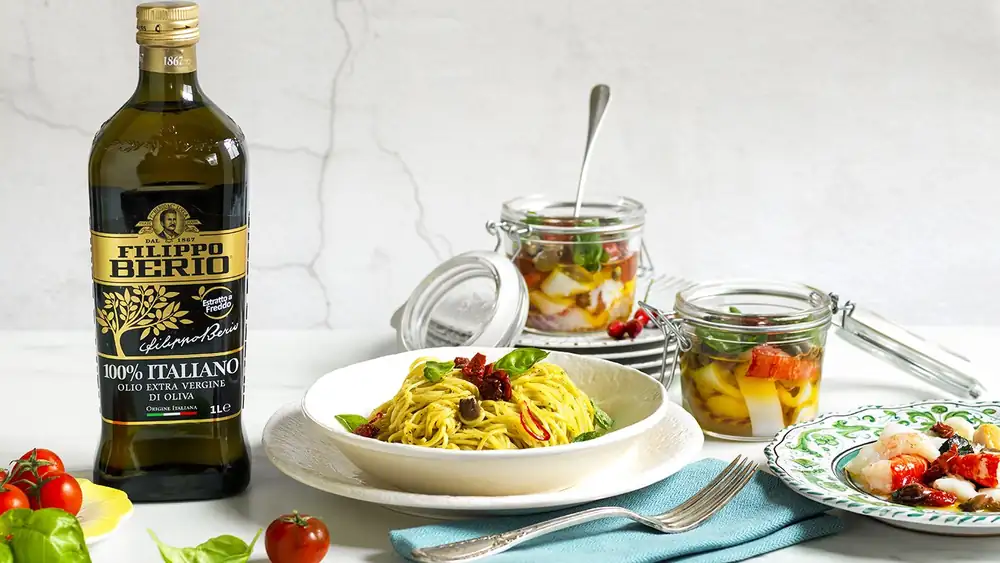
When extra virgin olive oil becomes a recipe ingredient
Extra virgin olive oil is a fundamental food for our health, a juice rich in vital properties for our well-being, and has rightly become an essential element of the Mediterranean diet.
Not all extra virgin olive oils are created equal. Choosing a good extra virgin olive oil is no easy feat. According to European regulations, "Extra Virgin Olive Oil" is defined as an oil with an acidity level of no more than 0.8% and when it is extracted exclusively using cold mechanical methods, at temperatures below 27 degrees Celsius. This process ensures no alterations caused by varying thermal conditions. The extra virgin olive oil production process involves several phases: olive harvesting, leaf removal, washing, pressing, malaxation (the stirring of the oil paste to separate the emulsion between water and oil), extraction, and separation of the remaining water due to the different densities of the two liquids. Finally, bottling and sale.
The quality of an extra virgin olive oil is measured by the aromas and flavors it releases on the nose and palate. The best-quality extra virgin olive oils have a rich bouquet, determined by the polyphenols present in the olives. Among the most common and recognizable scents of an excellent extra virgin olive oil are cut grass, artichoke, tomato and its leaf, almond, green apple, as well as intense balsamic notes. All of this contributes to the oil's fruity character, which can be classified into three categories: light, medium, and intense. A fruity flavor with a good balance of bitterness and spiciness is synonymous with a masterfully crafted product.
Among the many products on the market, Filippo Berio 100% Italian extra virgin olive oil is the result of an extremely rigorous quality process, which places equal importance on both the techniques used to produce a top-quality oil and the development of sustainable agronomic methods, essential for environmentally friendly olive oil production. Filippo Berio 100% Italian is a fruity oil that releases hints of herbs, artichokes, and slightly bitter ripe tomatoes on the palate. It is one of four products under the Filippo Berio brand, born in the first half of the 19th century when Filippo, from Oneglia, in the province of Genoa, moved with his family to Lucca, Tuscany. There, after learning all the secrets of the extra virgin olive oil production process, he founded Oleificio Berio. After 15 years of experience, Filippo began exporting his olive oils to North America, thanks to the large influx of Italians to the United States, achieving significant international recognition. After his death, the helm passed to his daughter Albertina, who, together with several Lucca industrialists, founded the Salov Group, which later incorporated the Filippo Berio brand. Salov is headquartered in Massarosa, in the province of Lucca, and remains one of the largest companies in the olive oil sector. For Italy, it has developed a dedicated line, specifically designed for this particular market.
The difference in quality for every Filippo Berio oil lies in the meticulousness with which it is produced. Every step, from the field to the bottle, is traceable and certified, beginning with the application of sustainable integrated production techniques. Certification is carried out by a highly respected external body, SGS, which assesses both product quality (starting with parameters that are more stringent than legally required) and environmental sustainability throughout the supply chain, from the field to all stages of olive selection, transportation to the mill, and pressing. Specifically, only crops that adhere to integrated production principles are selected, and the healthiest olives are chosen, harvested at the perfect stage of ripeness and rigorously cold-pressed, to achieve the highest possible quality and a full, balanced flavor. For Filippo Berio, quality is not just a goal, but a journey, a virtuous approach aimed at offering the best through a product that is a symbol of Italian culinary tradition: extra virgin olive oil.
Among the many projects developed, one in collaboration with the CNR (National Research Council), involving the olive grove on the Filippo Berio farm, is particularly important. Fifty-two different olive tree varieties have been planted across the 75 hectares of cultivated land, with the aim of studying the productivity and sustainability of crops and rediscovering little-known varieties resistant to Xylella Fastidiosa, a bacterium that is threatening Italy's entire olive-growing heritage. Several ancient Tuscan cultivars, which had fallen into disuse over the years and could become representative of one of the areas best suited to olive cultivation, have also been recovered. The project will effectively transform the Filippo Berio olive grove into an open-air laboratory, where the trees will be treated and cared for in full compliance with sustainable and cutting-edge production methods and will be studied for the improvement of olive growing. Real-time monitoring will then allow for the entire cultivation environment to be monitored, using interconnected wireless sensors on the olive trees and in the soil, and drones to monitor plant health. These devices will also detect the presence of the olive fly, a parasite capable of rapidly destroying an entire tree. A key aspect of all this work remains environmental awareness through efficient yet sustainable production. This project will, thanks to biodiversity, help combat major climate change while preserving as many olive varieties as possible.
Ingredients for 4 people: 400 ml extra virgin olive oil, 200 g calamari, 200 g cuttlefish, 8 red prawns, 8 large scampi, 200 g sea bass, 200 g scallops, black olives, a few basil leaves, capers, garlic, sun-dried tomatoes, chili pepper, salt. For the pasta: 400 g 00 flour, 2 eggs and 2 egg yolks. For the basil pesto: basil, oil, pine nuts, salt, pepper.
Method: For the pesto: Place the blender jug in the freezer an hour before starting. Clean the basil, rinse it very quickly with cold water, and dry it thoroughly with a cloth. In the jug you placed in the freezer, chop the pine nuts with a little oil. Then add the basil, oil, and a pinch of salt and pepper. Pour everything into a jar and refrigerate until ready to use.
For the pasta: On a pastry board, make a well in the flour, then add the eggs and egg yolks one at a time. Knead with your fingers for 10 minutes until the dough becomes elastic. Let it rest in a bowl in the refrigerator for an hour, until it loses its elasticity. Once the dough is ready, roll out the dough with a rolling pin on a floured surface, divide it into three pieces, and pass each piece through a pasta cutter of the desired size. To make the pasta transparent: separate the squid heads from the squid, clean both squid and cuttlefish, and cut them into small pieces. Place everything in a container, cover with oil, and refrigerate until ready to use. Clean all the other fish: shell and wash the crustaceans, remove the coral from the scallops, and rinse them under running water. Also shell the scampi and wash the sea bass fillets. Take four airtight glass jars, divide the raw fish evenly between each jar, add the basil, capers, garlic, sun-dried tomatoes, a little chili pepper, and a pinch of salt. Cover completely with oil and place the jars in a bain-marie. Place them in the oven and cook for 1 hour at 70°C (158°F). Once ready, serve a jar to each guest.
With the remaining sauce, you can dress freshly cooked pasta, to which you can add basil pesto, for a delicious first course!