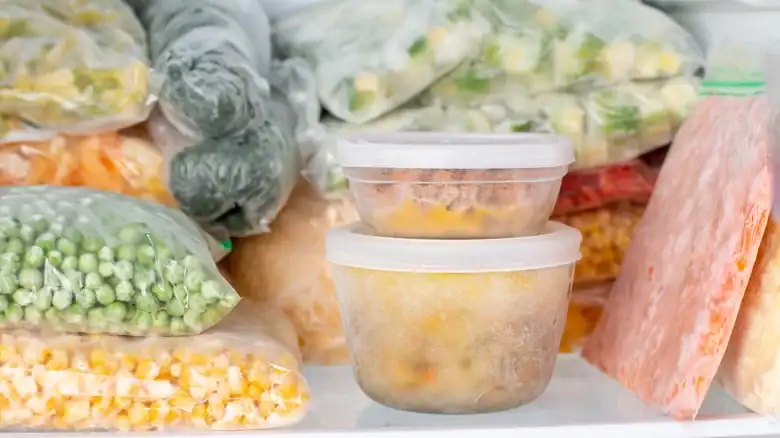
How To Use Your Freezer To 'Cook' Food
What do you use to cook food? For most people, the answers are obvious: the oven, your microwave, your air fryer, your grill, anything that can produce heat. These answers are completely correct and to say otherwise would be untrue.
It wouldn't be unreasonable if you believed said person must be severely mistaken in their understanding of kitchen appliances. You may be surprised to learn that, under certain criteria, your freezer can actually "cook" your food. Certain techniques, such as the practice of "freeze-roasting" for example, rely heavily on the use of the freezer to — what else? — freeze your produce or meats in order to get certain textures or flavors that you wouldn't be able to achieve simply by roasting them.
But how exactly can you cook food in your freezer? What does "freeze-roasting" mean, and how exactly can you reap the benefits of it? The answer lies in how food reacts when frozen and the changes that come about from it.
Freezing food can unlock different flavors and textures
Let's clear the air on one certain fact: you can't cook with your freezer the same way you cook with your oven. No amount of time in the freezer will turn your food from frozen to fully cooked without the use of an actual cooking appliance. If that's the case, what does it mean to "cook" food in the freezer?
When you freeze food, whether it's potatoes or seafood, the food undergoes a unique change invisible to the naked eye. For example, pears that are frozen and thawed over and over develop a soft texture similar to a pear that has been poached and a sweeter, incredibly juicy flavor. Clams and shellfish, when frozen and then thawed out, not only become easier to open but are also tenderized by the freezing process. Sweet potatoes that have been frozen will have a fluffier texture, as the water inside the potatoes freezes, changing the texture of the potato's skin and flesh.
Cooking with your freezer is simply another way of getting different textures and flavors on your food, similar to how you get different textures and flavors through the heat of your oven. But what sort of foods can you freeze, and which foods can you not freeze?
It's best to avoid freezing leafy green vegetables
When you freeze food, you'll notice that the texture of whatever you froze feels somewhat drier and rougher. If you were to put a carton of strawberries in the freezer, you'll notice that the strawberries harden up and lose their soft, squishy texture, which can be regained if you let the strawberries thaw out. This is because the moisture in those berries freezes, as is the case with meats and other types of produce.
Because of this change in moisture, certain foods shouldn't be frozen at all. For example, it's best not to freeze leafy green vegetables — lettuce, cabbage, Brussels sprouts, etc. — as the loss of moisture will mean that the vegetables may wilt and get a mushy, wet texture. Any foods that have a high amount of moisture, like fresh greens, citrus, or watermelons, are best enjoyed fresh, as the freezing and thawing can affect all of the water inside of them and lead to a drastically different texture. Foods that can be frozen include bacon, eggs, bananas, avocados, cheese, and chocolate, as these have relatively lower moisture compared to lettuce, celery, or melons.