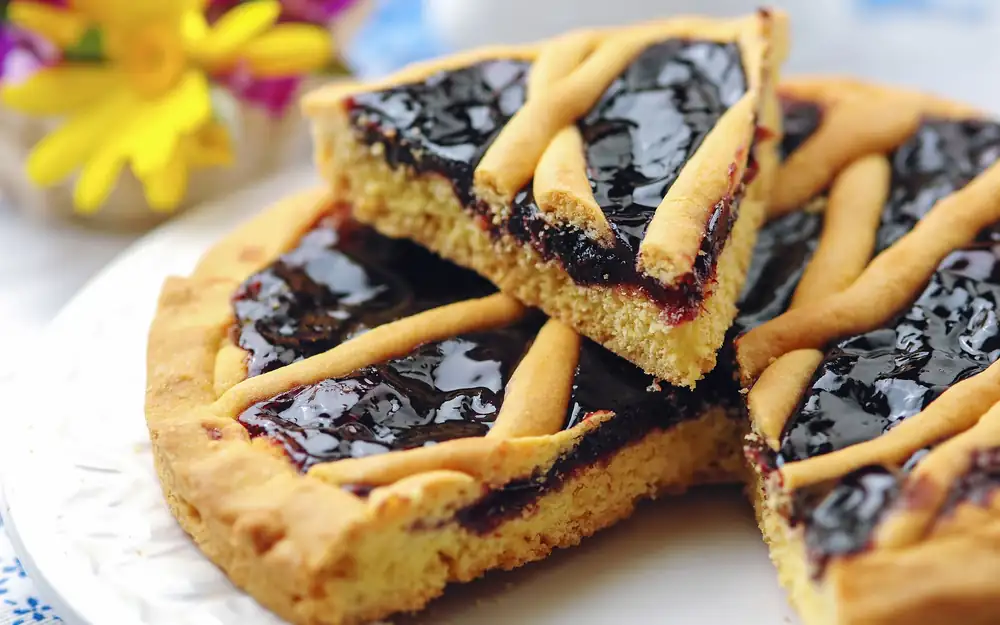
Jam Tart: The Secrets to a Sure-Filled Tart
Jam tart is one of the great classics of Italian home baking: crumbly shortcrust pastry, a generous layer of jam, and the inevitable grilled pastry on top. Simple? In theory, yes.
The most classic version is with apricot jam, but the same base can be filled with strawberries, cherries, berries, figs, peaches, or your favorite jam. But first, let's take care of the most important part: the shortcrust pastry.
Jam tart: my recipe
- 300 g of flour
- 120 g of sugar
- 170 g of butter
- 1 egg or 2 egg yolks
- grated zest of 1 lemon
- 1 pinch of salt
- jam to taste
- Work the shortcrust pastry quickly: one of the secrets to obtaining a crumbly dough is to avoid heating the butter too much with your hands. Once you have a smooth dough, flatten it slightly, wrap it, and let it rest in the refrigerator for at least an hour.
- Resting is not a negligible step: it allows the butter to return to the right consistency and makes the dough easier to roll out.
- Then, take the chilled pastry and quickly roll it out with a rolling pin. Set aside a portion to make the classic tart strips.
- Line the pan with the pastry, making sure it adheres well to the bottom and sides, then trim away the excess. Prick the bottom with a fork and spread the jam in an even layer.
- Roll out the remaining pastry, cut out strips with a pastry wheel, and arrange them on the surface in a traditional grid pattern. Crimp the ends of the strips tightly against the edge.
How thick should the shortcrust pastry be?
Thickness matters more than it seems. A pastry that's too thin may not hold the filling well, while a crust that's too thick can be heavy and more difficult to bake. As a guide, you can roll out the pastry to about 3-5 mm: thin enough to be crumbly, but firm enough to hold the jam.
Another key tip is to work with the dough while it's still cold. If it becomes too soft and sticky while you're rolling it out, it's best to stop and put it back in the refrigerator for a few minutes rather than continue adding flour.
How long should shortcrust pastry rest?
Refrigeration is a good rule of thumb for shortcrust pastry. However, you can also prepare it further in advance and keep it refrigerated until ready to use.
Cold is particularly important because shortcrust pastry contains a significant amount of butter: if the dough heats up too much during processing, it becomes more difficult to roll out and risks losing the crumbly consistency we seek.
How much jam should I put in the tart?
Here's where you need to find the right balance. A layer that's too thin risks drying out during baking; too much, however, can cause the jam to boil and leak out of the pan. Therefore, spread it evenly over the base, without reaching the rim of the pan, and remember that it will tend to become more fluid as it heats.
By the way: in everyday language, we almost always say "jam tart," but technically, jam and marmalade are not synonymous—we'll never stop repeating this! The term "marmalade" is reserved for citrus-based products, while other fruits are called "preserve." Our beloved apricot "marmalade" tart, therefore, is technically a tart with apricot jam.
How to keep the jam from leaking out of the tart?
The first thing to remember is not to overdo the filling. During cooking, the jam reaches high temperatures and can begin to simmer: if the layer is too thick, it will easily spill over the edge.
Even cooking the tart gently helps. Baking the tart more gently allows the pastry to gradually brown without subjecting the filling to excessive heat.
Tart: static or fan oven?
You can cook the tart in either a conventional or fan-assisted oven, keeping in mind that the two systems distribute heat differently.
With a static oven, it's best to place the tart in the middle-lower area: this way, the base will receive enough heat without risking the surface darkening too quickly or drying out the jam excessively.
A temperature around 170°C in a conventional oven allows for a gentler, more gradual baking. Baking times may vary depending on the thickness of the pastry, the pan, and especially your oven: watch the tart more closely than the clock. The pastry should appear evenly golden.
How to prevent the tart from remaining raw underneath?
A tart that's nicely browned on top but still undercooked on the bottom is one of the most common problems. To avoid this, don't roll out the crust too thickly, don't overdo the jam, and place the pan in the lower-middle rack of a conventional oven.
Even the mold can make a difference. Those with a removable bottom are particularly practical because they allow you to remove the tart more easily once it has cooled.
Why does shortcrust pastry break?
If the pastry breaks while you're rolling it out, it doesn't necessarily mean you need to re-roll it. Very cold pastry may initially feel stiff: wait a few minutes and gently roll it out with a rolling pin.
If, however, it's very soft and tends to stick to the countertop, it's probably overheated. In this case, let it cool again in the refrigerator before continuing.
Whole egg or just yolks in the shortcrust pastry?
Both options are possible, but the result is different. Using egg yolks results in a more crumbly texture, while egg whites help give the dough more structure.
This is precisely one of the interesting aspects of shortcrust pastry: small variations in the proportions and ingredients allow you to obtain different consistencies depending on the tart you want to prepare.
Tips for a perfect tart
In summary: work the pastry quickly and without heating it, let it rest properly in the refrigerator, and roll it out when it's cold. Don't overdo the jam, pay careful attention to the thickness of the crust, and monitor the bottom crust for doneness.
And wait before unmolding it. When it comes out of the oven, the tart is still fragile and the jam is very hot: letting it cool will help the pastry firm up and make it much easier to transfer to a serving plate.
At that point, only the most difficult question remains: deciding whether it tastes better for breakfast, as a snack, or at the end of a meal. Enjoy your meal!