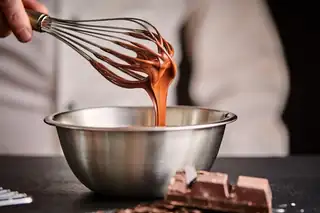
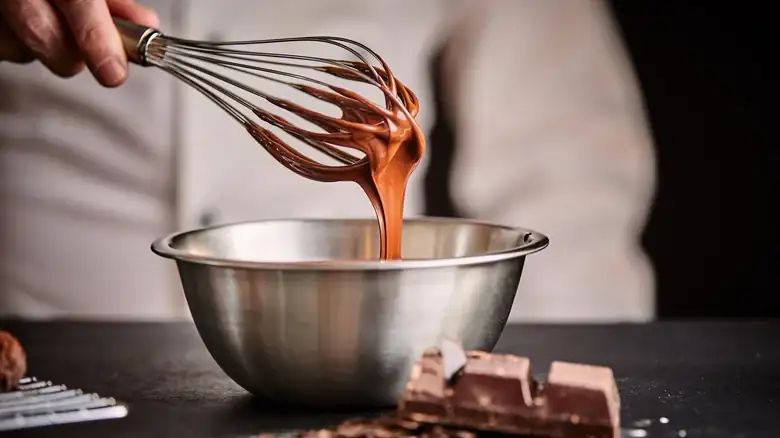
Side-beating outperforms traditional methods for whipping creams and egg whites
According to a test by America's Test Kitchen, the side whisk gave the best results, generally in half the time, except for beating eggs.
There are many types of whisks and ways to use them: wire whisking, figure-eight whisking, and traditional whisking. Side whisking, however, stands out. In testing, this method whipped cream and egg whites to perfection in about five minutes, and a vinaigrette remained emulsified for up to 15 minutes after whisking was complete.
According to America's Test Kitchen, lateral whisking generates the greatest shear force, that is, the force produced parallel to a surface that breaks down the liquid's structure. By changing direction, the whisk generates an opposing force that collides with the previous one, creating more tension in the bowl in less time than whisking in a single direction. In egg whites, this tension breaks down the protein structure and forms new bonds with the trapped air.
While it's not something you'll use every day, lateral whisking can be useful when needed, such as when trying to emulsify a hollandaise sauce. However, for beating eggs, whisking with a hand whisk is still the preferred method.
Whisks have a long history. Centuries ago, prototypes of whisks existed, made from a bundle of twigs or birch branches. Later, wire whisks became popular, and home cooking and baking were forever changed.
The first mechanical whisks came later, but according to Alice Waters of Chez Panisse, a hand-cranked whisk remained commonplace in American kitchens for decades. Waters credits Julia Child with teaching the nation not only how to use a whisk, but also which one is best suited for each dish.
The knowledge was lost at some point, but today it can be recovered. If your electric or stand mixer breaks down, you can still whip fresh cream with a hand whisk and a side-to-side motion.