Desayuno sin azúcar: ideas deliciosas de una nutricionista
Un desayuno sin azúcar: es posible. Y eso no significa que necesariamente tenga que ser salado. Y si deberías probarlo, también es porque es una buena inversión: te permite ahorrar algo de azúcar para distribuirlo a lo largo del resto del día.
A sugar-free breakfast: it's possible. And that doesn't mean it's necessarily salty. And if you should try it, it's also because it's a good investment: it allows you to save some sugar to spread throughout the rest of the day. Sugars, in fact, aren't something to avoid; they're simply something to limit. "They can be consumed, and it's important to clarify: a healthy, balanced diet must contain all the nutrients," explains Romina Cervigni, nutritionist and scientific director of the non-profit Valter Longo Foundation. "The problem is added sugars, which are added to those naturally present in foods, like milk, honey, and fruit. Trying a sugar-free breakfast can be a great way to keep them within limits and feel better."
Why it's helpful to reduce added sugars
Sugars are an important source of energy for our bodies, but we often consume too much of them because we use them to sweeten drinks like milk or coffee (to continue with the breakfast example). Furthermore, they're found in many processed foods that we often don't even think about (in addition to the usual fruit juices and carbonated drinks, for example, they're also found in ketchup). This makes it easy to exceed the WHO recommended intake of 5% of total daily energy intake (which is equivalent to six small teaspoons of table sugar per day).
"In fact, eating too much sugar doesn't simply mean gaining weight. Excess sugar triggers metabolic mechanisms that can expose us to many risks: too much sugar causes blood sugar and insulin spikes, which in turn make us hungry and crave sweets, and inflammatory mechanisms in the intestines that create temporary problems and can expose us to the risk of chronic diseases in the long run," says Dr. Cervigni.
Sugar-Free Breakfast: How to Make It Balanced
"If done well, with the right amount of protein, carbohydrates, vitamins, and healthy fats, a sugar-free breakfast provides our body with all the micronutrients and macronutrients needed to feel energized and full of energy, while also preventing intestinal inflammation and thus helping us feel better," continues the expert.
Can't give up sweets? There are several natural and calorie-free ways to sweeten our favorite foods. "For example, have you ever thought about using spices to flavor them? Cinnamon, cocoa, and vanilla, for example, are an excellent alternative to the classic sugar we use for our morning cappuccino," says the doctor. And—we might add—they're also a great way to experiment and start the day differently. Ideas? Here are five sugar-free breakfast suggestions from Dr. Cervigni.
Sugar-Free Breakfast: 5 Ideas to Try
Breakfast can consist of a cup of sugar-free plant-based milk fortified with vitamin D and calcium. To round it out, you can add some oat flakes and dried fruit flakes.
«Toast two slices of whole wheat bread and spread 100% tahini, a cream made with sesame seeds as the only ingredient».
"This recipe can be prepared ahead of time for a healthy, nutritious, tasty, and fresh breakfast, ready to enjoy," says Dr. Cervigni.
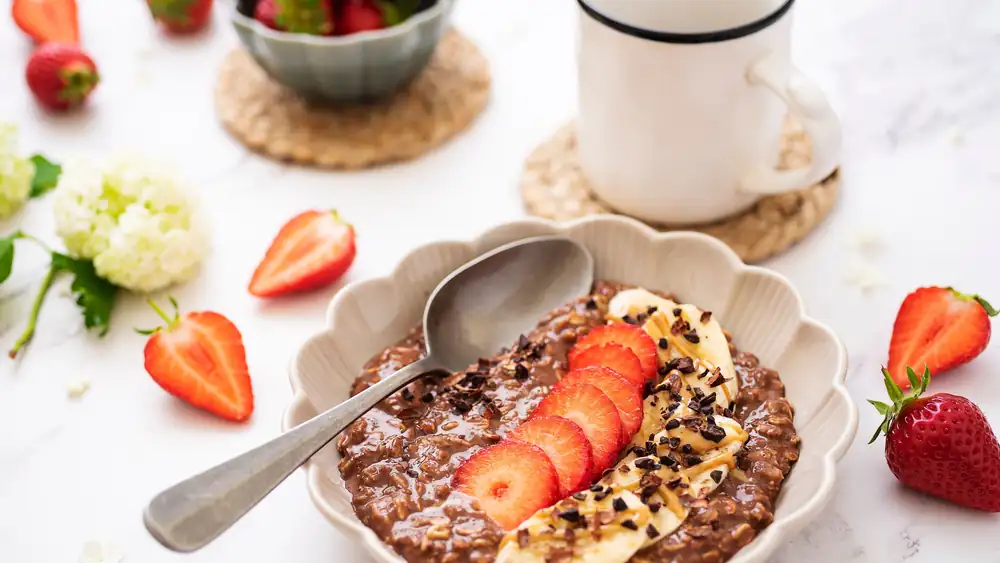
- oat flakes
- vegetable drink
- cocoa powder
- cinnamon
- pinch of salt
- fresh fruit to taste
- Add a sprinkling of cinnamon and bitter cocoa powder to flavor the oat flakes and a pinch of salt to enhance their flavor.
- Mix and add your desired plant-based drink.
- Store in the refrigerator and consume the following morning, adding fresh fruit to taste.
Toast two slices of whole-wheat bread and serve them with salmon carpaccio marinated in extra virgin olive oil, pink pepper, and lemon juice. For a more substantial breakfast, you can slice avocado thinly and spread it on the toast.
- 300 g chickpea flour
- 900 ml of water
- sale
- rosemary (optional)
- In a bowl, combine the chickpea flour, water, a little extra virgin olive oil, and salt to taste.
- Mix the ingredients well until you obtain a smooth, homogeneous mixture without lumps.
- Cover the bowl with a cloth or cling film and let the dough rest for at least an hour, so that the flavors can meld and the chickpea flour can hydrate properly.
- Meanwhile, preheat your oven to a high temperature, usually around 220°C.
- Take a baking pan and generously grease the surface with extra virgin olive oil.
- Pour the prepared batter into the pan, smoothing it out to obtain an even layer. If desired, sprinkle the batter with rosemary leaves for extra flavor.
- Place the pan in the oven and cook the farinata until a golden, crispy crust forms on the surface (about 25 minutes).
- Once cooked, remove the farinata from the oven and let it cool slightly.
- Once cooled, the farinata can be cut and frozen. It can also be reheated in the microwave as a snack or a savory breakfast.