Cocoa's journey from the tropics to Tuscany: here's how one of the world's most award-winning chocolates is made
Milk, dark, or with dried fruit: chocolate is one of those pleasures you just can't live without. It lifts your mood, even relaxes you, but above all, it makes any moment of the day special, from breakfast to after-dinner.
But not all chocolates are the same. It takes many steps and a great deal of skill to transform simple seeds—cocoa beans—into a crunchy, glossy bar, covered pralines, or velvety creams.
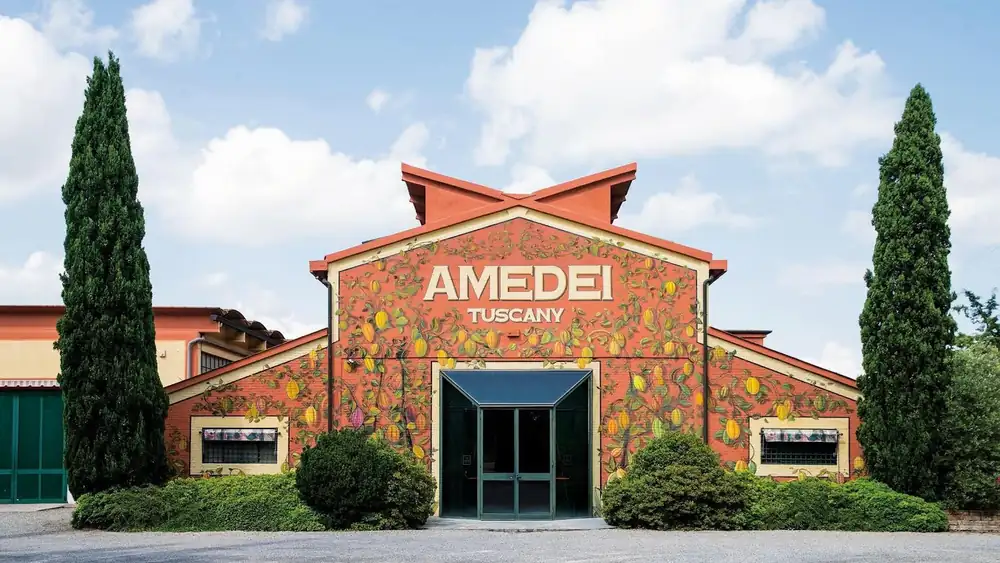
Amedei, a small Italian excellence since 1990, tells us how its over 150 chocolate masterpieces are created, a fusion of flavor, dedication, and top-quality ingredients. This begins with plantations discovered and nurtured in faraway lands, and continues with the selection of the finest cocoa varieties, such as Criollo and Trinitario. From the qualitative analysis of each batch to the precise and controlled stages of artisanal production, the fruit of years of agronomic expertise and experimentation, Amedei is the company with the highest number of Golden Bean awards from the Academy of Chocolate in London, one of the most prestigious institutions in the industry.
There's nothing like chocolate, capable of stimulating all five senses, and few journeys are as fascinating as that of cocoa.
From the seed to the wonders of Amedei chocolate
In a breathtaking tropical landscape, in the world's most remote countries, such as Ecuador, Venezuela, Jamaica, and Madagascar, cocoa pods are harvested from Theobroma cacao trees. These are opened with primordial skill, by hand, with delicate machete strokes that reveal their precious contents: the cocoa beans, also known as fava beans, wrapped in a soft, white pulp. After a two-to-three-week fermentation and sun-drying process, the beans are packed into jute sacks, ready to be shipped to Amedei, in the splendid Tuscan setting, just a few kilometers from Pontedera.
The cut test evaluates the homogeneity and average fermentation quality of the beans through sensory analysis, while the aroma is checked through a test roasting: this ensures that Amedei's high quality standards are met. The finest cocoa is then air-roasted, gently over indirect heat, to preserve and enhance its natural aroma. It is then hulled by separating the husk from the nib. It is then ground, mixed with selected pure cane sugars, and refined until the cocoa mass becomes finer and ultimately liquid.
The cocoa mass, now in a liquid state, also known as cocoa liquor, is transferred to the conching tanks and then "cradled" by a roller for up to 72 hours, releasing its acidic component and maximizing its aromatic bouquet. Once conched, the chocolate is tempered, or rapidly cooled to a precise temperature: this allows some of the fat to pre-crystallize, hardening earlier than the rest. This process leaves the bars and pralines shiny, smooth, crunchy, and above all stable, meaning they will no longer melt at room temperature. Amedei chocolate is ready to be poured into molds, alone or mixed with the finest nuts, such as Bronte pistachios, Avola almonds, and round, delicate Piedmont hazelnuts.
Amedei's small chocolate works of art are left to cool in molds, then carefully removed and packaged. The different types of chocolate—extra dark, dark, milk, and with premium dried fruit—have over 100 unique flavor profiles and are the result of extensive experience, a harmony of hand-blended ingredients, textures, and aromas, a sensorial elegance that is entirely Italian, and the magic and passion of a true laboratory of emotions. Among the most exclusive are the Acero 95 blend, a 95% dark chocolate with a bold and mellow flavor, sweetened only with maple sugar, and the Blanco de Criollo, a 70% vintage dark chocolate, born from creative genius, with a blend of rare Peruvian cocoas. All Amedei products are free from soy lecithin and added flavors, preservatives, thickeners, and gluten, and embody craftsmanship and innovative blends to keep flavors in step with the times.