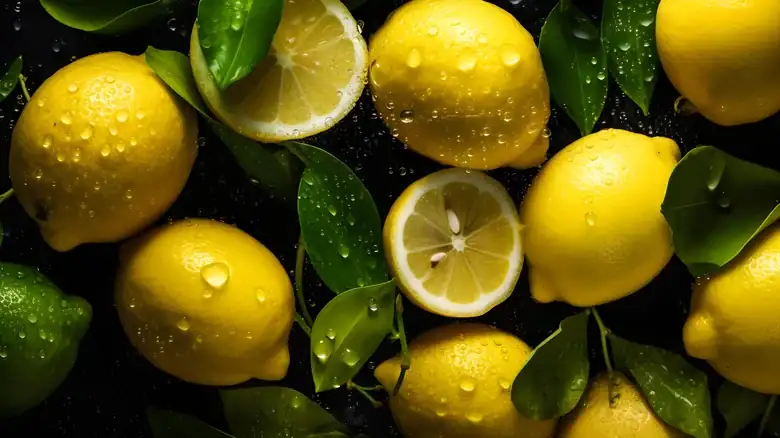
El país que produce más limones en el mundo
Aunque algunas de las variedades de limón más populares del mundo provienen de Italia, Francia o incluso California, ninguna de estas regiones se acerca a la producción mundial de limones de la India.
Though some of the world's most popular lemon varieties come from Italy, France, or even the state of California, none of these regions come close to producing as many lemons as India. As the top heavy-hitter in the lemon arena, India produced nearly 3.55 million tons of the citrus fruit in 2022, or approximately 17% of the world's total lemon supply. These crops are worth around 73 billion rupees (or $876 million USD).
Mexico and China follow close behind, each producing somewhere in the realm of 2 million tons of lemons per year. Understandably, their exact rankings vary every calendar cycle, with production depending on factors like available farmland and weather.
With all that being said, the U.S. imports most of its lemons from Mexico and Argentina, as well as growing its own supply in the states of California, Florida, and Arizona. Meanwhile, China and India choose to export mainly to their respective surrounding regions.
Factors influencing the production of lemons
As mentioned previously, annual lemon production is heavily affected by weather and other factors. Lemon trees grow best in warmer climates, thriving with humidity but suffering if they receive too much rain. They prefer slightly acidic soil, but may need to be supplemented with a fertilizer rich in nitrogen, potassium, phosphorus, magnesium, zinc, and iron to grow properly and produce usable fruit. Due to these requirements, lemon production is very sensitive to droughts and flooding, flash freezes, and rising temperatures.
If weather wasn't enough of an issue, lemon crops are also subject to available acreage. In India, for example, farmers can only plant 210-250 trees per acre, with acreage constantly in flux due to climate and soil properties. Farmers in Florida, on the other hand, have experimented with high-density methods of up to 900 trees per acre, but consequently struggle to keep up with maintenance and harvest. As such, lemon farmers have to find the perfect balance.
How lemons differ from one country to the next
Just like with any other citrus varieties, lemons differ from one producing region to the next. Lemons from India, for instance, are usually between 1-3 inches wide, and tend to be smoother rather than bumpier in texture. They also often have 12 or 13 segments within. Meanwhile, lemons/limes grown in Mexico tend to be smaller — no more than 1.5 inches wide — and contain 10-12 segments. They have a similar texture to their rind, but are usually more green in color than yellow.
Somewhere in between these two are California's Eureka lemons, more or less 2 inches wide, with eight to 10 segments. Eureka lemons are essentially what we picture when someone mentions lemons, being that they're bright yellow and have a somewhat bumpy exterior skin.
Although many of these differences boil down to lemons hailing from varying breeds, differences also arise depending on weather. Cooler temperatures can make lemons taste sweeter, for example, while heavy rain can make lemons grow plumper. Their color may also be more or less vibrant according to the amount of sunlight they receive.