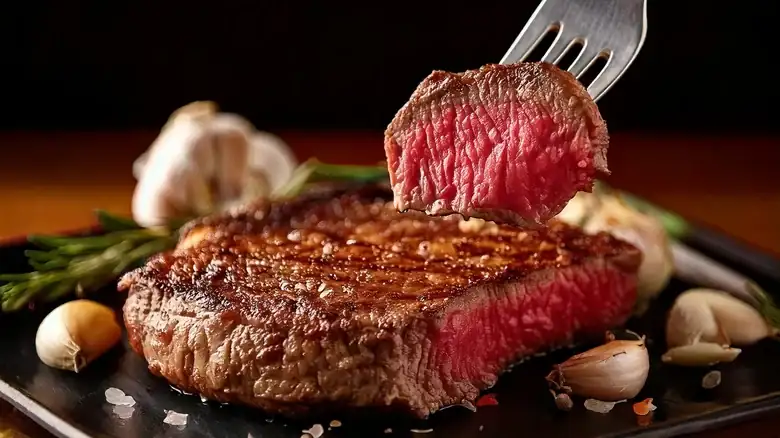
El truco umami que hace que tu filete sepa a carne madurada en seco
El proceso de maduración en seco se ha utilizado como técnica de conservación de la carne durante cientos de años, pero hoy en día goza de popularidad entre los chefs de restaurantes gourmet y los conocedores de la carne por igual.
Dry-aging has been used as a meat preservation technique for hundreds of years, but today, it enjoys popularity among gourmet restaurant chefs and meat connoisseurs alike. Tender, savory dry-aged steaks are steakhouse standbys as well as a splurge-worthy grocery item worth trying at least once — however, if you simply don't have the funds (or time), you no longer need to break the bank to emulate that aged flavor. All you need is some porcini mushroom powder.
While it's difficult to replicate the deep, funky flavor created by the dry-aging process, the nutty umami profile of porcini mushrooms can serve as a viable facsimile. There are various mushroom powder seasonings you can buy online or at specialty grocers, but you can also easily make your own version for cheap. Simply blend fully dehydrated mushrooms into a coarse powder, then mix it into whatever seasoning rub you like to use on your steaks.
If you can't find porcinis (whether powdered or dried), or you want to experiment to find the perfect flavor for you, dried shiitake mushrooms can be substituted for or added to the porcinis. This cuts some of the funkiness that can make dry-aged steak overwhelming for some people. Another twist is to try adding the mushroom powder to a mix of ground coffee, brown sugar, black pepper, and salt for a sweet and salty coating on your grilled steak, which really hits those complex aged notes.
Other ways to create the dry-aging effect at home
There are specific notes that you want to hit when trying to replicate a bite of dry-aged steak. The meat is defined not only by its tenderness and umami taste, but also by the funkiness that comes from regulated decay as it sits out in a dry environment. It also has a natural concentration of flavor that comes from the gradual loss of moisture.
One way to approximate this effect is to use koji, a Japanese rice mold used to ferment foods such as soy sauce and sake. It can be found in many Japanese or Asian groceries. Steaks are usually dry-aged for about a month or far beyond, but koji gives you delicious results in just two to three days. Rub a steak down with koji-infused rice grains and have it sit uncovered on a wire rack in the fridge, and let the mold do what it does best: fermenting. Then, all that's left is to wash the koji off and sear your tender beef, then enjoy the strong umami, nutty flavor with notes of miso.
If you're looking for a quicker, overnight marinade instead, try adding fish sauce to your mushroom powder, rub it on the steak, and then finish by coating the fatty side or fat cap on the beef with blue cheese, salt, and pepper, to achieve that dry-aged funk that stays in the nose. Make sure to salt the steak well beforehand to draw out moisture and season it deeply, achieving a bit of extra flavor.