The Budget-Friendly Cut Of Steak That's Surprisingly Tender
When the urge for a steak night strikes, it usually means it's time to spend some money. Whether it's a night out at a fancy steakhouse or a backyard barbecue, these nights aren't getting any cheaper. That is, unless you know about some of the best budget-friendly steak cuts, like the flat iron.
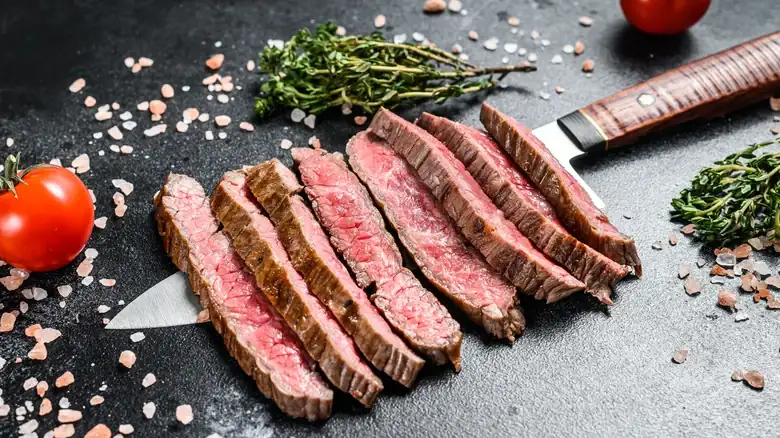
The secret to flat iron's tenderness lies in its marbling — the streaks or flecks of white fat visible when the steak is raw. This marbling not only contributes to the steak's tenderness but also gives it a savory, beefy flavor that is sometimes lacking in cuts like filet mignon. Flat irons also take very well to marinades, allowing you to flavor them any way you like.
Slicing and buying flat iron steak
Flat iron steaks look just like they sound — flat. They have a lot in common with other flat cuts like flank steak and skirt steak. While flat iron comes from a completely different part of the cow, the cooking principles for all flat steaks are the same. Sear them over high heat, and cook to medium-rare or medium for the best results. When they've had some time to rest, make sure to slice the meat against the grain, just like you would a flank steak. This cuts the long muscle fibers and makes the steak easier to chew, giving it a little extra tenderness.
It shouldn't be too difficult to track down the perfect flat iron steak at your local grocery store or supermarket, but if you don't see any steaks with that name, it doesn't mean they're not there. Flat irons are often labeled as top blade steaks, although technically that's a slightly different cut. Both flat iron and blade steaks come from the chuck of the cow, which is the shoulder. These two muscles make up the top blade roast, but are separated by a thick piece of connective tissue. Some grocery stores might confuse the two since they come from the same area. A specialty butcher, on the other hand, should know exactly what you're talking about, and it's a great excuse to get friendly with your local meatmonger. If you like to save a few bucks on steaks, they'll be the first to let you know.